Thanthania Kalibari, Kolkata: the Kali Puja errand of 1885
It is nine o'clock on the morning of Friday, 6 November 1885, Kali Puja day. In an upstairs room at Shyampukur, Sri Ramakrishna stands in a freshly washed cloth. He is ill. A disciple called M. walks in, still barefoot, holding prasad.
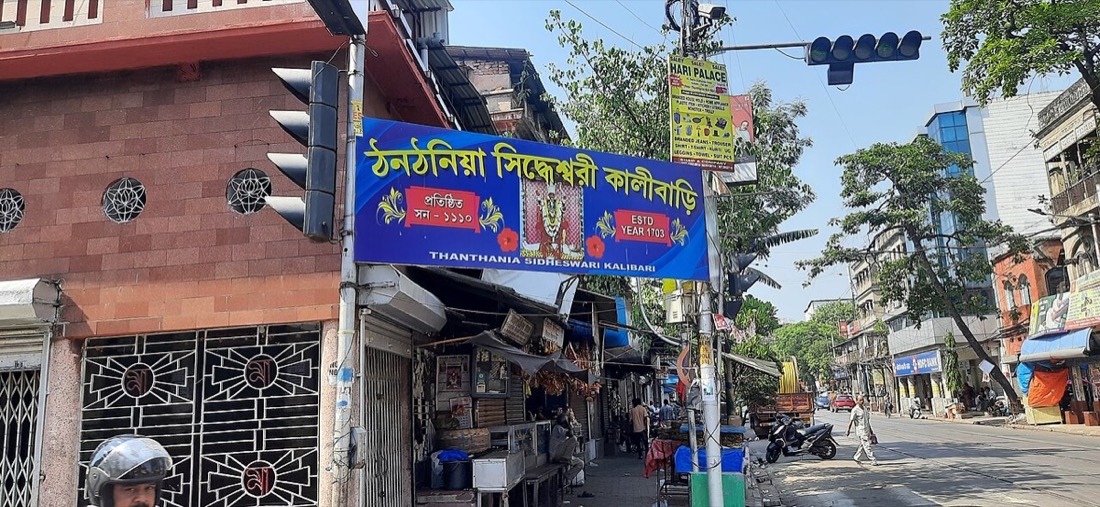
The prasad is from Thanthania Kalibari, where Maa Kali is worshipped as Siddheshwari. It stands on Bidhan Sarani, a short way from the College Street crossing in north Kolkata. This article follows that errand, then the wall tablets, the family, and the stories that disagree.
A barefoot errand on Kali Puja morning
M. is Mahendranath Gupta, the disciple who wrote down Ramakrishna's conversations as the Kathamrita. In his record of the day, Ramakrishna had asked him to offer the morning worship to Siddheshwari Kali at Thanthania. The offering was flowers, green coconut, sugar and sandesh. M. bathed first, went to the temple barefoot, and carried the prasad on to Shyampukur without sandals. Swami Nikhilananda's English Gospel of Sri Ramakrishna describes the same morning.
In the room, Ramakrishna takes off his sandals before he eats. He takes a little of the prasad with great reverence and touches a little to his forehead. He calls it very good prasad.
M. has run a second errand: two books of songs, by Ramprasad and Kamalakanta, for Dr Sarkar, the doctor attending Ramakrishna. Ramakrishna says the songs will find their way into the doctor's mind.
The passage does not say why Ramakrishna chose this temple, and it promises nothing about what the offering would bring. It shows only that, in 1885, Thanthania was where he sent M. on Kali Puja morning. A 2023 Aaj Tak Bangla feature adds, as hearsay, that his devotees also prayed here for his health while he stayed at Shyampukur.
That is one morning at one Kolkata temple. Devam is coming soon on the App Store and Google Play, bringing together stories of more than 1,000 Indian temples and of gods and goddesses, with bhajans, mantras, aartis and quizzes. If you would like more stories like this one when it opens, join the waitlist.
Green coconut and sugar, vowed to a Siddheshwari
Green coconut and sugar (dab-chini) appear in another passage. On 28 November 1883, Ramakrishna is talking with Keshab Chandra Sen, the Brahmo leader, who has been unwell. He says Keshab's illness always unsettles him. During an earlier illness he used to cry at the end of the night, asking the Mother whom he would talk to if anything happened to Keshab.
Then, on coming to Calcutta, he had given green coconut and sugar to Siddheshwari and vowed to the Mother that the illness would be cured. This time, he adds, it has not been so serious.
The name matters here. Aaj Tak Bangla says Siddheshwari is called so because of a belief that every vow made to her is fulfilled.
But which Siddheshwari? The 1883 passage names no neighbourhood, and the city has several. Cotton's Calcutta, Old and New lists a second one on Upper Chitpore Road. The Bowbazar temple known as Firingi Kalibari is also Siddheshwari's, and Lake Kalibari, on Southern Avenue in south Kolkata, is a different shrine altogether.
Aaj Tak Bangla and TV9 Bangla place the green coconut and sugar at Thanthania. A 2023 Indian Express Bangla feature puts the same vow at the Siddheshwari temple in Kumortuli. This article does not choose between them. Only the 1885 passage names Thanthania.
Two tablets and a pun
Cotton's 1907 handbook is the earliest printed description of the temple read for this article. On page 981 it says a Brahmachari named Udayanarayana set up the image and served as its priest until his death. A Haldar Brahmin then took over. In his time, in the Bengali year 1210, Babu Sankar Chandra Ghosh of Thanthania built the present temple.
Cotton also copies two wall tablets. One names the temple of Mother Siddhesvari, founded by the late Sankar Ghosh in 1210. The other says Kali lives in the heart of Sankara. Cotton notes that the name works two ways: it is Shiva's, and it is the builder's. He adds that the goddess seems some years older than the temple, and that her image is clay.
The Bengali year 1210 falls around 1803. Later reports give other figures. TV9 Bangla says 1806, and Aaj Tak Bangla says 1860. Indian Express Bangla mentions a stone on the temple marked 1110, around 1703, which it reads as a date for a Kali temple that early. Cotton's 1210 and that 1110 are one digit apart. No source read for this article transcribes the inscription itself, so the building's date stays open.
A clay goddess, a forest and a bell
The Bengali features tell an earlier beginning, and they present it as local tradition. Before the city's streets, they say, the Bhagirathi flowed past the wooded village of Sutanuti. At a cremation ground beside the river, a tantric practitioner named Udaynarayan Brahmachari shaped a clay image of Kali as Siddheshwari, around 1703. TV9 Bangla adds that the first temple was small, with mud walls and a palm-leaf roof.
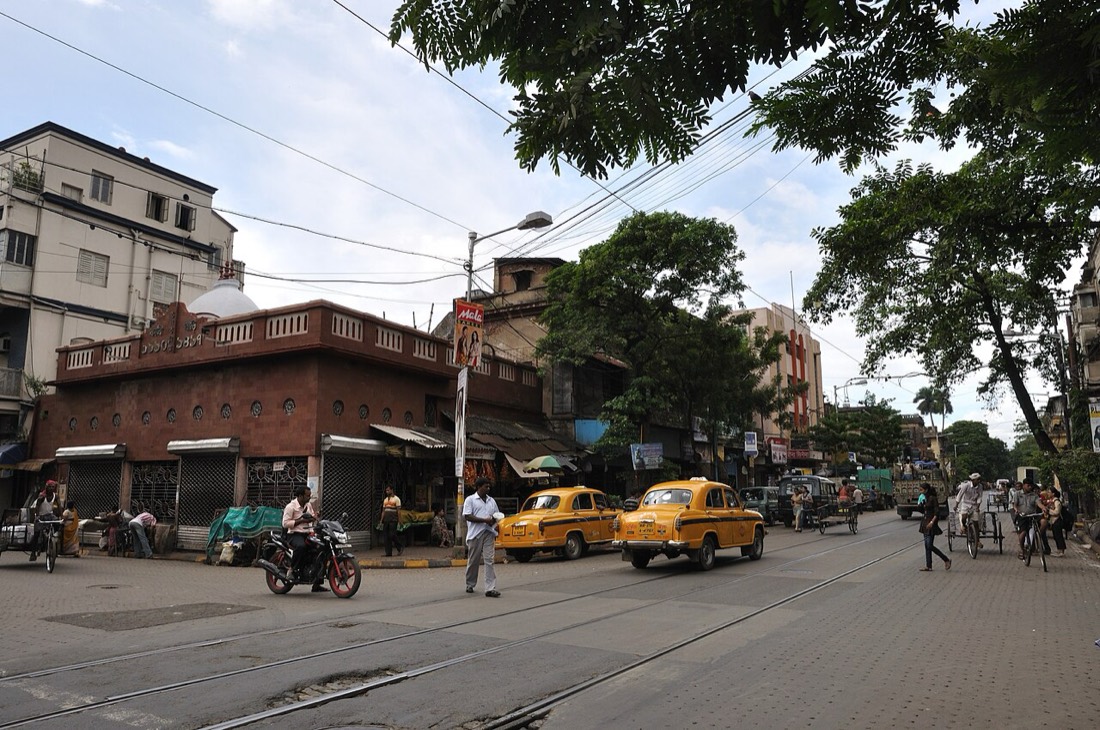
A bell rang there, the stories say, and its sound carried through the forest: than-than. The locality took its name, Thanthania, from that sound.
Later, the account continues, a businessman named Shankar Ghosh built the temple and an eight-roofed shrine, an atchala, for Pushpeshwar Shiva, named as the temple's Bhairava. He also took the daily worship on himself. The reports say his descendants are still its hereditary sevayets, the caretakers who serve the goddess.
They describe her as a dark, four-armed clay image: sword and skull-cup in her left hands, the gestures of assurance and boon-giving in her right, and mostly silver ornaments. Aaj Tak Bangla says the image is repaired every year.
A family that tended her, and a son who walked to Ramakrishna
Shankar Ghosh's family appears in one more record. Belur Math, headquarters of the Ramakrishna Order, says Subodh Chandra Ghosh, born in Calcutta in 1867, belonged to the family of Shankar Ghosh of the Thanthania Kali temple.
In the middle of 1885, as a schoolboy, Subodh slipped away on foot to Dakshineswar to meet Ramakrishna. The biography says Ramakrishna told him he knew his parents and had visited their house now and then. Subodh grew up to be Swami Subodhananda, a monastic disciple of Ramakrishna.
So a family that tended Siddheshwari's worship also sent a son to Ramakrishna, in the same year as the errand.
Bhog, new moons and the hour of a visit
Aaj Tak Bangla and TV9 Bangla say the goddess is worshipped by full tantric rites. TV9 says the bhog, the food offered to her and then shared as prasad, includes non-vegetarian dishes through the year, with vegetarian bhog on Phalaharini Puja and Dipannita Kali Puja. A 2020 Bengal Chronicle visitor's account says animal sacrifice continues on new-moon nights. The other reports read here do not mention it, so it is left unconfirmed.
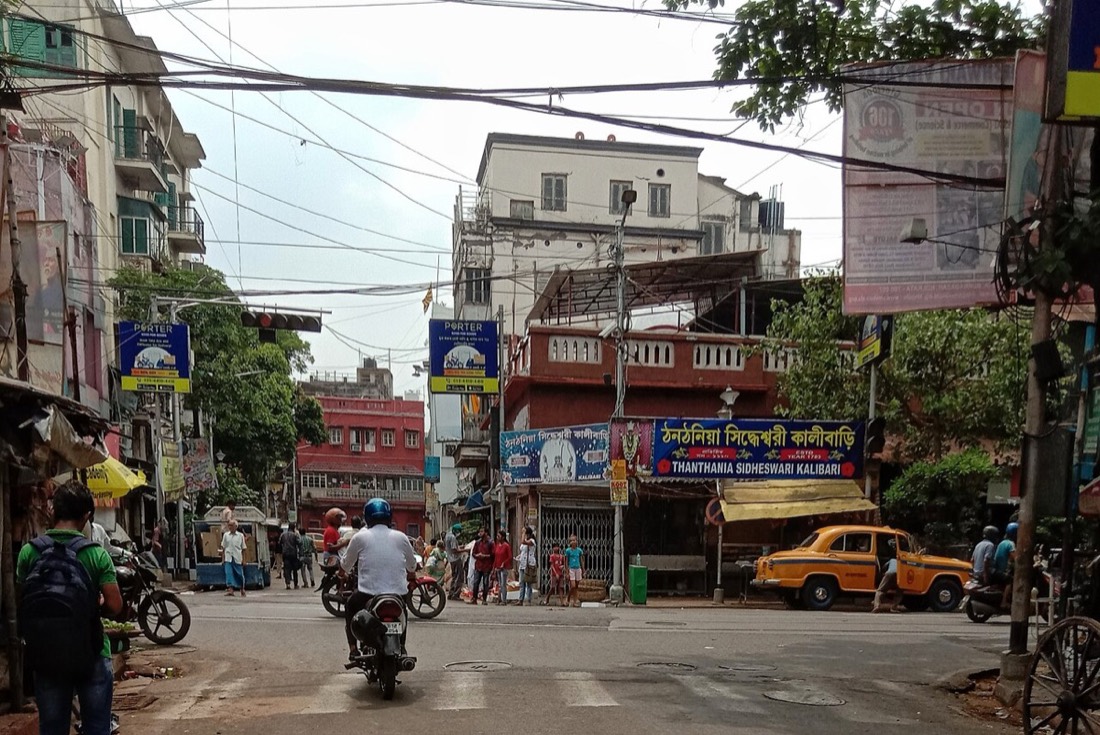
Aaj Tak Bangla says the temple is open all seven days, with a morning and an afternoon session. It says crowds gather mainly on new-moon days, with the grandest worship on Kali Puja day. Hours differ between reports, and no official website or temple notice turned up when this article was checked on 4 November 2026, so confirm timings, dress and rules at the temple.
Questions people ask about Thanthania Kalibari
What are the timings of Thanthania Kalibari? Is it open every day?
A 2023 Aaj Tak Bangla report says it is open all seven days, with a morning and an afternoon session. Hours differ between reports, and no official website or notice was found on 4 November 2026. Crowds gather mainly on new-moon days and on Kali Puja, so confirm timings at the temple.
Where is Thanthania Kalibari, and which metro station is nearest?
It stands on Bidhan Sarani, a short way from the College Street crossing in north Kolkata, and its goddess is Siddheshwari Kali. It is not Lake Kalibari, on Southern Avenue in south Kolkata. The Siddheshwari temples at Bowbazar (Firingi Kalibari) and Kumortuli are separate shrines. Kalighat and Dakshineswar are separate Kali temples in other parts of the city. A 2018 visitor's guide names Mahatma Gandhi Road metro station, northern exit, as the nearest stop, about 750 metres away along Muktaram Babu Street. Check the route before you travel.
Who is the goddess at Thanthania Kalibari?
Maa Kali, worshipped here as Siddheshwari. Bengali reports describe a dark, four-armed clay image with a sword and a skull-cup in her left hands, the gestures of assurance and boon-giving in her right, and mostly silver ornaments. Aaj Tak Bangla says the image is repaired every year.
When was the temple built?
No source read for this article settles it. Tradition dates the first clay image to about 1703. A wall tablet recorded in 1907 gives the Bengali year 1210, around 1803, for Shankar Ghosh's temple; later reports say 1806 or 1860. The tradition is sacred history, the tablet is a documented record.
When is Kali Puja in 2026, and what time is the puja in Kolkata?
Kali Puja in Bengal falls on Sunday, 8 November 2026, the same night as Diwali. Drik Panchang, a panchang site, gives the Nishita time for Kolkata as 10:55 pm to 11:46 pm. Aaj Tak Bangla says the temple's grandest worship is on Kali Puja day, but no temple notice with this year's programme was found, so confirm it at the temple.
Why is it called Thanthania Kalibari?
The Bengali reports read for this article tell it as local tradition. A bell rang in the forest there, its sound carrying as than-than, and the locality took the name Thanthania from that sound. Kalibari means a house of Kali.
Who built Thanthania Kalibari?
The reports say a businessman named Shankar Ghosh built the temple, and a wall tablet recorded in 1907 names him. Tradition places an earlier clay image of Kali, made by a tantric practitioner named Udaynarayan Brahmachari around 1703. The reports add that Shankar Ghosh's descendants are still the hereditary caretakers who serve the goddess.
What is Thanthania Kalibari's link with Sri Ramakrishna?
On Kali Puja morning, 6 November 1885, a disciple known as M. brought prasad from this temple to Sri Ramakrishna at Shyampukur. Belur Math also records that Subodh Chandra Ghosh, a member of Shankar Ghosh's family, walked to Dakshineswar to meet Ramakrishna in the middle of 1885 and became Swami Subodhananda.
The line that reads two ways
Go back to the wall. Kali lives in the heart of Sankara: Shiva, and also the man who built her a home. Cotton noticed both readings in 1907, and his entry does not mention Ramakrishna. TV9 Bangla, in 2024, attributes the words to Ramakrishna and says they are still written on the temple wall.
If a line that reads two ways on a Kolkata wall is the kind of detail you enjoy, Devam is coming soon to Google Play and the App Store with more temple stories, and the waitlist is open.