Surya Mandir on Galta Hill, Jaipur: when the Sun leaves home
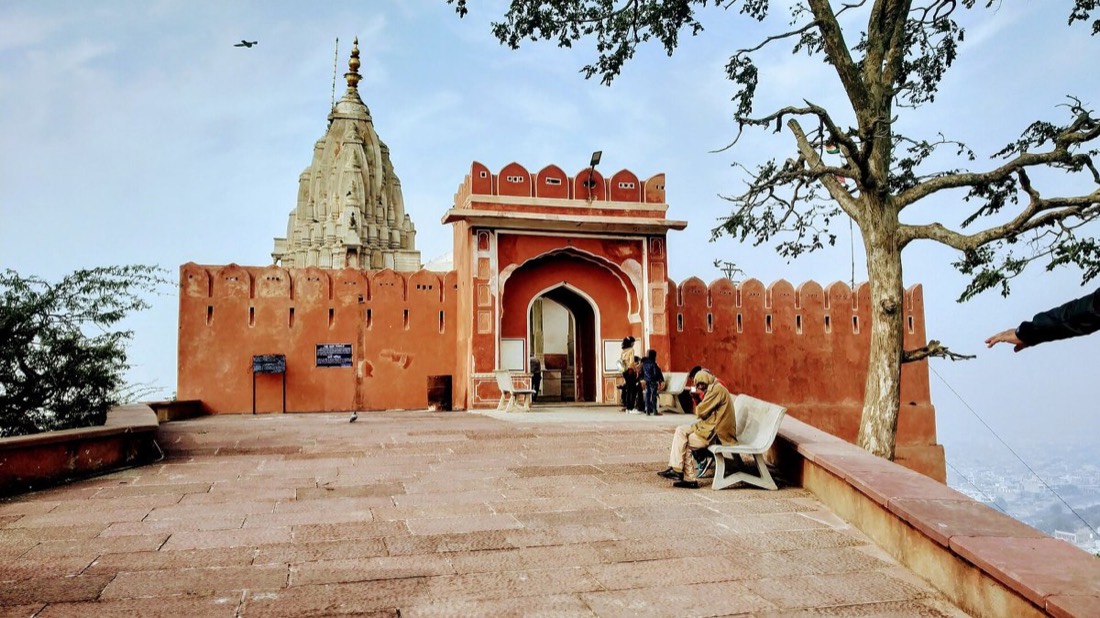
On the ridge east of old Jaipur stands a small shrine to Surya, the Sun god. A red battlemented wall encloses it, and a pale stone spire rises behind the gate. This is the Surya Mandir on Galta Hill, in Rajasthan, and its best story is a journey. On the Sun's festival, Jaipur newspapers report, the Sun's image goes from this hilltop into the city. An architect has also argued that the shrine helped fix the line of Jaipur's plan. Both stories follow, with a plain note on what the sources do not settle.
A red wall, a white spire and a founder nobody agrees on
In photographs, a broad paved terrace leads to a red gateway with a pointed arch, set in the battlemented wall. Behind it rises the shikhara, the tower over the sanctum. Rajasthan's tourism page calls it a small temple to the sun god on top of the hill. It was built by Diwan Kriparam, the page says, and can be seen from anywhere in the city.
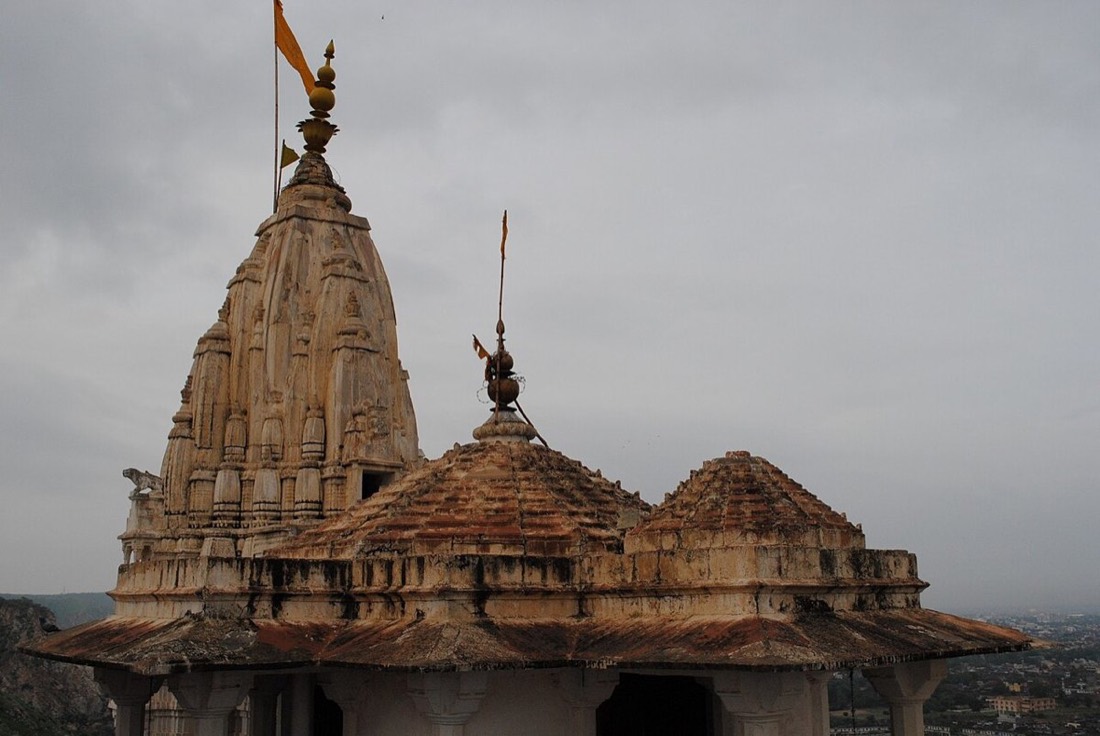
Who built it, and when, is less settled. The architect Rémi Papillault dates the shrine to around 1720. The historian Devendra Kumar Bhagat gave ETV Bharat another account in 2023. Sawai Jai Singh II, Bhagat said, installed the Sun's image after an ashvamedha, an old royal horse ritual, and then had the temple built. A Patrika report gives 1734 to 1735. No source read for this article cites a foundation record, so "early eighteenth century" is as far as it goes.
The shrine is separate from Galtaji, the pilgrimage complex of holy water tanks, called kunds, in the valley below.
Chhath belongs to the valley below
Each year in the month of Kartik, Chhath is kept with arghya, an offering of water to the setting Sun and then to the rising Sun. Its date follows the lunar calendar, and the four-day vrat includes a long fast. The sources read for this article do not tie the temple to Chhath. They do tie the festival to the water beneath it. Patrika in 2022 and News18's Local18 desk in 2026 both describe devotees offering arghya at Galta's kund. Among them are people who have moved to Jaipur from Bihar and other states. The Sun worship that reports do attach to the hill shrine belongs to a different month.
The day the Sun leaves home
James Tod, writing in the early nineteenth century, describes a festival called Bhan Saptami. It is the seventh day of the Sun, also called the birth of the Sun. The festival falls two days after Vasant Panchami, the spring festival, in the month of Magh.
At the Jaipur court, whose princes claim descent from Kusha, the second son of Rama, it is especially sacred, Tod says. On that day the chariot of the sun, drawn by eight horses, is taken from the sun's temple and moved in procession. Tod adds that the ceremony is otherwise seen only at the inauguration of a new prince.
Tod does not name the temple. Later reports do. On 25 January 2026, Patrika reported, the Sun's chariot was setting out from the Galta Hill temple for Surya Saptami, also called Ratha Saptami. It was to pass through the main bazaars to Chhoti Chaupar, where a grand aarti was planned. The paper called it a tradition from the princely era.
Bhagat told ETV Bharat that a palna, the Sun's cradle kept at the shrine, is carried into the city in this procession. A cradle suits a festival that Tod says marks the Sun's birth. The reports place Surya Saptami on the bright seventh of Magh, a lunar date that falls in January or February.
Count the horses and the accounts part ways. Tod's chariot has eight. Patrika describes the shrine's Sun image as riding a chariot of seven. The sources do not explain the difference.
A god who leaves a hill shrine to meet a city is the kind of story Devam is gathering for more than 1,000 Indian temples. Devam is coming soon on the App Store and Google Play, and you can join the waitlist to be there when it opens.
A temple at the end of a line
The shrine also has a place in an argument about how Jaipur was planned. The same study by Papillault, published in 2008, proposes that Jaipur's east-west axis was laid out parallel to a natural crest line. In the east the axis ends at the Sun temple, half way up the hill. In the west it ends at the temple of Balanandji, on another high point.
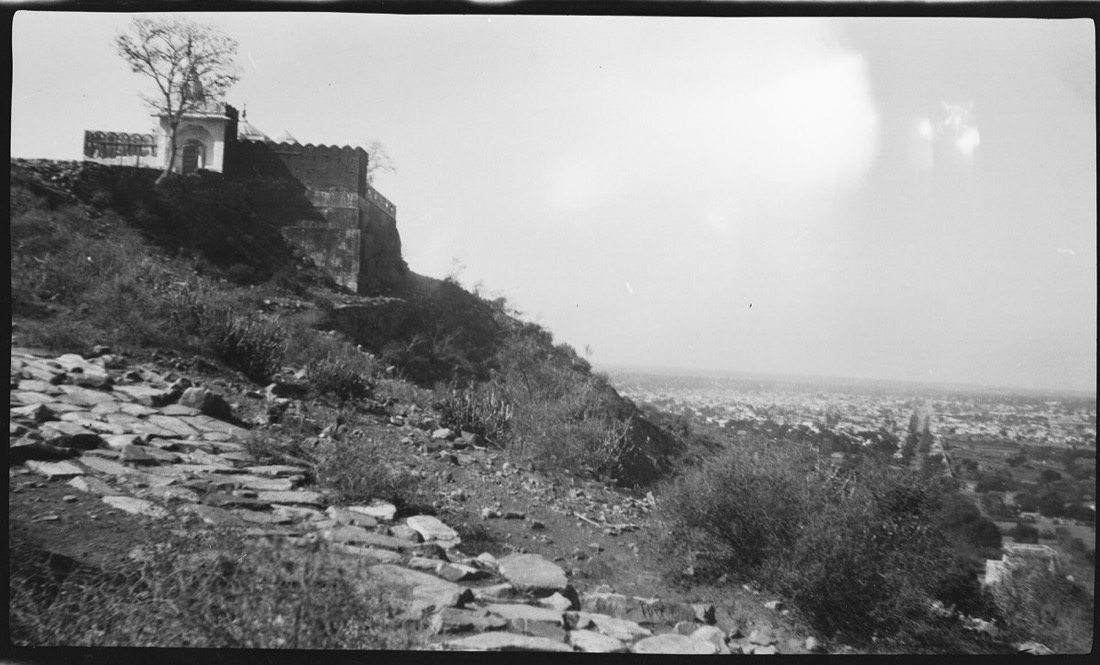
The study places the Sun temple's terrace exactly on the crest line joining Galta Gate in the east to Chand Pol Gate in the west. The layout, it says, was controlled in part by high points on the surrounding hills. Ganesh Mandir marks the north, the Surya Mandir the east and Balanandji's temple the west.
That is an architect's reading of measured plans, not a recorded design statement. Put beside the procession, the argument makes one picture: a city planned towards an eastern ridge. On the day marked as his birth, the Sun comes down from that ridge.
On the footpath above Galtaji
ETV Bharat describes the shrine as lying on the footpath towards Galtaji. As of 12 November 2026, the pages cited here are what this article rests on. Opening hours, entry rules, dress and festival-day arrangements change, so the temple's own notices are the place to check them.
Questions people ask about Galta's Surya Mandir
Is the Surya Mandir the same as Galtaji?
No. Galtaji is the valley pilgrimage complex, with its holy water tanks and the Ramgopalji temple. The Surya Mandir is a separate small shrine on the ridge above, which Rajasthan's tourism page describes in its Galtaji entry. ETV Bharat places it on the footpath towards Galtaji.
Who built the Sun temple, and when?
No source read settles it. Rajasthan's tourism page credits Diwan Kriparam. Papillault dates the temple to around 1720. Bhagat links the Sun's image to an ashvamedha by Sawai Jai Singh II, and Patrika gives 1734 to 1735. None cites a foundation record, so early eighteenth century is the safest statement.
Does the Sun's image really travel through Jaipur?
Recent reports say so. Patrika described the Sun's chariot leaving the Galta shrine in January 2026. Tod described a Sun procession at Jaipur's court in the early nineteenth century, without naming the temple. Devotees keep it as the Sun's birth festival. No source read proves an unbroken yearly route.
When is the Sun's festival at the shrine?
The date shifts each year with the lunar calendar. Reports place Surya Saptami on the bright seventh of Magh, which falls in January or February. Tod puts Bhan Saptami two days after Vasant Panchami. Patrika reported the procession on 25 January 2026. The temple's own notices give each year's date.
A small shrine, a long procession
The Surya Mandir is small, but its story is not. A ridge was chosen as the eastern end of a city. In Tod's account, a court that claimed descent from Rama's son brought out a chariot of the Sun. Jaipur newspapers record the Sun's image going from the hill into the streets. The sources differ on who built the shrine and when. On the direction of travel, from the hill into Jaipur, the recent reports agree.
Devam is gathering the stories of more than 1,000 temples, with bhajans, mantras, aartis and quizzes beside them. It is coming soon on Google Play and the App Store. If the Sun's journey down from Galta is the kind of story you want more of, you can join the waitlist.