Surya Mandir, Bundu: the Sun's chariot built as a temple
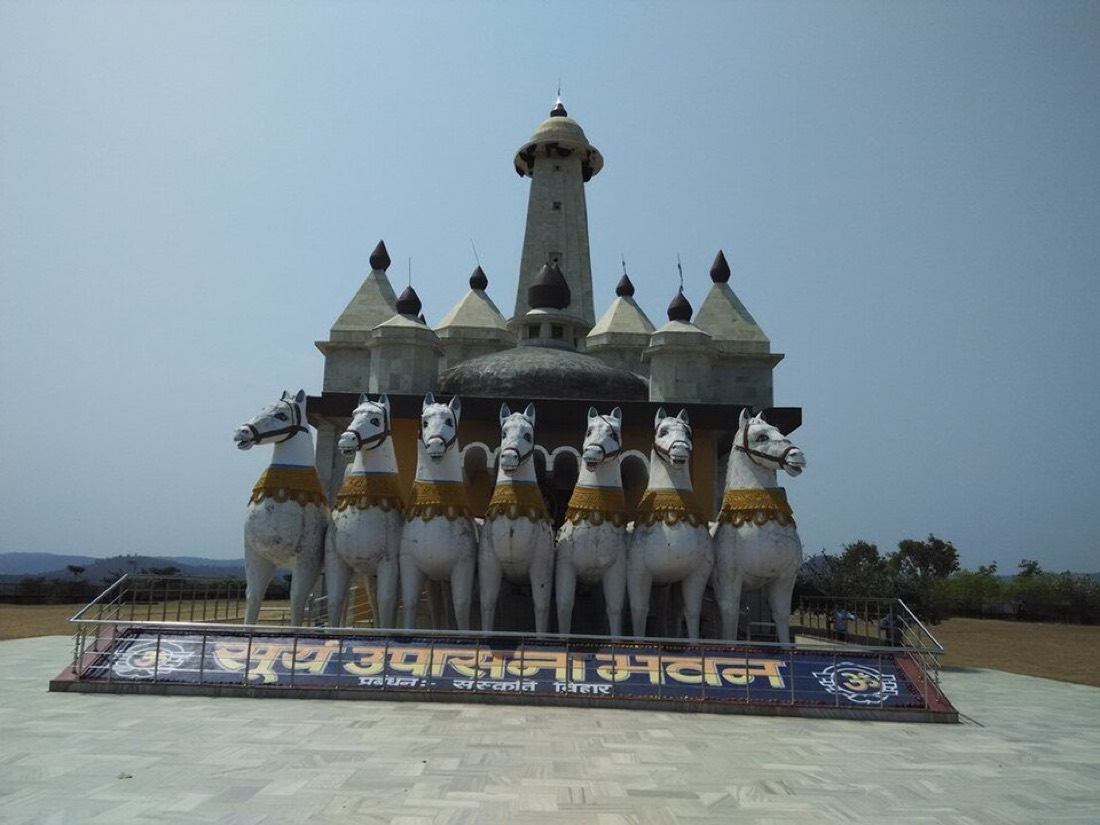
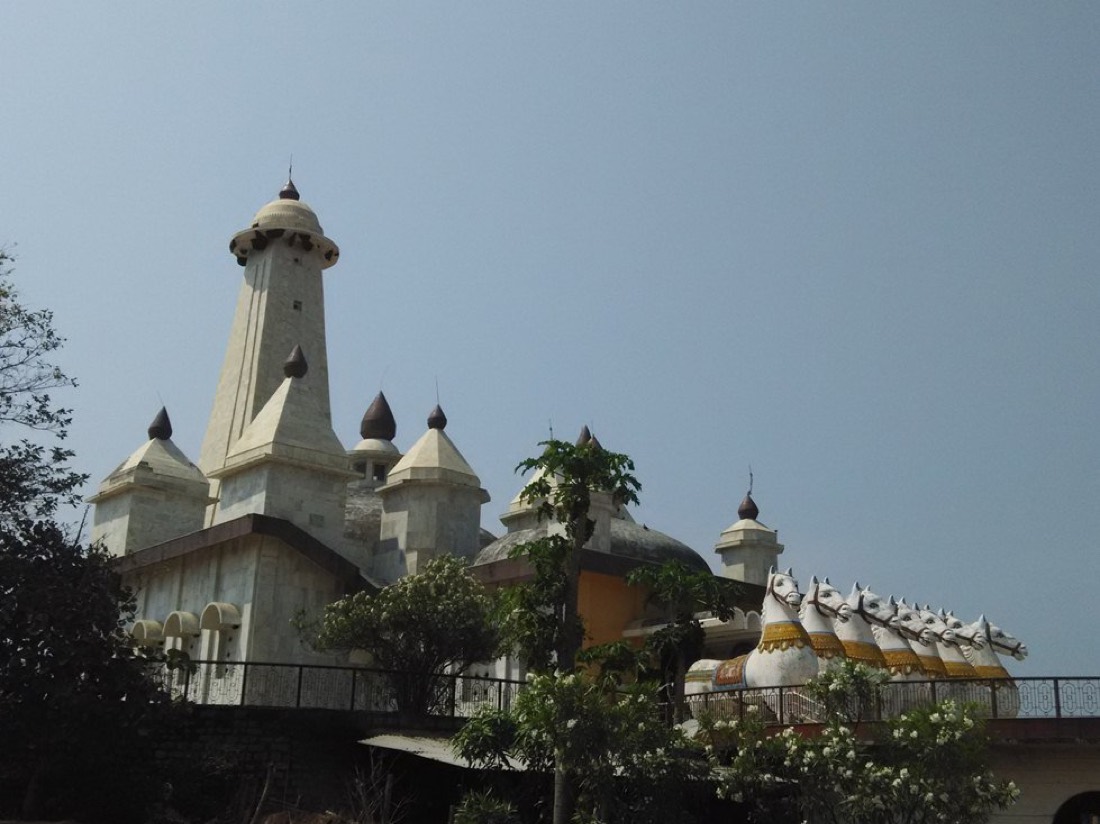
Seven white horses stand in a row at the front of a hilltop temple near Bundu, in Ranchi district, Jharkhand. Behind them rises a marble building with domes and a tall spire. Surya, the Sun God, is worshipped here, and the building itself is his chariot.
This is the Surya Mandir at Edalhatu village, on the Ranchi–Tata road. It has a statue of Hanuman facing the Sun, and a pond for Chhath, which is observed each year in the month of Kartik. The date follows the lunar calendar. The trust that built the temple, by one report, wanted prayer to sit beside medicine.
A chariot with its wheels fixed to the walls
The state tourism department describes a marble temple built as the Sun God on a chariot with 18 wheels and seven horses. Bundu.in counts nine wheels on each side.
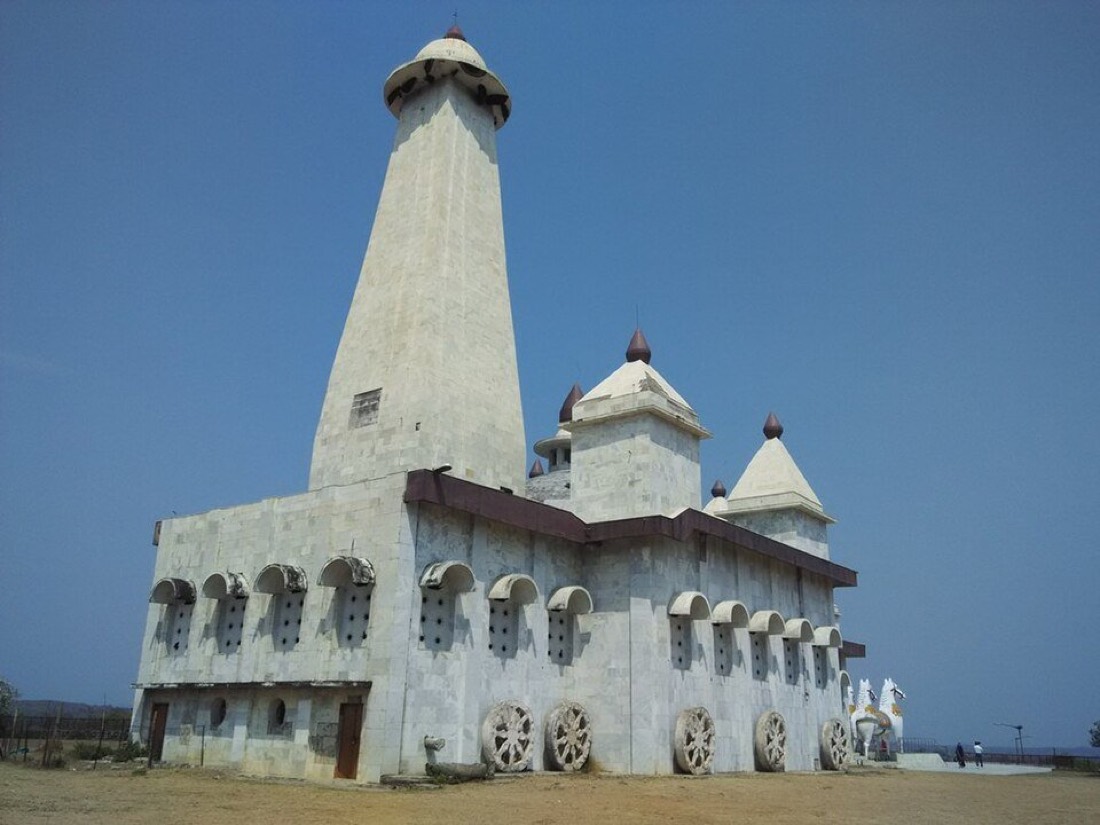
The horses stand at the front and look lifelike enough to seem about to set off. The wheels are set along the walls, so the building goes nowhere. From the side, it still reads as a long vehicle. From the front, the horses lead the eye up to the domes and the spire.
ETV Bharat says the chariot has its charioteer too. It reports that the seven horses are said to stand for the seven colours of the rainbow and the seven days of the week. Local writers, the tourism page notes, have called the temple a poem written in stone.
Hanuman at the door, facing the Sun
In front of the main doorway, a statue of Hanuman stands facing Surya. ETV Bharat gives the local explanation. Hanuman asked the Sun God to teach him. Surya replied that he is always moving and cannot stay still for a lesson. Hanuman answered that he would keep moving in front of him.
The statue remembers that answer, and the report reads it as a picture of teacher and student.
The Valmiki Ramayana has a related passage. In the Uttara Kanda, in Hari Prasad Shastri's English translation, Hanuman goes to the Sun-god to learn grammar. He travels with the Sun from the mountain where it rises to the mountain where it sets. He carries a large book of the sutras and their commentaries. He becomes a scholar whom none equals in the Shastras. The temple's account and the epic's passage are separate tellings, and they differ in detail.
Both leave the same picture: a student who keeps pace with a teacher who cannot stop.
Devam is bringing together stories like this one for more than 1,000 Indian temples, alongside bhajans, mantras, aartis and quizzes. The app is coming soon on the App Store and Google Play, and you can join the waitlist to hear when it arrives.
A trust, a roadside meeting and a hill
The temple is modern. Sanskriti Vihar, a Ranchi organisation, built it. Jagran reports that Swami Vasudevanand Saraswati laid the foundation stone on 24 October 1991. The prana pratishtha, the rite that invites the deity's presence into the image, followed on 10 July 1994, performed by Swami Vamdev Ji Maharaj.
Bundu.in tells how the land came. Sitaram Maroo, who led Sanskriti Vihar, was travelling towards Tata and stopped at a roadside dhaba. There Maroo met Pradhan Singh Munda, the landholder of Edalhatu. Munda said land could be given for a temple. Maroo called it a good idea and said arrangements would follow. A few days later, the land was given in the temple's name. Bundu.in puts it at 15 acres. This is local lore, and no land record was available to check it.
ETV Bharat gives a second kind of reason. It says Sanskriti Vihar began work against leprosy in the Panch Pargana region in 1986. The trust held that medicine alone was not enough and that faith could help too. The temple was built on that thinking, the report says. Hindustan reported in 2023 that Maroo saw the area as long affected by leprosy. The report's own headline makes a health claim for Sun worship; no source read tests it, and this article does not repeat it. These are the trust's beliefs as reported, not medical claims.
Devotees add an older layer. Local belief, reported by ETV Bharat and Hindustan, says Rama, Sita and Lakshmana stopped here during their exile. In that belief, Rama worshipped Surya at dawn, the Sun being his family's deity. That is a belief about the place, not a date for the building.
One caution on names. A different Sun shrine in Bundu block, at Heth Burhadih on the Kanchi river, is a separate place. Prabhat Khabar reported in 2025 that villagers there call it over a thousand years old.
Surya Sarovar, where Chhath gathers
Within the temple grounds is Surya Sarovar, the Sun's pond. In Chhath, fasting devotees stand at the water and offer arghya, a water offering, to the setting Sun at dusk and the rising Sun at dawn.
Hindustan reported on 11 November 2026 that preparations had begun at Surya Sarovar for both offerings. It added that thousands of fasting devotees, called vratis, had offered arghya there in 2025. ETV Bharat reported in 2025 that Sanskriti Vihar and the temple committee had made the arrangements for some 30 years. They include clean ghats, lighting, a fixed place and number for each vrati, and milk for the offering. A social worker quoted there said 1,500 to 2,000 families stay overnight in the grounds each year.
Hindustan's 2023 report adds that lodging, milk, tea and a night-time langar are provided free. Devotees also join the temple's morning and evening collective aarti after the offering.
Reaching the hill
- Place: Edalhatu, near Bundu, on the Ranchi–Tata road. Sources give 35 to 40 km from Ranchi, and Bundu.in puts the temple about a kilometre off the highway, on a small hill.
- Grounds: a pond and a dharmashala for pilgrims, according to Jharkhand Tourism.
- Fair: a Tusu fair follows Makar Sankranti, on 25 January by the state tourism page and on 25 and 26 January by Bundu.in.
- Timings, dress and rules: not given here. Check the temple committee's or Sanskriti Vihar's own notices before travelling.
As of 12 November 2026, these details match the sources linked in this article. Visiting arrangements can change.
Questions people ask about Surya Mandir, Bundu
How old is the Sun Temple at Edalhatu?
It is modern. Its foundation stone was laid on 24 October 1991, and the prana pratishtha was performed on 10 July 1994, according to Jagran and Bundu.in. The belief that Rama worshipped the Sun here is local tradition, not documented history. The separate Heth Burhadih shrine is described by villagers as much older.
Why is the temple shaped like a chariot?
Surya rides a chariot drawn by seven horses, and here the building shows that vehicle at a scale people can walk around. Jharkhand Tourism describes 18 wheels and seven horses. ETV Bharat reports that the horses are said to stand for the rainbow's seven colours and the seven days of the week.
Who built it, and why?
Sanskriti Vihar, a Ranchi organisation led by Sitaram Maroo, built it. Bundu.in tells of land offered by a local landholder, Pradhan Singh Munda. ETV Bharat says the trust, working against leprosy in the region from 1986, wanted faith alongside medicine. These are reported accounts, not checked records.
Is Chhath observed at the temple?
Yes. Hindustan reported on 11 November 2026 that preparations had begun for arghya at Surya Sarovar, within the temple grounds, for the setting and rising Sun. ETV Bharat reported in 2025 that Sanskriti Vihar and the committee had arranged the ghats, lighting, places and milk for some 30 years.
The chariot stays, the Sun moves
In the Hanuman story, the Sun cannot stand still, so the student walks in front of him. On the hill at Edalhatu, the arrangement is turned around. The chariot stands still, and people come to it. They come to the seven horses at the front, the statue facing Surya and the water at dusk and dawn.
Devam is bringing together stories of more than 1,000 Indian temples and of gods and goddesses, with bhajans, mantras, aartis and quizzes. It is coming soon on the App Store and Google Play. If a temple built from a trust's plan and a chariot's shape is your kind of story, join the waitlist.