Sun Temple, Borsad: a vermilion mark and a seven-horse chariot
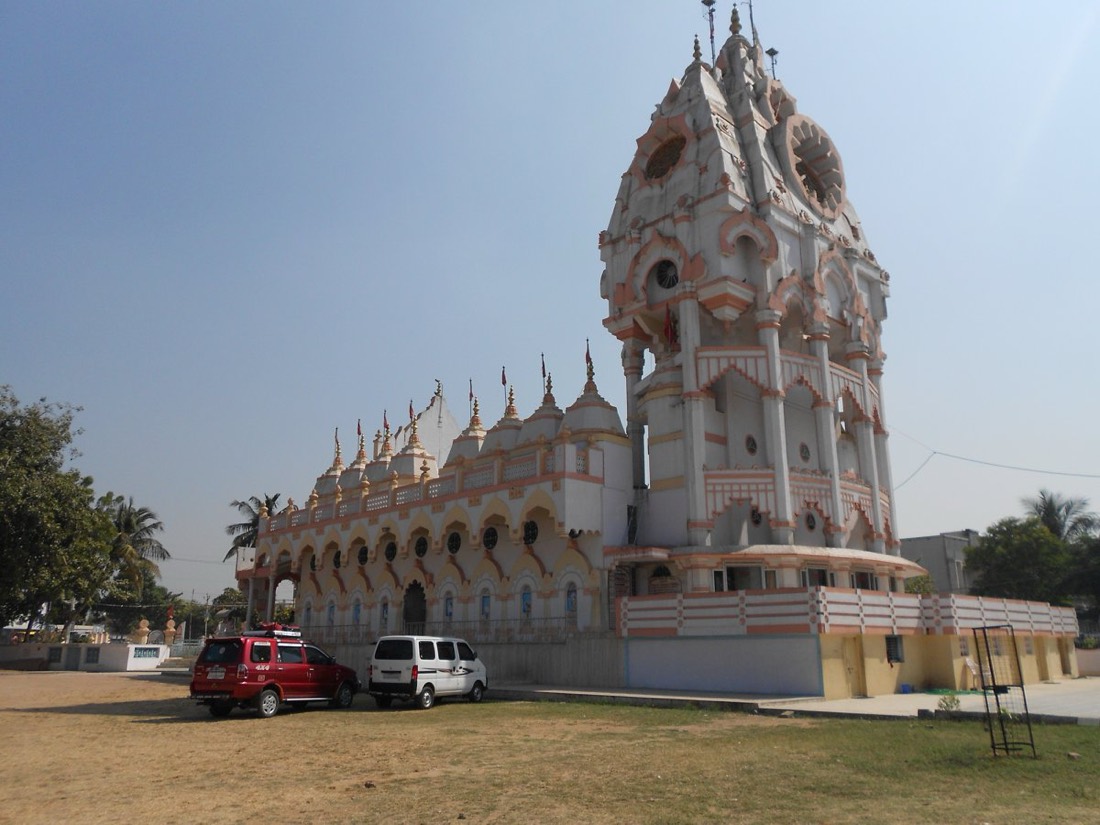
Borsad, a town in Gujarat's Anand district, has a temple to Surya Narayan, the Sun God, on the Tarapur–Vasad road. It is a community temple, not an ancient monument. Its website says it was built in 1974, after a sign that devotees say appeared in a family's home in 1972.
Two things reward a closer look: a founding story told three ways, and a chariot above the entrance whose seven horses are named for Vedic verse metres. This is not the Sun Temple at Modhera, the eleventh-century monument in Mehsana district.
Chhath, kept each year in the month of Kartik, is a four-day festival in which devotees fast and offer arghya, a water offering, to the setting Sun and then the rising Sun. Its dates follow the lunar calendar. Britannica notes that it is traditionally kept without images, temples or priests.
The temple's website does not mention Chhath on any page read. A directory of Anand district temples, Pilgrim Data Services, lists Chhath Puja among the Kartik observances here, with Sunday Surya puja, Makar Sankranti and Ratha Saptami. No source read describes how Chhath is kept at Borsad, so this article does not.
A vermilion mark in Navaran Society
The temple website's history page places the beginning in a house, not a shrine. In 1972, it says, Surya Narayan is said to have revealed himself through a five-month-old child who could not speak. The child's parents were there, at home in Navaran Society, Borsad. What appeared was a mark of kumkum, red vermilion.
The page says the sign inspired the family and the local community to build a temple in the Sun God's honour. The community rallied behind the idea, and a local architect and engineer designed and built it. The website dates the building to 1974 and the registration of a public charitable trust, at Nadiad, to 1977. The main shikhara, the temple's tower, rises roughly 121 feet.
That is the whole of the website's account. It does not say where on the child the mark appeared. A sign small enough for a child's skin, and a community that answered it.
One sign, three tellings
Other published accounts keep the sign and change the rest. A 2013 listing on Temple Travel says the Sun God spoke through the five-month-old, asking for a temple. The parents were astonished. Then the Sun God appeared as kumkum, gave darshan and disappeared.
The listing names the child's father as Ramanbhai M. Patel, an advocate. It says two Borsad residents were inspired to donate seven acres of land, and an architect and an engineer to prepare the plans. It dates the temple to 1972.
Pilgrim Data Services tells it differently. In its account, Patel took a five-month-old child to a local temple for darshan in 1972. There the Sun appeared as a round kumkum tilak on the child's forehead, and Patel heard clear words asking for a grand Sun temple on that spot.
A landowner offered the land unasked, villagers built the temple, and it was completed in 1986. The account adds that Patel lived on the temple premises for fourteen years and expanded the complex around 1993.
The tellings differ on where the sign came, a family's home or a local temple, and on whether the child spoke. They differ on dates too: 1972, 1974 or 1986 for the building. The sources read do not reconcile them and offer no independent record, so this article uses the temple website's dates. Read together, the tellings agree on the order: a sign first, then a temple.
Seven horses, seven metres
Above the entrance, Surya Narayan rides a chariot drawn by seven horses, flanked by a radiant sun disc. The history page calls it one of the temple's most recognisable images.
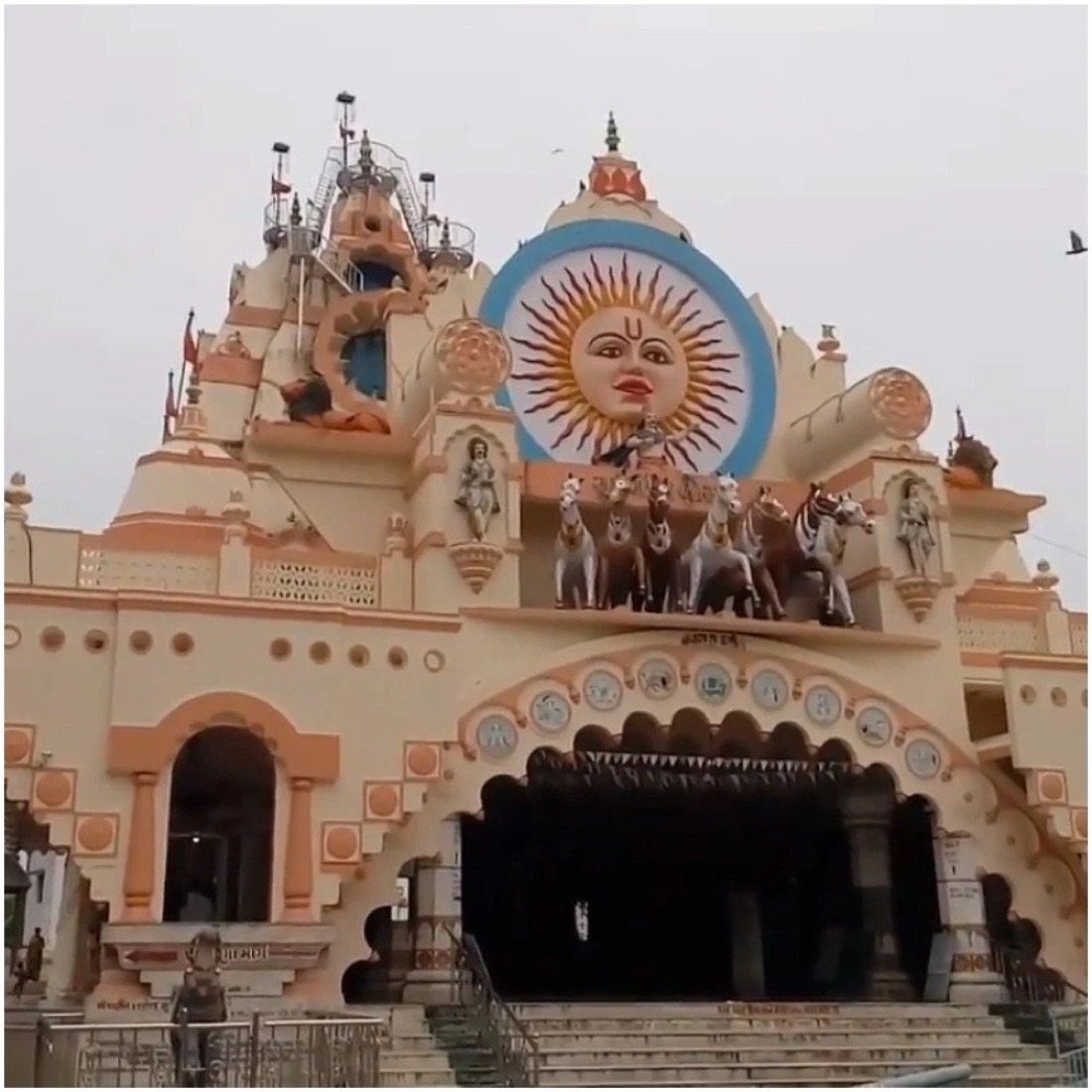
Pilgrim Data Services names the horses: Gayatri, Brihati, Ushnik, Jagati, Trishtubh, Anushtubh and Pankti. These are the seven metres of Vedic verse, the fixed patterns of syllables in which hymns are composed. The Vishnu Purana says the same of the sun's horses. In H. H. Wilson's 1840 translation, Book 2, chapter 8, they are "the metres of the Vedas".
In other words, the Sun's chariot is pulled by poetry. The first horse, Gayatri, shares its name with the Gayatri mantra. Britannica lists that mantra among the Vedic mantras honouring the Sun that remain important in Hindu practice.
Pilgrim Data Services adds that, seen from a distance, the whole temple resembles the Sun God's chariot. A large round sun disc sits just below the top of the tower. The same directory calls Ratha Saptami the temple's biggest festival. According to Wikipedia, the festival's name means "chariot-seventh"; it falls on the seventh day of the bright half of Magha, by the lunar calendar, and marks Surya's birthday.
A temple that traces itself to one small sign, with an entrance built around the Sun's chariot, is the kind of story Devam is collecting. Devam is bringing together stories of more than 1,000 Indian temples, and the app is coming soon on the App Store and Google Play. You can join the waitlist.
Shrines for many gods under one Sun
Inside, Surya Narayan is not alone. Pilgrim Data Services describes five sanctums. The central one holds Surya Narayan on his seven-horse chariot, with his consorts Sanjna and Chhaya beside him. The others hold Rama, Lakshmana and Sita; Shiva and Parvati, with a Shivalinga; Radha and Krishna; and Lakshmi and Narayana.
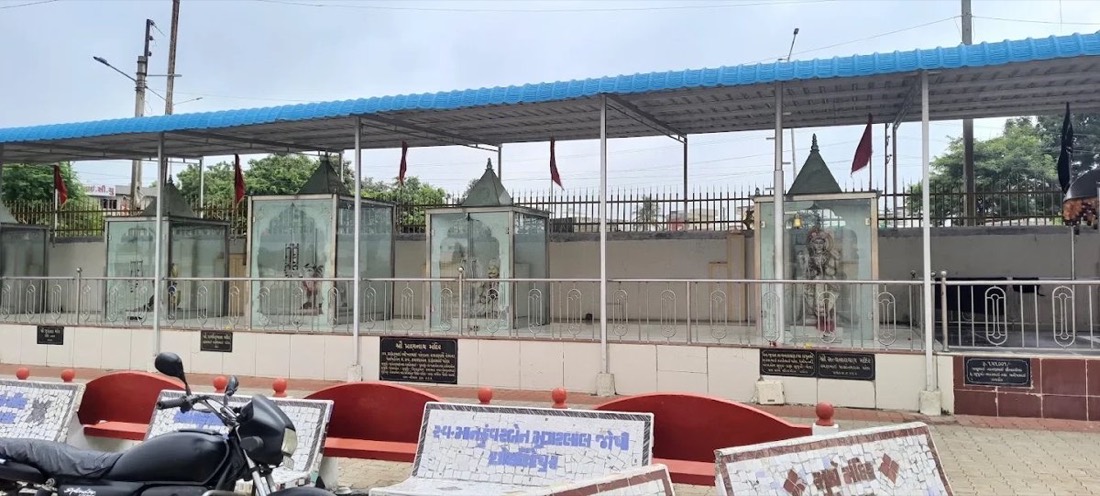
Smaller shrines line the side walls of the hall, according to the same directory. They hold figures such as Dattatreya, Sai Baba, the Buddha, Mahavir Swami and Jalaram Bapa. In the courtyard, facing the temple, a water basin is shaped like a Surya Yantra, a sacred diagram of the Sun.
Worship here comes with service. The website's seva page says the temple hosts about 50 yagyas (fire rituals) and 37 kathas (recitations of sacred texts) each year, including recitations of the Surya Purana. It also lists free meals for pilgrims and a guest house. These figures are the website's own, with no outside audit.
Finding the temple, and checking the details
The temple stands on the Tarapur–Vasad road (State Highway 6) in Borsad, about 18 km from Anand and 40 km from Vadodara, by the website's reckoning. The website lists five aartis a day, from Mangala in the morning to Shayan at night, and says timings may change on festival days. As of 12 November 2026, its timings page advises calling the temple before a special visit. For hours, rules and special-day changes, confirm with the temple.
Questions people ask about the Borsad Sun Temple
Is this the same as the Modhera Sun Temple?
No. The Borsad Sun Temple is a community temple in Anand district, which the temple's website says was built in 1974. Modhera's Sun Temple is a separate, eleventh-century monument in Mehsana district. The two are different sites, and this article covers only Borsad.
How old is the Borsad Sun Temple?
The 1972 sign is the temple's sacred account. The temple website's dates are 1974 for construction and 1977 for registration as a public charitable trust. Other published accounts give 1972 or 1986 for the building. The sources read do not reconcile these dates, and none is an independent record.
What are the seven horses at the entrance?
They are the horses of Surya's chariot. Pilgrim Data Services names them Gayatri, Brihati, Ushnik, Jagati, Trishtubh, Anushtubh and Pankti, the seven Vedic metres. The Vishnu Purana, in Wilson's 1840 translation, also calls the sun's seven horses the metres of the Vedas.
Is Chhath observed at the Borsad Sun Temple?
One directory, Pilgrim Data Services, lists Chhath Puja among the temple's observances in the month of Kartik. The temple's website does not mention it, and no source read describes how it is kept there. Chhath follows the lunar calendar, so ask the temple about any arrangements.
A sign first, then the chariot
Borsad's Sun Temple keeps its order in plain view. First came a small sign in a family's life, then a community's answer, then a chariot over the door pulled by the metres of the Vedas. The tellings differ on the details, but each ends in a temple.
Devam is coming soon on the App Store and Google Play, gathering the stories of more than 1,000 Indian temples and their gods and goddesses. If you would like more tellings like this one, add your name to the waitlist.