Srikalahasti Temple: named for a spider, a snake and an elephant
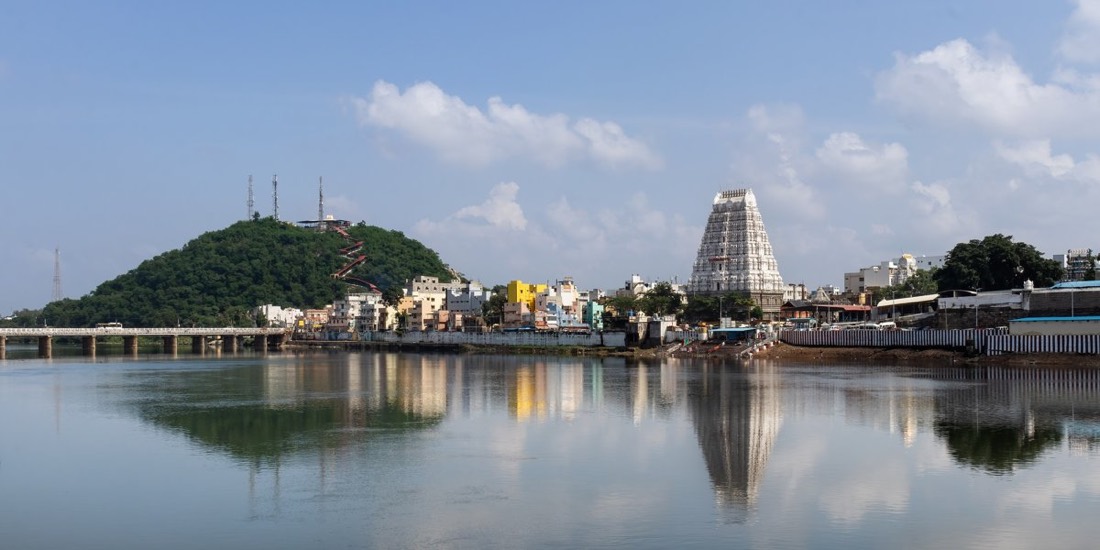
Srikalahasti, a town in Tirupati district, Andhra Pradesh, is named after three animals. The district's tourism page says the name joins Sri, a spider, Kala, a snake, and Hasti, an elephant, who worshipped Shiva here and reached salvation. The temple beside the Swarnamukhi River honours him as Kalahasteeswara, with the goddess Gnanaprasunambika, a form of Parvati.
Two stories explain why the place is remembered. In the first, three creatures each bring Shiva a gift and then quarrel over them. In the second, a hunter arrives with tasted meat, flowers in his hair and water in his mouth.
Three creatures, three kinds of worship
The temple's own website tells the spider's part first, in the age called Krita Yuga. The spider weaves a web into the shape of a small shrine around the linga, the simple rounded form in which Shiva is worshipped. Shiva tests it by letting a lamp burn the web. The spider tries to swallow the lamp. Shiva appears and offers a boon. The spider asks never to be born again, and Shiva takes it into himself.
Ages later, a snake brings gems from the underworld and adorns the linga each day. An elephant arrives, bathes the linga with river water carried in its trunk, throws the gems aside and offers bilva leaves and flowers. Next day the snake clears the flowers and puts its gems back. The quarrel turns deadly. The snake enters the elephant's trunk and dies. The elephant strikes its head and trunk against the linga and dies too.
The same page says the linga's form remembers all three: a five-hooded snake at the front, elephant tusks above, a spider at the base.
The site's Deities page tells it differently. There the three worship at the same time. The elephant takes the spider's web for dirt and washes it away, the spider is crushed in the fight, and Shiva grants liberation to all three.
In either, nobody is wrong to love Shiva. Weaving, adorning and bathing are all worship. The trouble starts when the snake and the elephant cannot recognise it in each other.
If a temple name that hides a story is your kind of discovery, Devam is bringing together stories of more than 1,000 Indian temples, with bhajans, mantras, aartis and quizzes. It is coming soon on the App Store and Google Play, and you can join the waitlist.
The hunter who worried that Shiva was alone
The second story comes from the Periyapuranam, the Tamil poet Cekkilar's twelfth-century chronicle of Shiva's sixty-three Nayanar saints. In its Kannappa chapter the hunter is Thinnan; Kannappa is the name Shiva gives him at the end.
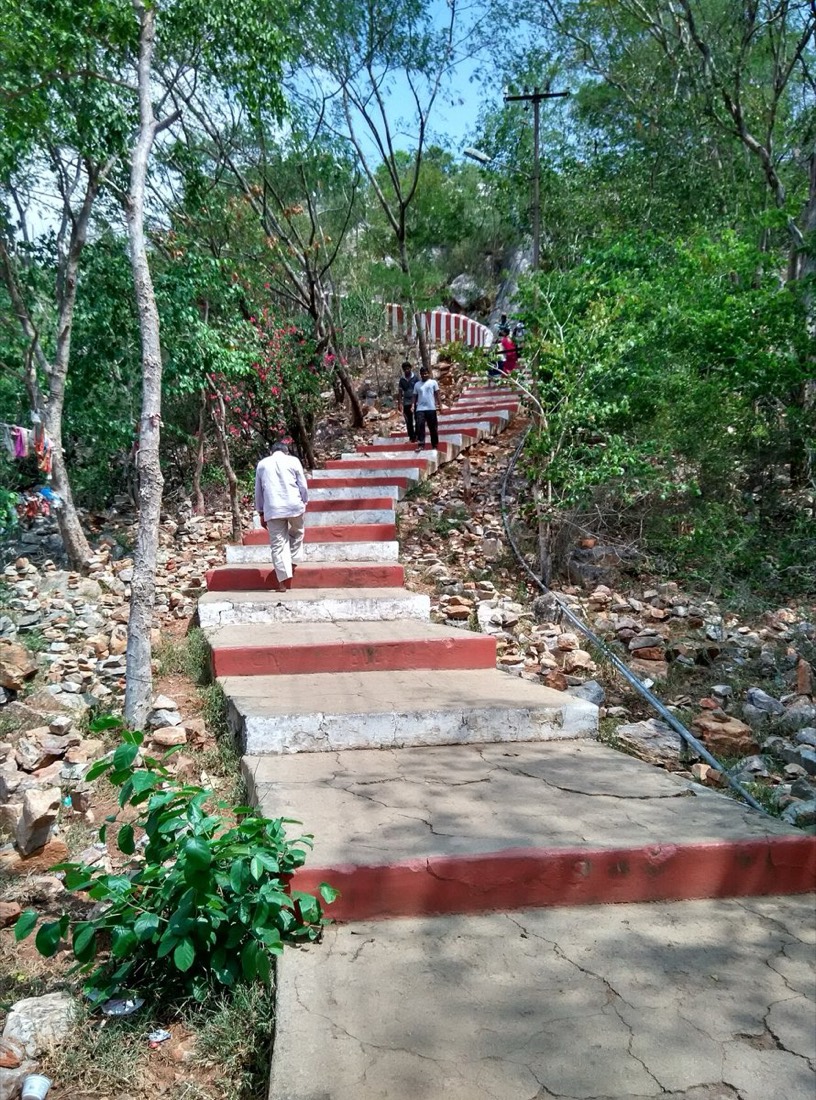
Thinnan is chasing a boar with two companions, Nanan and Kadan. After the kill they are tired and thirsty. Nanan points to the Ponmukali river, which sources match with the Swarnamukhi, and says Shiva lives on the hill beyond it. Kadan stays behind to roast the meat. Thinnan and Nanan climb to the shrine on Tirukkalatti hill.
Thinnan embraces the deity and begins to worry. Shiva is alone on a hill full of wild animals. Who looks after him? Then he notices leaves, flowers and water already left at the shrine. Nanan says a Brahmin priest must come here. So Thinnan decides to bring an offering of his own.
He roasts the meat and tastes each piece, so that Shiva gets only the best. His hands are full of bow and food, so he carries flowers in his hair and water in his mouth. At the shrine he pushes the old flowers aside with his foot, pours the water over the deity's head, adds his flowers and sets down the meat.
The priest arrives to find meat, bones and a shrine he considers defiled. He cleans it and appeals to Shiva. In a dream Shiva tells him not to take this hunter for a merely rough man, and to hide and watch.
The priest watches. One of Shiva's eyes begins to bleed. Thinnan looks for whoever hurt him, then searches the forest for healing herbs. Nothing stops the bleeding. So he takes out his own eye and offers it. The bleeding stops, and Thinnan is overjoyed.
Then the other eye bleeds. Thinnan prepares to give his second eye as well. Once blind he could not find the wound, so he rests his foot against it as a marker. Shiva catches his hand before he finishes, calls him Kannappa and gives him a place at his right. The priest sees it all.
The priest knew the correct way to worship. The hunter knew only how to care, and Shiva asks the priest to watch it. Retellings differ: the temple's own website has Thinnan complete both offerings, after which Shiva restores his sight. The version here follows the Tamil text. It is sacred literature told as devotion, not a practice to copy.
A flag for the hunter
The temple's annual Maha Shivaratri Brahmotsavam follows the lunar calendar. In 2026, according to Andhra Jyothy's Telugu report of 11 February, its opening ceremony on the evening of 10 February belonged to Kannappa. His adorned festival image was carried up the hill after worship. A white flag and a flower garland were raised there.
The image then returned to a resting pavilion on Sannidhi Street. Sponsors from the Boya community offered cloth and food, and a procession went round the four streets that circle the temple. The report links this first honour to Shiva's blessing of Kannappa. So the festival opens with the man who first worried that Shiva was alone.
Air, and a lamp that keeps moving
Srikalahasti is counted among the Pancha Bhuta Sthalams, five Shiva temples linked with the five elements. Incredible India says that here the element is air and Shiva is worshipped as the Vayu Linga. A heritage site published by the C.P.R. Environmental Education Centre describes a lamp in the sanctum whose flame wavers day and night though there is no wind. It presents this as a sign of Vayu's presence. None of the sources read for this article reports a measurement, so it stands as devotees' belief.
The Incredible India page also calls the temple a Rahu-Ketu kshetra. Devotees perform abhishekam there in the belief that it lessens the influence of those two planets in astrology.
An old shrine, a rebuilt tower
The same tourism page credits Chola rulers with the main structure and Vijayanagara rulers with the great tower, and mentions Chola-era engravings inside. It also gives a fifth-century origin without naming evidence, so that date belongs to tradition, not measured history.
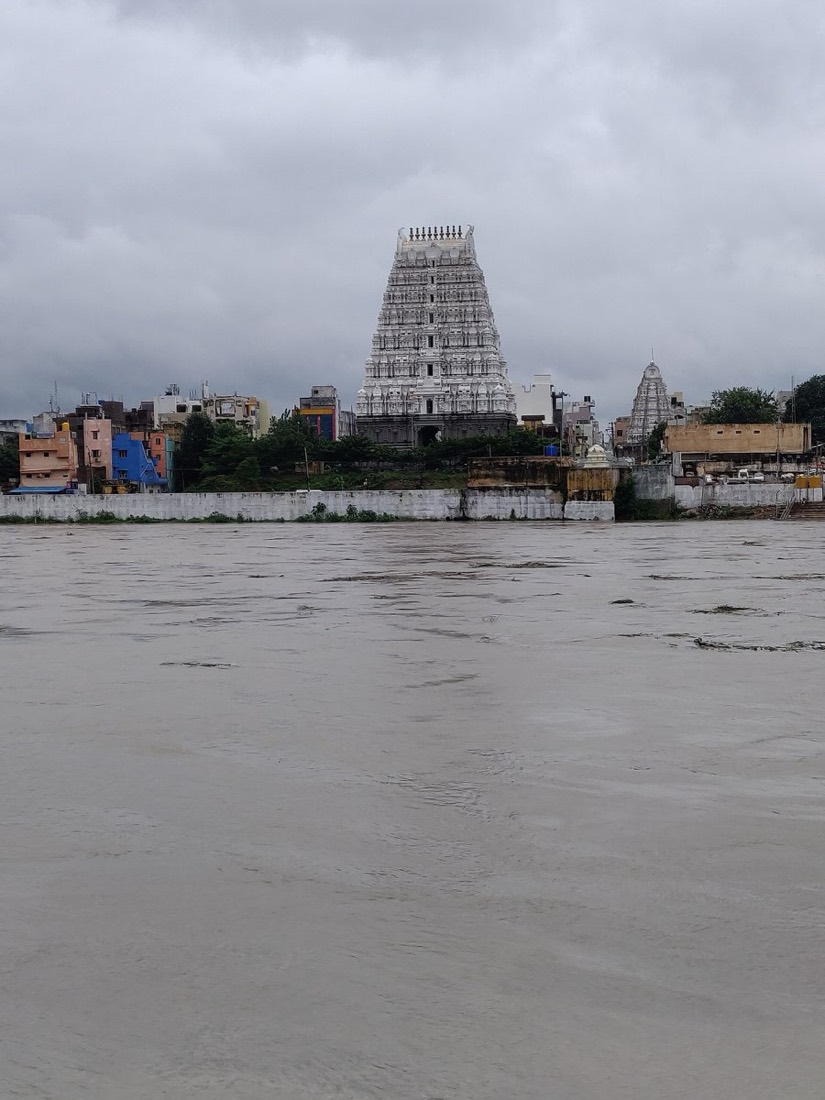
The tall white tower beside the river is a reconstruction. The earlier Rajagopuram collapsed in May 2010, after a crack that had widened for about 25 years, according to a report from The Hindu republished by Hinduism Today. Accounts differ on whether it dated from the fifteenth or sixteenth century. A new tower opened in January 2017.
Reaching Srikalahasti, and who sets the rules
Srikalahasti is in Tirupati district, and the tourism page lists Tirupati as the nearest railway station and airport. Timings, tickets, special pujas, dress and queue rules are set by the Devasthanam, the temple's administering body, and can change. Its own website carries notices and links to a booking portal. As of 10 November 2026, that site listed online booking for darshan and sevas and a daily Rahu-Ketu puja.
Questions people ask about Srikalahasti
Why is the town called Srikalahasti?
By tradition, the name joins Sri, a spider, Kala, a snake, and Hasti, an elephant, three animals that worshipped Shiva here and reached salvation, according to the district tourism page. That is a devotional explanation, not a linguistic study of how the place-name developed.
Who is worshipped at Srikalahasti?
Shiva, as Kalahasteeswara, with the goddess Gnanaprasunambika. The temple is counted among the Pancha Bhuta Sthalams, five Shiva temples linked with the elements. Here the element is air, and Shiva is worshipped as the Vayu Linga, according to the government tourism page.
Who was Kannappa?
A hunter in Cekkilar's Periyapuranam, called Thinnan, who offered Shiva tasted meat, flowers from his hair and water from his mouth, then his own eye. Shiva stopped him before the second eye and named him Kannappa. It is sacred literature, not a documented biography.
Is the temple really from the fifth century?
That date comes from a tourism page that names no evidence for it. The same page mentions Chola-era engravings inside and credits Vijayanagara rulers with the great tower. The fifth-century origin remains tradition, and the present tower is a reconstruction opened in January 2017.
What Srikalahasti remembers
Srikalahasti remembers love that did not look the way anyone expected. A lamp burned the spider's web, the elephant washed away the snake's gems, and the priest cleaned the hunter's meat off the shrine. In each story, Shiva is the one who recognises it.
Stories like these, of more than 1,000 Indian temples and of gods and goddesses, are what Devam is bringing together. It is coming soon on Google Play and the App Store, and the waitlist is where to hear when it opens.