Sri Surya Pahar, Assam: the Sun hill said to be one linga short of Kashi
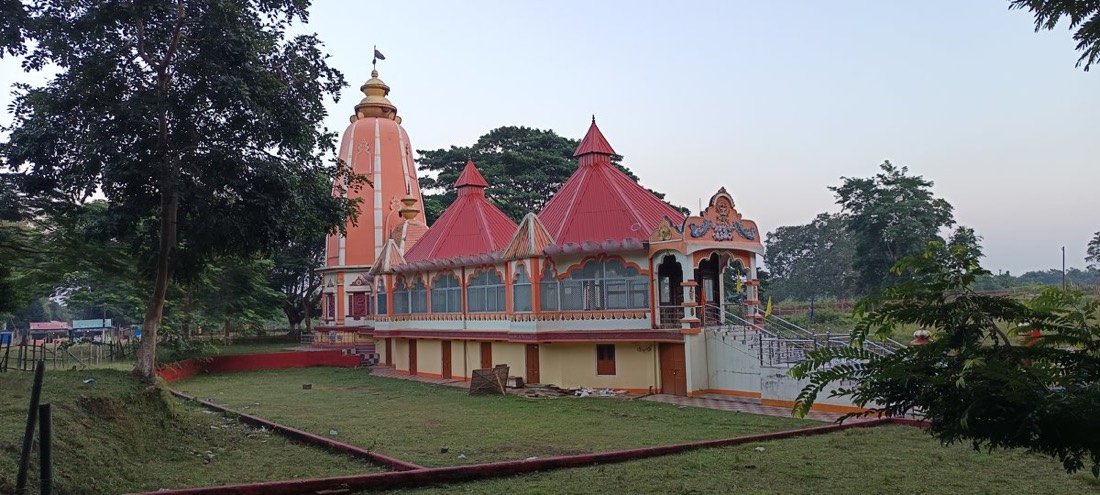
Near Goalpara in western Assam, seven peaks share one name: Sri Surya Pahar, the hill of the Sun. It is a sacred landscape, not a single building. A modern shrine to Surya sits within a complex that also holds rock-cut Shiva lingas, Buddhist stupas, Jain figures and the foundations of excavated temples. The Archaeological Survey of India (ASI) protects the site. This article follows three things the hill keeps: a carved ring of twelve suns, a temple found by accident, and a count of lingas that stops one short of a lakh.
A hill that took the Sun's name
The district administration says tradition traces the name to an image of Surya Devata, the Sun god.
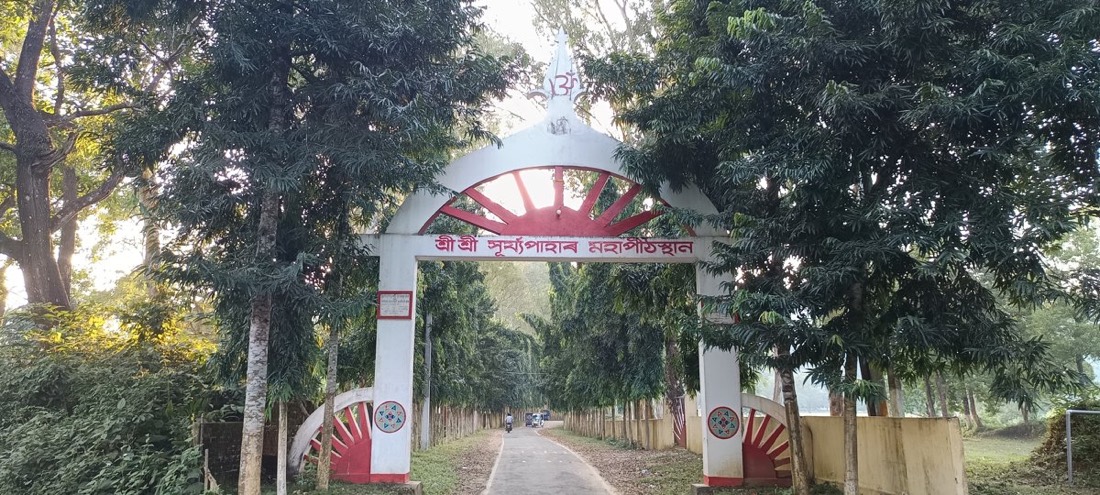
A text may stand behind that tradition. Wikipedia, citing a 1988 study by B. K. Baruah, says the Kalika Purana, an Assamese compilation of about the tenth century, mentions two seats of Sun worship in ancient Assam, and that this hill has been identified as one of them.
Chhath, kept each year in the month of Kartik, is the festival in which devotees offer arghya, an offering of water, to the setting and the rising Sun; its date follows the lunar calendar. The sources read for this article do not tie the temple to Chhath. The one festival the district page names here is Sri Sri Surya Mela, a three-day fair that it says begins on Maghi Purnima, the full moon of the month of Magha.
A trench dug for a new temple
One of the hill's temples came to light because people were building something new. An excavation report from the ASI's Indian Archaeology: A Review series, reproduced by InArchCenter, says local people were digging a trench for a new temple when they struck the sanctum floor of an older one beside an ancient tank.
From 1992–93 to 2000–01, the ASI excavated and uncovered two temple complexes, with finds from about the sixth to the twelfth century. One was brick. The other, near the tank, was a stone temple inside a four-sided brick enclosure, with four small shrines at its corners.
The stone temple's upper structure was gone, but its carved base survived to plinth level. Near one corner shrine lay a broken Ganesha. Near another was a small black basalt Mahishasuramardini, the goddess slaying the buffalo demon. The report dates the complex to about the ninth to twelfth centuries.
One thing did not turn up: the deity of the main shrine. The report says it was not found. It adds that a Vishnu image from the bed of the adjoining tank is kept in the Assam State Museum in Guwahati. What the diggers recovered was a place of worship with a complete plan and no image at its centre.
Twelve suns on a lotus
The carving most often linked to the hill's Sun worship is a round stone slab. A seated figure fills the centre. Around it, twelve lotus petals each hold a seated Aditya, one of the twelve solar deities. The names listed include Mitra, Varuna, Surya, Bhaga and Vishnu. Wikipedia, summarising ASI work, names the central figure as Prajapati. Live History India says Vishnu or Prajapati.
Some archaeologists think the slab was the detached ceiling of an older Surya temple. The ASI's 1997–98 report notes terracotta pieces that seem to be remains of such a temple, and says the slab was under worship near the site. Live History India and Wikipedia place it in a modern temple on the hill, the Sri Surya Mandir, where it is worshipped as Surya. One account reads the twelve Adityas as the twelve months.
So a stone that archaeologists think once roofed an older shrine is the focus of worship in a newer one.
Devam is coming soon on the App Store and Google Play, bringing together the stories of more than 1,000 Indian temples. If a ring of twelve suns makes you curious about other shrines, join the waitlist.
One linga short of Kashi
Another story belongs to Shiva. The district page records a popular belief that the hill holds one less than a lakh Shiva lingas. A lakh is 100,000, the number Live History India gives for Varanasi, also called Kashi. Falling one short, the page says, keeps the hill from claiming the name Kashidham, though it may be thought of as a second Kashi.
Live History India names the maker. Vyasa, it says, is popularly believed to have engraved 99,999 lingas on the hill because he wished to make a second Kashi.
A local account puts the stop in other hands. Vedanta Bharati published it in 2026 from local recitations. It says families across the region set up lingas after a period of fear and unrest, which it links to severe sacrificial practices. As the lingas multiplied, the account says, Adi Shankaracharya instructed that the count stop at 99,999, and a dream received by the community's spiritual leader confirmed it.
Neither version is a census. Live History India says there is no exact record, only several hundred lingas of all sizes dotting the hill. The number is devotion's arithmetic: a lakh would complete the claim, and one short leaves the hill reaching for Kashi without taking its name.
Three faiths on one slope
On the northern side, about 25 small votive stupas are cut from granite boulders, according to Live History India. Accounts based on the ASI's work place the earliest around the start of the Christian era.
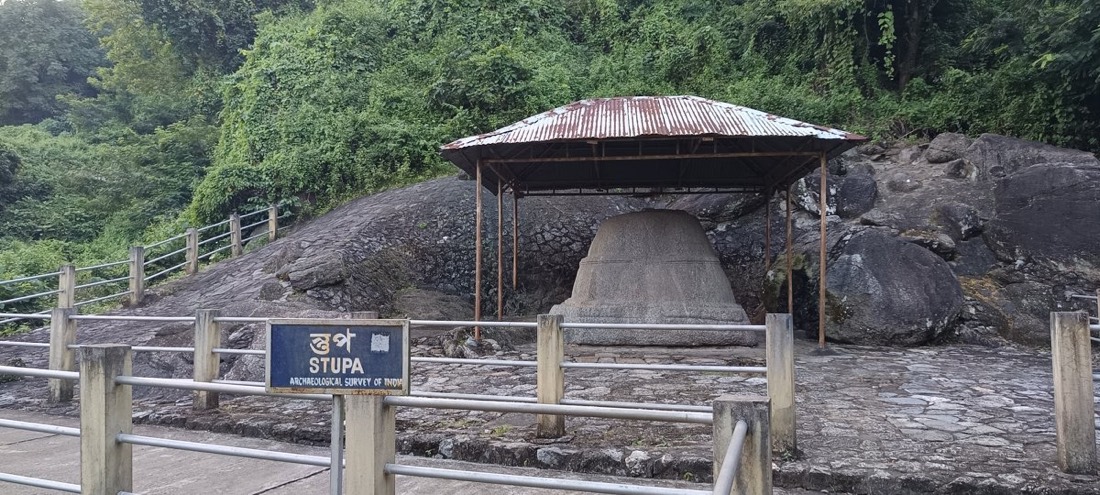
One boulder carries three stupas side by side. Readings differ: the Buddha, his teaching and his community of monks, or memorials to the Buddha.
On the southern slope, rock shelters hold Jain figures assigned to about the ninth century, including images linked to Rishabhanatha, the first Tirthankara, whose emblem is a bull. Live History India and Wikipedia both describe them as a rare Jain presence in the north-east.
Elsewhere on the hill, a twelve-armed figure stands under a seven-hooded canopy. The ASI report reproduced by InArchCenter reads it as Vishnu in his universal form. Some scholars see the snake goddess Manasa instead. The mound is locally called Dasabhuja, "ten-armed".
The district administration calls the hill perhaps the only site in the north-east where people and rulers of different faiths shared a common platform to worship their own gods.
Getting to the hill, and what to check first
The district administration places the hill about 13 km from Goalpara town. The ASI Guwahati Circle lists Dudhnoi as the nearest railway station, Goalpara as the bus station and Guwahati as the airport. Timings, any fees and the rules for protected remains are not given here because they change; the ASI and the district administration are the places to check. This account was checked against their pages on 12 November 2026.
Questions people ask about Sri Surya Pahar
Is Sri Surya Pahar a Sun temple?
Partly. It is named for the Sun, and a modern shrine to Surya on the hill is reported to hold a worshipped slab of twelve Adityas. But the site is wider than one temple: it also has Shiva lingas, Buddhist stupas, Jain figures and excavated foundations.
Does the count of 99,999 lingas come from history or belief?
Belief. The district page calls it popular belief, and the two tellings credit it to Vyasa or to Adi Shankaracharya's instruction. Live History India says there is no exact record, only several hundred lingas of all sizes on the hill. The figure is part of the story, not a measured count.
What did the excavations find?
Between 1992–93 and 2000–01 the ASI uncovered two temple complexes, one brick and one stone, with finds from about the sixth to twelfth century. The stone temple stood near an ancient tank, with four corner shrines. Its main deity was not found. Ganesha and Mahishasuramardini sculptures were.
When is the Surya fair held?
According to the district administration, Sri Sri Surya Mela begins each year on Maghi Purnima, the full moon of the month of Magha, and runs for three days. The date follows the lunar calendar, so it moves from year to year. Check the district or ASI notices for each year's dates.
The count that stays unfinished
The hill invites counting: seven peaks, twelve Adityas, three faiths, a lakh of lingas less one. None of it is tidy. The linga total is belief, the slab's origin is read with caution, and the ASI did not find the deity of the stone temple's main shrine. Yet a trench dug for something new struck an old sanctum, and reports describe worship of a ring of twelve suns.
Stories like this one, where a number or a stone carries the whole tale, are what Devam is gathering. It is coming soon on Google Play and the App Store, with the stories of more than 1,000 Indian temples. To hear when it opens, join the waitlist.