Ram Mandir, Ayodhya: a child's face and a beam of noon light
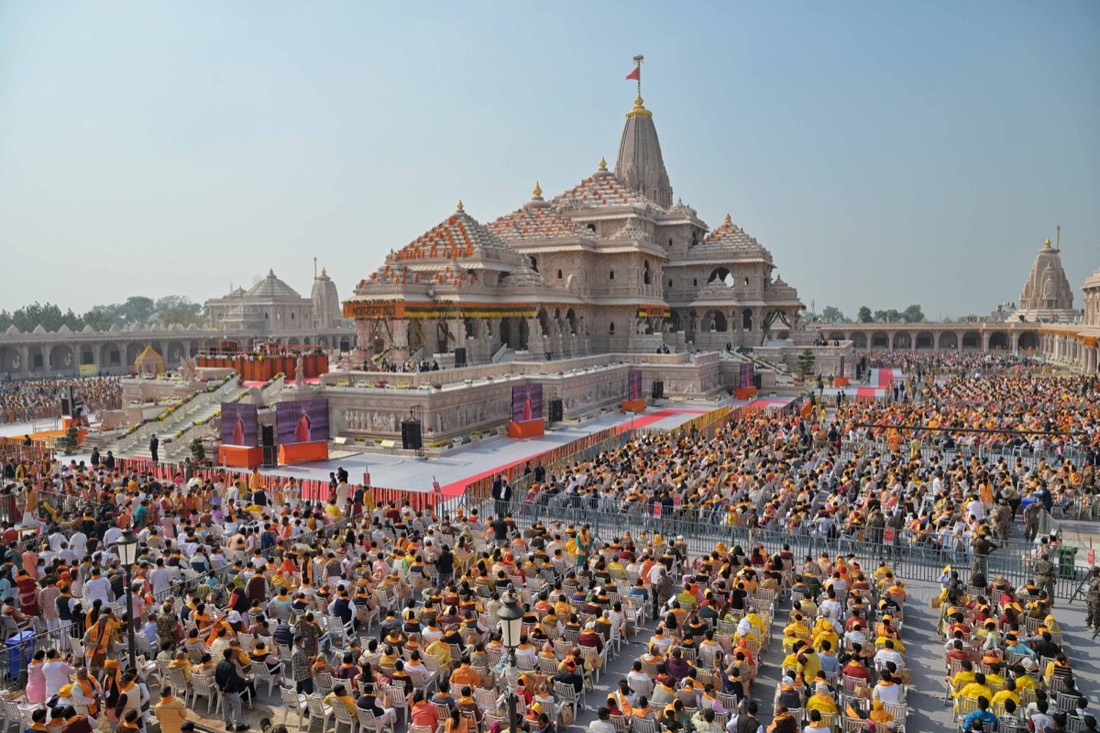
Inside the Shri Ram Janmabhoomi Mandir in Ayodhya, Uttar Pradesh, Rama is worshipped as Ram Lalla: a standing child of five, carved in dark stone. Devotees hold that the temple stands where Rama was born.
Two stories sit behind that image. One is about a sculptor who had to find the face of a five-year-old that could also hold a deity's presence, and who had to start again when the stone failed a test. The other is about the mirrors and lenses that send a beam of sunlight to the same forehead on Ram Navami.
A five-year-old, 51 inches tall, with a face still to find
The brief was precise. The temple's Trust asked three sculptors for a standing Ram Lalla, five years old and 51 inches tall. Arun Yogiraj, a sculptor from Mysuru, told The Indian Express that there are references for child Krishna but few descriptions of Rama's childhood. So Yogiraj went to watch children.
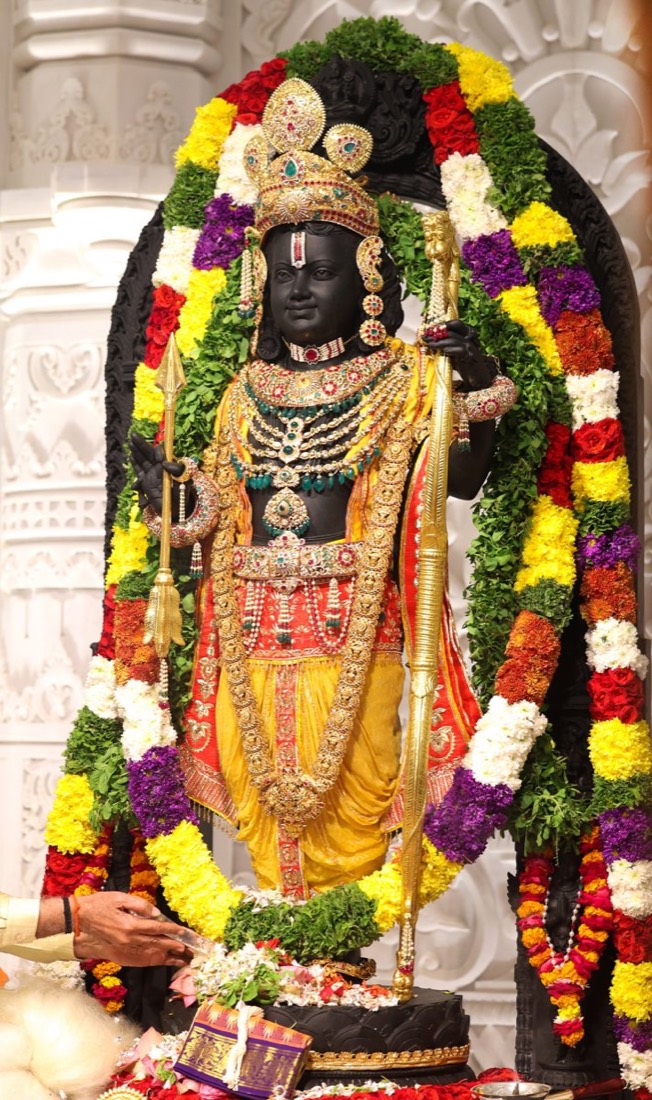
Yogiraj visited schools and Mysuru's Chinnara Mela, a children's event, to see how a five-year-old differs from a three- or four-year-old. About 1,200 photographs helped. The stone was Krishna Shila from H. D. Kote, chosen because, Yogiraj says, it does not react to the water and milk that devotees pour.
The harder problem was the face. In a later Hindi interview with Asianet News, Yogiraj said the image should not be too realistic. People had to be able to find Rama in it, so it could not simply be a portrait of a boy. The three sculptors lived and ate together, but their workshops stood about 500 metres apart and they did not discuss their designs. Unsure of the figure, Yogiraj began with the arch that stands behind it.
The stone that failed one test
Yogiraj says the first image was about 70 per cent finished when Nripendra Mishra, chairman of the Trust's construction committee, called Yogiraj to Delhi. Every stone had to pass several tests, and one of eight reports had come back negative. The news arrived at the end of August. In September, Yogiraj began a new image.
The account does not say which test failed, or what became of the first carving. It does show the decision: months of work had to give way to one test report.
The eyes had their own timetable. The Trust gave an auspicious hour, a muhurat, for netronmilana, the opening of the eyes, and Public TV reports that Yogiraj carved them with a silver hammer and a golden chisel. A photograph of small children dressed as Krishna for Janmashtami had given the idea for the face and eyes.
The same report says a tiny piece of stone pierced the cornea of one of the sculptor's eyes during the work. The Trust arranged hospital treatment, the fragment was removed, and the carving went on for about 15 days with one eye closed.
On 28 December, Yogiraj recalls, the image was unveiled for the trustees, who stood with folded hands. On 15 January 2024, Trust secretary Champat Rai announced the choice: 11 of the 15 trustees had picked this image over the other two, one in dark stone and one in white. Rai added that the older Ram Lalla image, worshipped for about 70 years, would stay in the sanctum beside the new one. The consecration followed on 22 January 2024.
Stories like this, where the making of a sacred image turns out to be as interesting as the image, are what Devam is gathering. Join the Devam waitlist; the app is coming soon on the App Store and Google Play.
Noon on a date that keeps moving
Ram Navami marks Rama's birth on the ninth day of the bright fortnight of Chaitra. In Tulsidas's Ramcharitmanas (Bala Kanda, around dohas 190 to 192), the birth comes at midday. Kausalya sees a four-armed divine form and asks for the form of a baby. The Lord becomes an infant and cries. Noon is also the hour of the temple's sunbeam.
The Surya Tilak, the sun's tilak, was first performed at 12 noon on 17 April 2024, according to the Press Information Bureau. The calendar was the problem. Ram Navami follows the lunar calendar, so its date shifts every year, and so does the sun's position. The Indian Institute of Astrophysics worked out the sun's position for Ram Navami across a 19-year cycle, after which the English-calendar date repeats, and designed the optics. CSIR-CBRI installed them. Optica of Bengaluru made them.
The system carries sunlight from the top of the temple down to the idol, planned to fall on the forehead for about six minutes. Someone must shift the first mirror by hand before each Ram Navami, and the mirrors and lenses can be reached for cleaning. Cloud or rain can stop the beam; the release says so plainly.
The first set-up, with four mirrors and two lenses, was fitted into a temple that was still unfinished. On 6 April 2025, CSIR-CBRI chief scientist S. K. Panigrahi told PTI that the ceremony came from the completed third floor, through a new optical design with two more lenses. On 27 March 2026, the Economic Times, citing ANI, reported the beam on the forehead at noon again.
The image stays put and the festival moves. So a mirror is turned by hand each year, and the sky still has the last word.
An old belief, a new building
Devotees identify this ground as Rama's birthplace. That identification is a matter of faith; the building is modern. A foundation-laying ceremony took place on 5 August 2020, and Ram Lalla was consecrated on 22 January 2024.
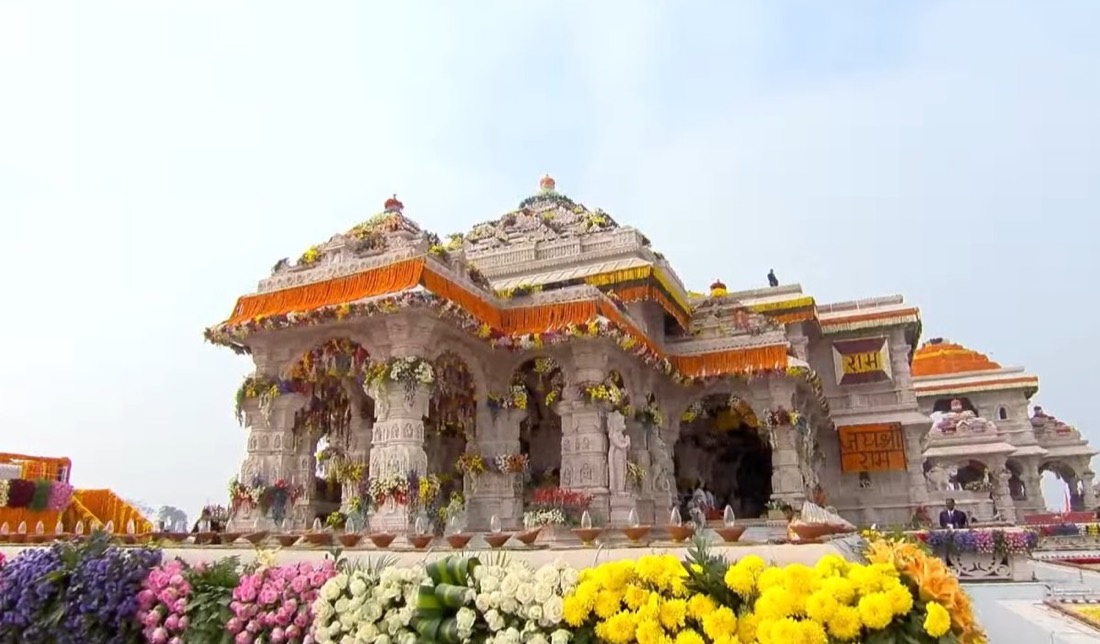
The site was also the subject of a long legal dispute. On 9 November 2019, the Supreme Court of India decided the title suit. As the Supreme Court Observer summarises it, the Court awarded title to the site to the deity, directed the Union government to frame a scheme for a trust to oversee construction of the temple, and allotted five acres elsewhere in Ayodhya to the Sunni Central Waqf Board for a mosque. Summaries of the judgment add that the Court called the placing of idols in 1949 and the mosque's demolition in 1992 unlawful. The ruling settled title to land.
Reading the temple's own notices
The Shri Ram Janmabhoomi Teerth Kshetra Trust administers the temple, and timings, passes and rules are its to set and change. As of 10 November 2026, its official website lists darshan slots through the day and three daily aartis: Mangal, Shringar and Shayan. Check there before travelling. The Surya Tilak depends on Ram Navami's lunar date and on the weather, so any plan around it should too.
Questions people ask about Ram Mandir
Who is Ram Lalla at the Ayodhya temple?
Ram Lalla is Rama as a child. The main image in the sanctum is a standing five-year-old, 51 inches tall, carved in dark Krishna Shila stone by Arun Yogiraj and consecrated on 22 January 2024. Trust secretary Champat Rai said an older Ram Lalla image, worshipped for about 70 years, stays beside it.
Is the Ram Mandir in Ayodhya an ancient building?
No. The building is modern: its foundation ceremony was on 5 August 2020 and Ram Lalla was consecrated on 22 January 2024. Devotees believe the site is Rama's birthplace, which is a matter of faith rather than documented building history. The Supreme Court's 2019 judgment decided title to the land.
When is the Surya Tilak, and can weather stop it?
It is planned for noon on Ram Navami, which follows the lunar calendar, so the English-calendar date changes each year. The designers' release states that cloud or rain can prevent it, and the first mirror is shifted by hand every year. It was reported on 17 April 2024, 6 April 2025 and 27 March 2026.
What happened to the first image Yogiraj carved?
Yogiraj says it was about 70 per cent finished when one of eight stone-test reports came back negative, and a new image was begun in September. The account does not say which test failed or what became of the first carving, so neither can be stated here.
The face and the beam
Both stories end at one small place: a child's forehead in a sanctum. One began with schoolchildren in Mysuru and ended with a silver hammer. The other begins each year with a mirror turned by hand. Each depended on getting one thing exactly right, the shape of a face and the angle of the sun.
If the craft behind a sacred image and the astronomy behind a festival are the kind of detail you enjoy, Devam is bringing together stories of more than 1,000 Indian temples and of gods and goddesses, with bhajans, mantras, aartis and quizzes. It is coming soon to Google Play and the App Store, and you can join the waitlist here.