Pune's Dagdusheth Halwai Ganpati and the Three Idols Behind One Name
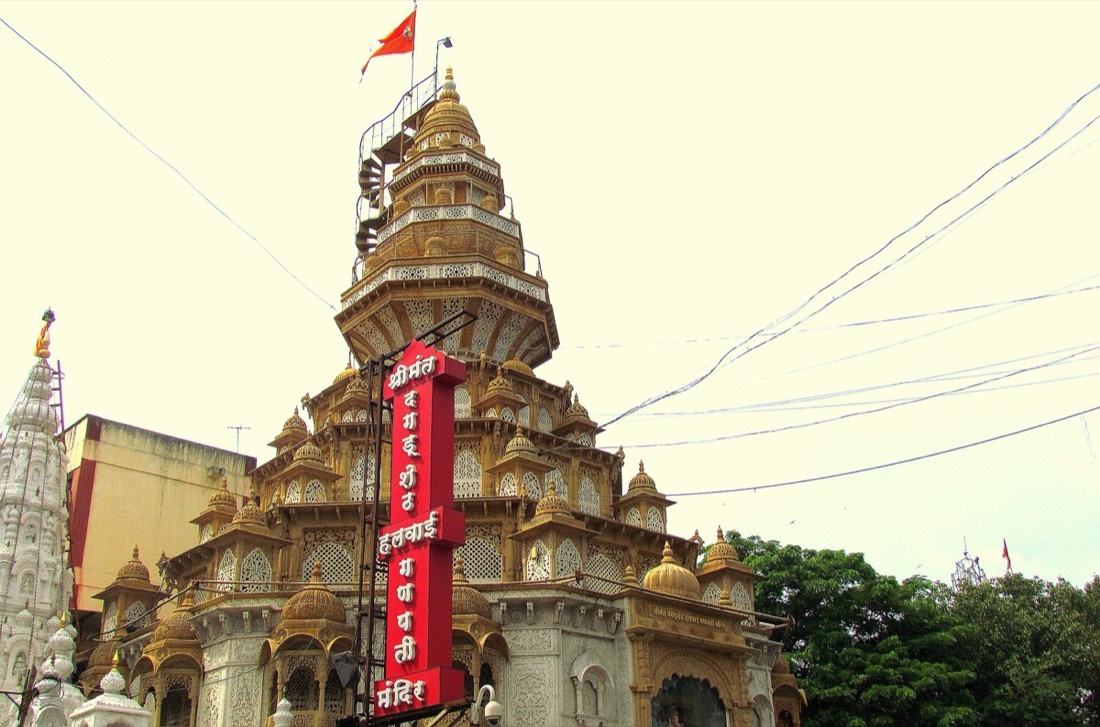
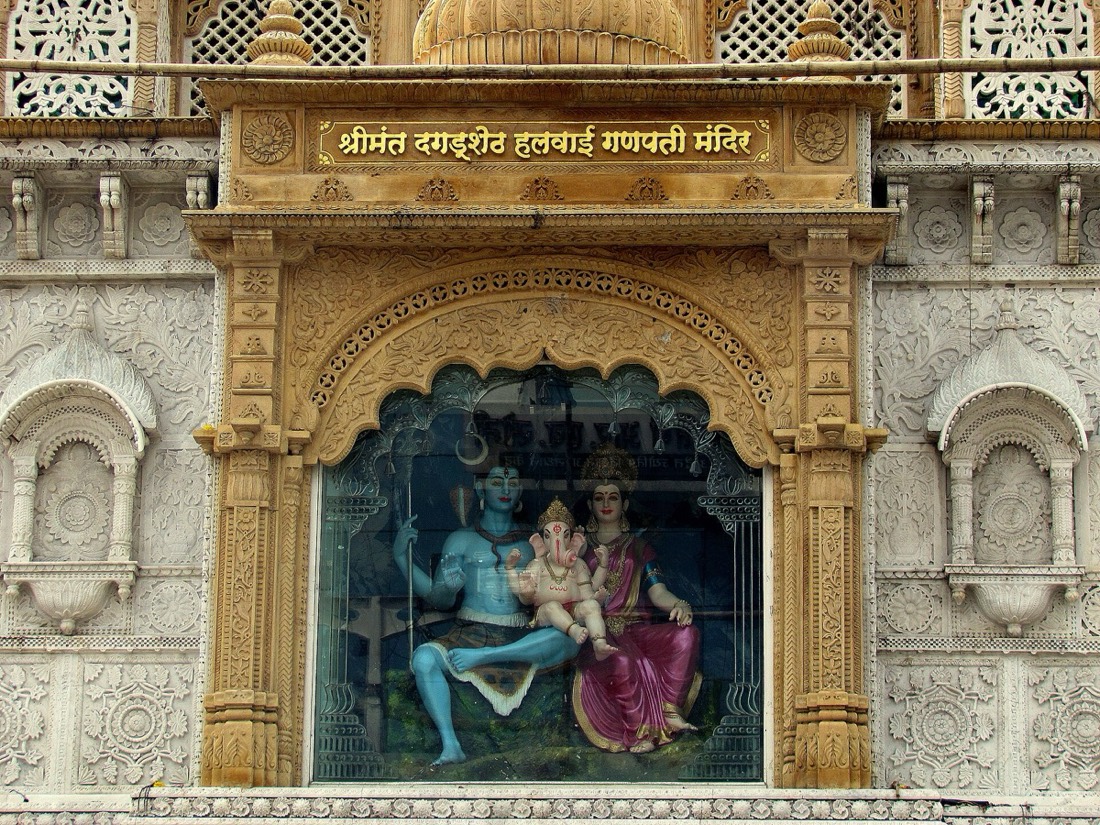
Three idols run through the story of the Shrimant Dagdusheth Halwai Ganpati Mandir, a Ganesha temple in Budhwar Peth, Pune, and the name on it today is a sweet-maker's. The present idol was drawn, modelled and made in 1967–68 by a sculptor from Karnataka, and consecrated on 27 August 1968. The two before it are said to be kept elsewhere in the city. The story runs from a festival beside a reservoir, through a plague year, to a sculptor who drew his Ganpati before he made it.
A sweet-maker's festival beside the Bahuli reservoir
The Indian Express's 2022 profile describes Dagdusheth Halwai as wrestler and merchant both. His father, Kisansheth Gadve, in that account an immigrant from Karnataka, sold sweets; halwai means sweet-maker. Dagdusheth trained as a mud wrestler under Jagobadada Vastad, then took over the business and rose in Pune's trade. The trust calls him the Nagarsheth of Pune, a title for the city's leading trader.
In 1893, the trust says, Bal Gangadhar Tilak called on people to celebrate Ganesh Chaturthi in public, and Dagdusheth took the lead. He began the festival at the Bahuli Haud, a reservoir near Kotwal Chawdi in the old city (trust FAQ). The first idol was made of paper pulp. A Marathi heritage article on Discover Maharashtra names its maker as Baburao Naik.
For decades the Ganpati went by its place, not its patron. It was Bahuli Haudacha Ganpati, the Ganpati of the Bahuli reservoir, and the Indian Express says the name lasted until the 1960s.
A plague year and a second idol
In 1896 plague reaches Pune. In the trust's history, Dagdusheth loses his son and, within a few months, dies himself. His widow, Lakshmibai, turns to the family's guru, Madhavnath Maharaj, who advises her to build a Datta temple in her husband's name. The same account has her commission a second Ganesha idol from the sculptor Naik.
In 1897, it says, the idol is handed to the young people of the neighbourhood so that they can carry the festival on. The trust's treasurer, Mahesh Suryavanshi, told the Indian Express in 2022 that the guru asked Lakshmibai to look after the new Datta idol and the existing Ganesha as her own children.
Accounts of the family itself differ. The trust's About page speaks of an only son, while the same treasurer told the Indian Express that Dagdusheth lost two sons. A descendant, Suresh Halwai, told the newspaper that the family came from Uttar Pradesh and not Karnataka, and that after two sons died Dagdusheth adopted his brother's son Govind; the paper reports both versions and settles neither.
The neighbourhood carries the festival
According to the Indian Express, an appointed neighbourhood committee, the Panch Mandal, kept the annual celebration going long after Lakshmibai's death. In 1952 a youth group, the Suvarnayug Tarun Mandal, took charge and grew it. The trust names Tatyasaheb Godse and his friends as the organisers from that year.
By 1967 the festival was nearing its 75th year, which the trust calls the Amrit Mahotsav. The second idol's arm had broken, the trust says, and the organisers were talking about a replacement.
The second idol was not discarded. The trust says it was carefully repaired and now stays at its child-care centre in Kondhwa, and a Sakal web feature from September 2026 says the same. The first idol has its own address, according to the heritage article: the Paranjape Ram Mandir at 245 Shukrawar Peth. The trust's history does not mention it.
If the people behind a temple's name interest you, Devam, coming soon on the App Store and Google Play, collects the stories of more than 1,000 Indian temples and of gods and goddesses. You can join the waitlist to hear when it opens.
A drawing, then a small model, then the idol
The fullest account of the making comes from the sculptor's own family. On 1 September 2025 the Marathi newspaper Sakal published Satish Jadhav's report, built on the recollections of Anand Shilpipandit, son of the late sculptor Nagalingacharya Shankarappacharya Shilpipandit. Other accounts spell the name differently. Nagalingacharya came from Hombal, in Karnataka's Gadag district, and later settled in Dharwad and Pune.
The order came in 1967, through his friend Dr Paranjpe of Sassoon Hospital. He did not start with the idol. He drew the Dagdusheth Ganpati first, and the mandal liked the drawing.
Then he made a small model and showed it. Only after that did the order for the full idol follow. The trust's history agrees that a trial model came first and that the commission followed its approval, and adds that he worked from a photograph of the old idol.
He made the idol in about a year at the family's studio, Anand Shilpakala Niketan, in Hadapsar. In the family's account the glass eyes were made and fitted by hand, the trunk carries carved ornament, and the idol is about four feet tall.
Five yantras went inside: Ganesh, Vishwakarma, Gayatri, Kubera and Mahalakshmi. A yantra is a consecrated diagram placed within an image. The trust's history speaks of the Ganesha yantra, placed, it says, during a solar eclipse at the Mula–Mutha confluence in Pune. The new idol was consecrated on 27 August 1968.
Clay or plaster, and which image is which
The sources part ways on a few details, and it is more useful to say so than to choose. The trust's Marathi FAQ describes the 1968 idol as made of shadu clay; Sakal calls it plaster of Paris. The trial model is about a foot high in the family's account and a metre on the trust's English page.
The trust dates the second idol to 1896, while the heritage article says the first idol stayed in public worship until 1901 and a replacement was being decided in 1902. None of the sources read for this article points to a material study, a workshop record or an archive that would settle these.
One more detail from the trust's FAQ bears on the question of which idol you are looking at. The FAQ calls the principal idol a chal murti, a movable image, because it is taken each year to the old Kotwal Chawdi for the festival. It adds that the temple was enlarged, which it dates to 2005, and given a kalash, or finial. Scripture, it says, required a fixed image beneath the kalash, so a silver idol was installed in the temple.
The FAQ does not say which image a visitor will see on a given day, especially during the festival. This article does not match the principal idol to any of the three above. That is for the temple to say.
What the trust's pages say about visiting
This temple, in Budhwar Peth, is not one of the eight Ashtavinayak shrines. This section rests on the trust's official site as it read on 3 November 2026; nothing was booked and no visit was made. The schedule page lists darshan from 05:30 to 23:00 and aartis through the day, while the home page gives 05:00 to 22:30, or 23:00 on Tuesdays, so confirm hours before you travel.
The portal also lists paid e-seva services and a Tatkal Darshan Pass. The e-seva page says a priest performs the daily Maha-Abhishek at the temple on the devotee's behalf. The pages read do not say whether any booking brings queue priority, sanctum entry or a place at a ritual, so treat each as a separate question.
The e-seva page asks those booking its services to wear Indian attire. The pages say nothing on photography or security, and a graphic about prohibited items on the schedule page could not be read, so ask the temple.
Questions people ask about Dagdusheth Ganpati
Which idol is worshipped at Dagdusheth Ganpati today?
The present idol was made by a Karnataka sculptor and consecrated on 27 August 1968, according to the trust and the sculptor's family. But the trust's FAQ calls the principal idol movable and says a silver idol was installed in the temple, so which image you see on a given day is for the temple to say.
Is Dagdusheth Ganpati an Ashtavinayak temple?
No. It is not one of the eight Ashtavinayak shrines. It is a Ganesha temple in Budhwar Peth, Pune, and the home of a public Ganeshotsav (Ganesh festival) mandal, run by the Shreemant Dagdusheth Halwai Ganpati Trust.
Who was Dagdusheth Halwai?
In the Indian Express's 2022 profile he is a sweet-maker's son, a mud wrestler and later a leading Pune trader, whom the trust calls the Nagarsheth of Pune. A descendant tells the family's origins differently, and the newspaper reports both versions without settling them.
The sculptor's son and the aarti
The name on the temple is a sweet-maker's, and the story of his family is still argued over. The youngest idol began with something plainer: a drawing that the festival's mandal liked.
Sakal reported in 2025 that during Ganeshotsav the sculptor's son Anand and his family are given the honour of worshipping that idol, and Anand the honour of the aarti. He continues his father's work.
Devam is coming soon on the App Store and Google Play, and it will pair its stories of temples, gods and goddesses with bhajans, mantras, aartis and quizzes. If you would like to know when it opens, sign up for the waitlist.