Modhera Sun Temple, Gujarat: the Sun's seat and its seven horses
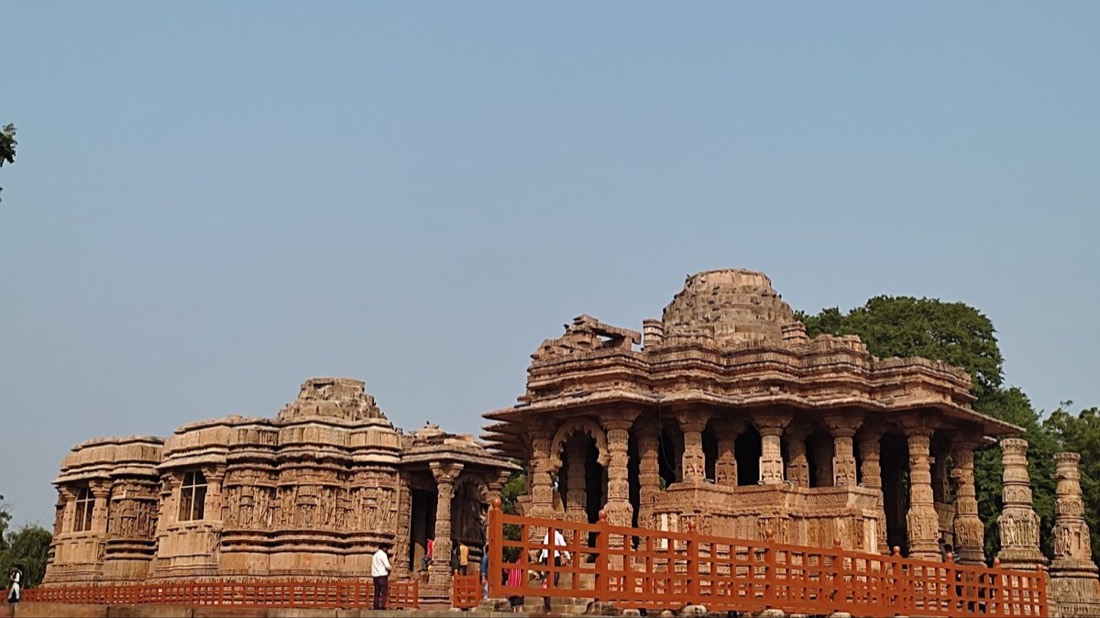
Modhera's Sun Temple, in Mehsana district, Gujarat, was built for Surya, the Sun God, and his main image does not survive. The sanctuary has no god in it. Yet a survey published in 1903 records what was found when the fallen stone was cleared. It was the seat where the image had stood, with seven horses carved along its front.
This blog walks the buildings in the order they stand, from the water to that seat, and shows how the temple still points to the god who left it.
Water first, and a legend about horses
The route to the Sun begins at a tank, the Surya Kund, also called Rama Kund. James Burgess and Henry Cousens, the authors of the 1903 survey, measured it at 176 feet by 120 feet. Its sides descend in terraces. Short flights of steps turn across them and meet at small landings, with little shrines and niches in between. Gujarat Tourism counts 108 shrines around the water. One, on the east side, holds Vishnu reposing on the serpent Shesha, the survey says.
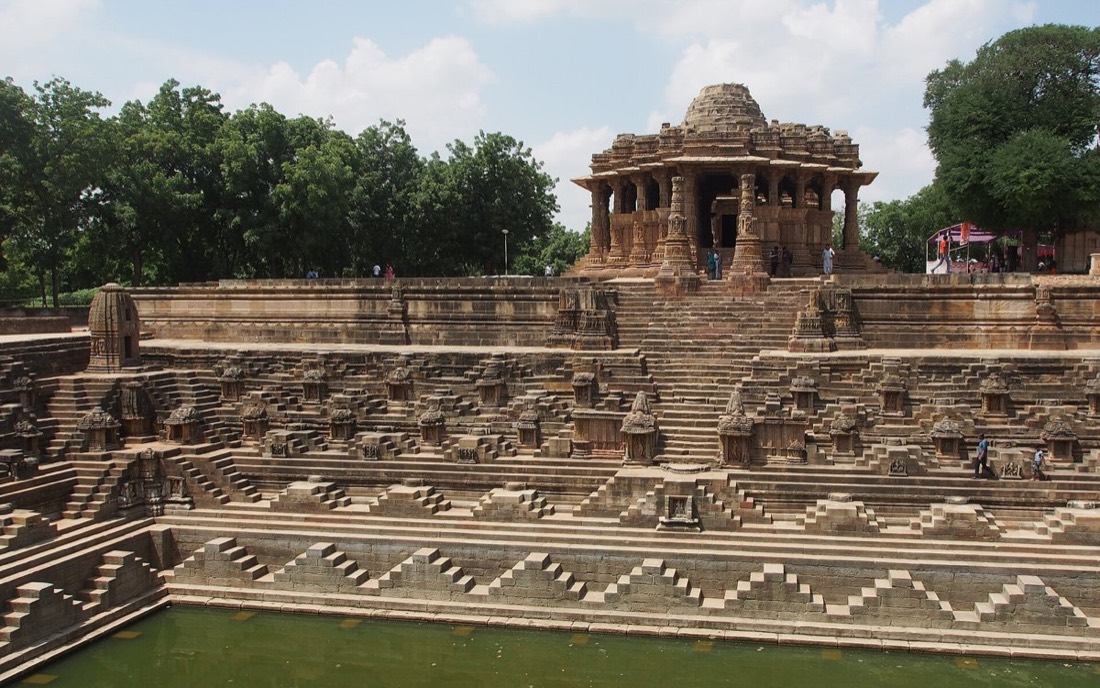
Gujarat Tourism's brochure describes the tank as the place for ablutions before Sun worship. The survey also records a local legend: the tank was formed by the pawing of Surya's horses. It gives this as legend, not as the history of the reservoir. Keep the horses in mind. They return at the other end of the walk.
Where Chhath meets this temple, and where it does not
Chhath is a festival of the Sun, observed each year in the month of Kartik (October to November). Devotees keep a fast and stand in water to offer arghya to the setting Sun in the evening and the rising Sun at dawn. The date follows the lunar calendar.
The sources read for this article do not tie Modhera to Chhath. What they do describe is a Sun temple whose tank served ablutions before worship, and whose sanctuary, Incredible India says, no longer hosts worship.
Columns, a hall and a god in boots
From the water a broad stair climbs to the temple. Two tall carved columns stand near its head: all that remains of a torana, a ceremonial gateway arch, according to the survey. Beyond them is the assembly hall, a separate building, and past a narrow passage the shrine itself. The survey notes that the hall was known locally as Sita's chavadi.
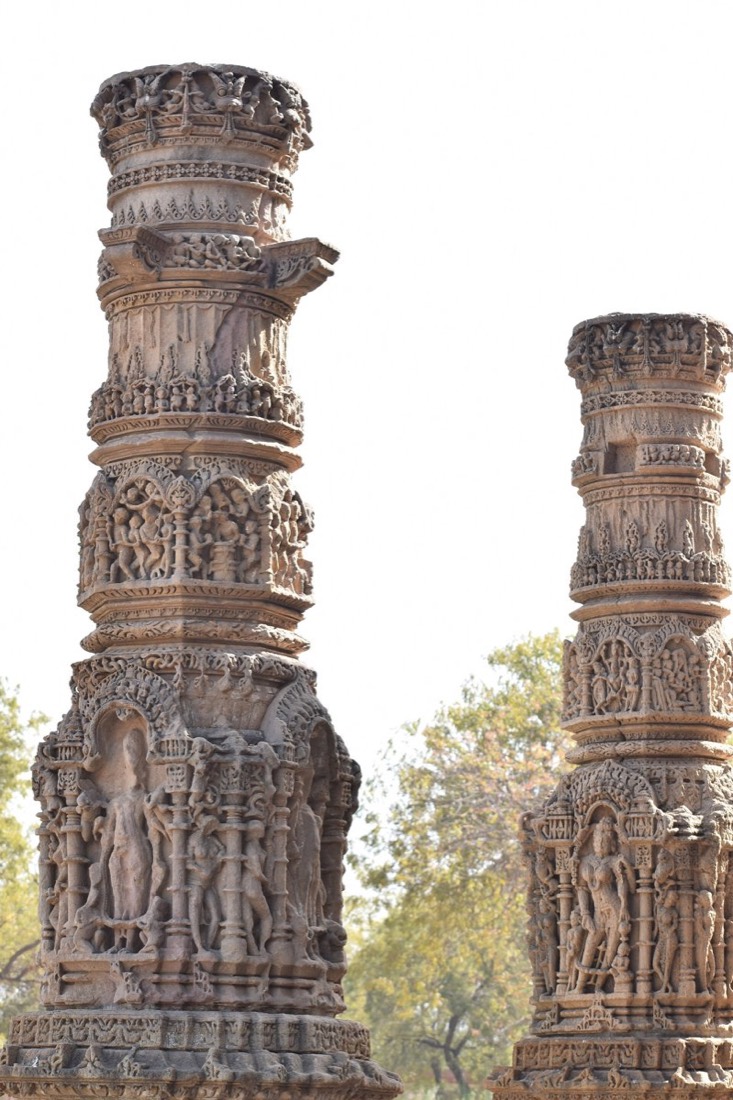
Carved figures of Surya repeat one detail. They wear long boots, some marked with crossing diagonal lines that the surveyors took for impressed leather. In some figures, seven horses appear below. The surveyors set the boots beside Varahamihira's sixth-century description of the Sun's image in northern dress. They also saw that Surya is usually carved with two arms, while the other divine figures on the walls generally have four. Gujarat Tourism adds that the hall carries the twelve Adityas, forms of the Sun matched to the twelve months.
The temple faces due east, the survey notes, so the rising Sun at the equinoxes would shine through the hall's doors into the shrine. That is the surveyors' reasoning, not a measured observation, and Incredible India repeats it only as something that is said.
The seat under the rubble
By the survey's account, the shrine was a wreck. Its floor and part of its roof had fallen into a sunken cell about eleven and a half feet below. When the debris was cleared, the seat of Surya's image came to light in the middle of the floor, joined to the side walls by stone blocks. Across its front, seven horses were carved, their forequarters projecting and pressing forward.
Seven horses draw Surya's chariot. The seat named its occupant, though the image was gone.
The surveyors could not say how the cell had been entered. They guessed at a trapdoor and ladder, and wondered whether it had been a treasury for jewels. The horses were a finding. The rest was guesswork, and the survey says so.
A temple that gives its god away through boots and horses is the kind of story Devam is gathering. It is bringing together tales of more than 1,000 Indian temples and of gods and goddesses, with bhajans, mantras, aartis and quizzes. The app is coming soon on the App Store and Google Play, and you can join the waitlist.
A date written upside down
On one block of the shrine's back wall, Cousens found a date cut upside down: Vikrama Samvat 1083, equal to 1026–27 CE. The surveyors compared the carving's style with a Jain temple at Mount Abu from 1032 and placed Modhera in the reign of Bhima I. Gujarat Tourism, citing the Archaeological Survey of India, gives the same years.
The date does not settle every question. A later architectural study reports M. A. Dhaky's view that the assembly hall belongs to the early years of the later king Karnadeva's reign, so the temple may have grown over time. Writers also differ on what the upside-down block marks. The surveyors read it as the time of building; others read it as a sign that the shrine was damaged and rebuilt. One dated block is a strong clue, not a foundation record.
Visiting the monument
As of 12 November 2026, Gujarat Tourism's brochure describes Modhera as a protected monument under the Archaeological Survey of India, and Incredible India says worship no longer takes place inside the sanctum. For timings, tickets, dress and rules, use the official notices of the Archaeological Survey of India and Gujarat Tourism, since these change. A modern performing-arts festival, the Modhera Dance Festival, also called Uttarardh Mahotsav, is held at the temple in January after Uttarayan; Gujarat Tourism advises checking the exact dates with its office.
Questions people ask about Modhera Sun Temple
Is the Sun God still worshipped at Modhera?
Not inside the sanctum. Incredible India's page says worship no longer takes place there, and the original image of Surya does not survive. The temple is kept as a protected monument by the Archaeological Survey of India. Check official notices before planning a visit.
Does the 1026–27 date show when Modhera was built?
Only in part. The date is cut upside down on one block in the shrine's back wall, and the 1903 survey linked it to Bhima I's reign. A later study places the assembly hall in the early years of Karnadeva's reign, and some writers read the block as a sign of rebuilding.
Did the equinox sunrise really light the shrine?
That is the surveyors' reasoning, not a recorded measurement. The 1903 survey noted that the temple faces due east, so the rising Sun at the equinoxes would shine through the hall's doors into the shrine. No measurement was made for this blog.
What was in the chamber beneath the shrine floor?
The sources read do not say. The surveyors found a sunken cell about eleven and a half feet below, with the floor fallen into it, and could not tell how it was entered. A trapdoor, a ladder and a treasury for jewels were their guesses. The seat with seven horses is the firm finding.
The horses at both ends
The legend begins with Surya's horses pawing out a tank. The stone ends with seven horses on a seat the god no longer occupies. Between them stand a stair, a pair of columns, a hall named for Sita, boots on a figure and a date cut upside down. Devam is bringing temple stories like this together. It is coming soon to Google Play and the App Store, and if you would like to read more of them, you can join the waitlist.