Martand Sun Temple, Mattan: the shrine a dying king sought
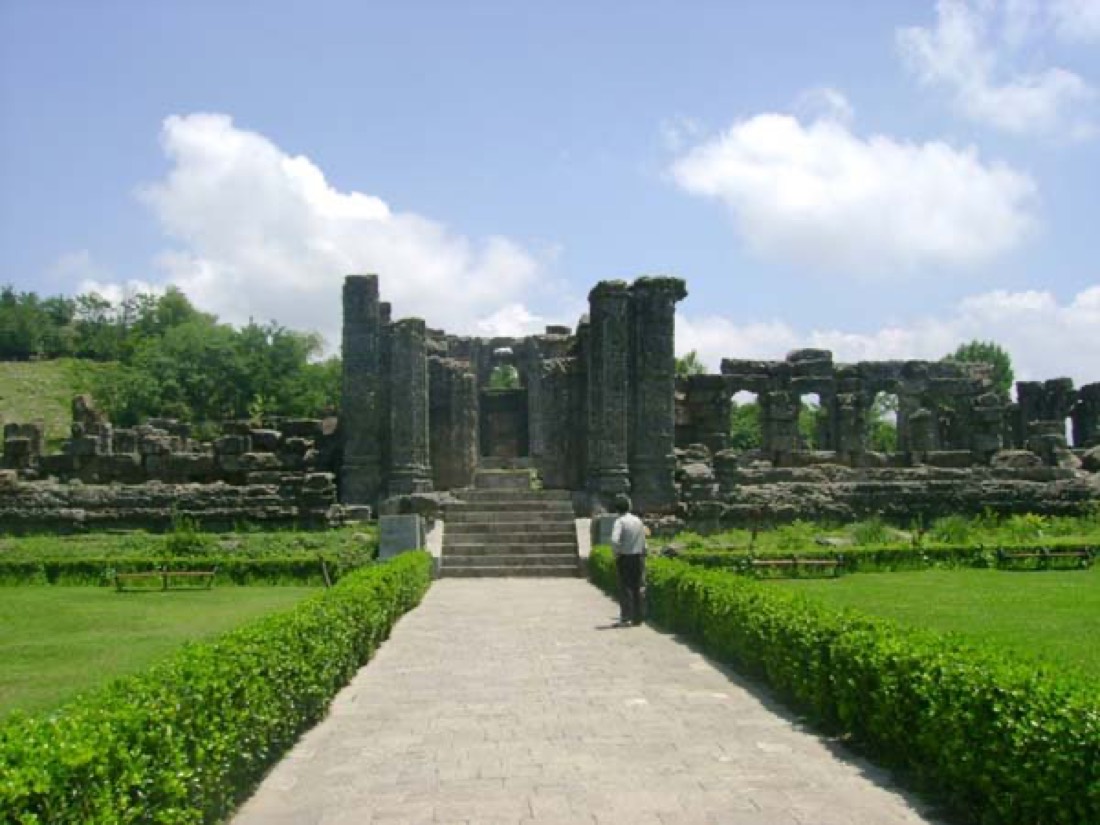
Kalhana, the twelfth-century Kashmiri writer behind the chronicle Rajatarangini, keeps coming back to one temple. It is the Martand Sun Temple, on a plateau near Mattan in Anantnag district, where Surya is worshipped under his name Martanda. In Kalhana's pages a dying king is carried to it. His son, who strips the valley's temples of their images, leaves its Sun image alone. Soldiers later fight in its courtyard.
A temple named for the Sun
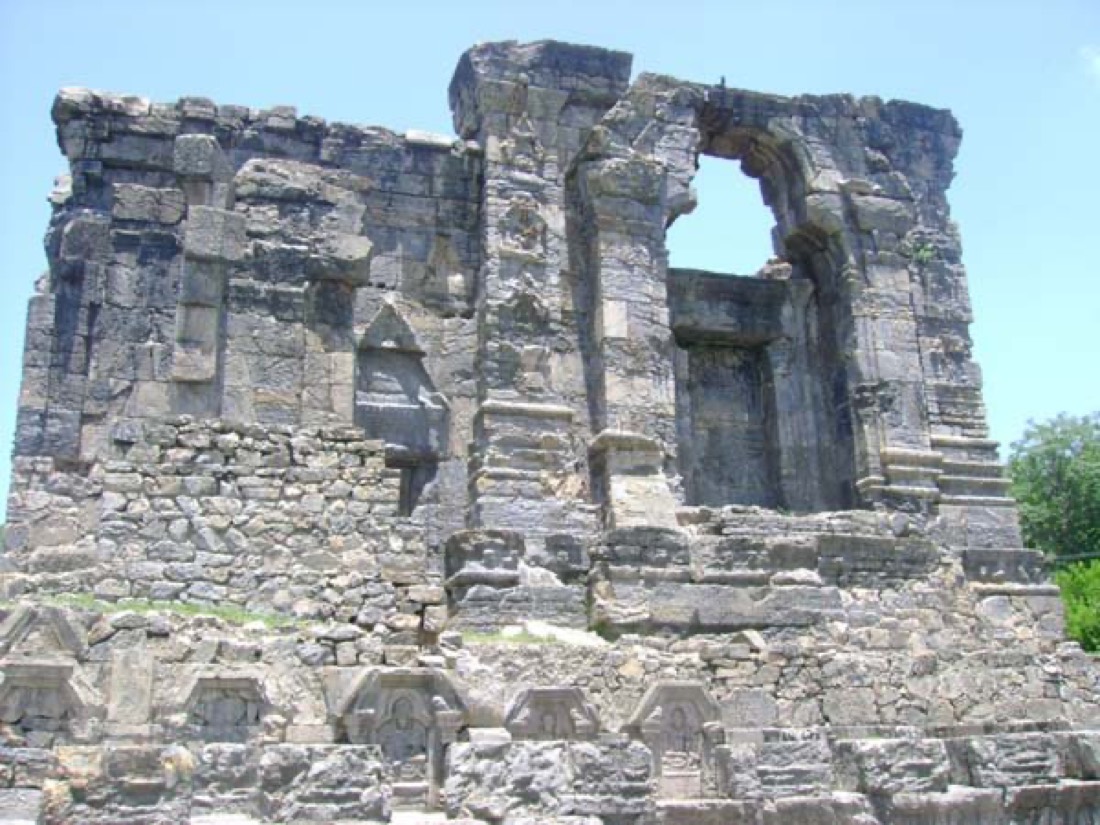
Martanda is one of Surya's names, and the temple carries it. The Ministry of Tourism's Incredible India page describes an eighth-century Surya temple built by Lalitaditya Muktapida of the Karkota dynasty. The Anantnag district page also lists it as a Surya temple. Kalhana names the same king. In M. A. Stein's 1900 translation, Lalitaditya raises a shrine of Martanda with massive stone walls inside a lofty enclosure, and a town "swelling with grapes" beside it.
About a mile from the ruins, springs at the foot of the plateau are sacred to the same god. The later pilgrim text Martandamahatmya, Stein reports, tells of Aditi, wife of Kashyapa. Her thirteenth child is a lifeless egg (martanda), and the sun comes from it. Stein adds that the Nilamata, a Kashmiri text, already lists the spring among places sacred to Surya. The modern name Mattan comes from Martanda.
Chhath is kept each year in the month of Kartik, with arghya, water offered to the setting and the rising sun. Its date follows the lunar calendar, as Wikipedia summarises it. The sources read for this article do not tie Martand to Chhath. What they do show is a Sun shrine with a long written record, and that record is the story below.
The king who melted a Sun image
Kalhana's King Kalasa, who reigned from 1063 to 1089 in Stein's dating, is not a gentle man. The chronicle says he first melted down the copper image of Surya called Tamrasvamin, then took brass images from Buddhist monasteries. Soon afterwards he falls ill, and Kalhana reads the illness as a curse.
On an evening in the month of Margashirsha, 1089, the king gets from his bed into a litter. Kalhana says he believes the god is angry about Tamrasvamin and that Martand is where to take refuge. He leaves Vijayakshetra, a town where dying is said to bring final beatitude, though Kalhana notes that he worships Shiva. By boat on the Vitasta and then across the plateau, he reaches the temple with a quarter of the next day left. He offers a gold image of the god, to save his life.
He keeps asking for his elder son, Harsha, who is held under guard elsewhere. The dying man listens through an open door to singers performing a song Harsha composed. Each time he tries to say Harsha's name, the minister Nonaka holds up a mirror, adarsa, as if that were the word. The king pushes it away with a smile.
He dies on the sixth day of that bright fortnight, aged forty-nine. At the last, Kalhana says, he signals to his ministers and is carried before the image of Martanda.
Kalhana does not say whether the god answered. The scene still shows how Martand stood in his account: the shrine a king chose for his last journey, even a king who worshipped Shiva.
The image Harsha left alone
Harsha takes the throne that same year and rules until 1101. Kalhana's Harsha needs money. He confiscates the riches earlier kings gave to temples. When those are gone, he appoints an officer, Udayaraja, to oversee the overthrow of divine images.
Kalhana says no temple in a village, town or the capital kept its images. Only two chief images were respected: Ranasvamin in the capital, and Martanda in the townships. Two colossal Buddha statues were also saved, after requests made to the king at a generous moment.
Kalhana gives no reason for the exception, and he does not link it to Kalasa's death at the same shrine. That link is the reader's to make. It is hard not to notice that the son who spared the Sun at Martand was the one his dying father kept trying to name there.
Temples that turn up in old chronicles, in pilgrim texts and in ruins are the kind of story Devam is gathering. Devam is coming soon on the App Store and Google Play. It brings together the stories of more than 1,000 Indian temples and of gods and goddesses, with bhajans, mantras, aartis and quizzes. Join the waitlist to read the next one.
A courtyard that became a fortress
Martand appears once more in Kalhana's own lifetime. Under King Jayasimha, who reigned 1128 to 1149, a royal commander named Sanjapala takes up position at Martanda, in Stein's translation of Book VIII. A local chief, Trillaka, attacks. Many of Sanjapala's men fall, and troops from outside the capital flee with plunder.
Stein read the mention of the temple enclosure here as showing that the great courtyard, with its lofty walls and colonnades, served as a fortification. Whatever had changed since Lalitaditya's day, the enclosure still stood.
What is left to read in the stone
Kalhana's pages stop there, and the ruin comes later. The sources disagree about how. Stein reports that the later chronicler Jonaraja lists the temple among those the Sultan Sikandar, who ruled 1389 to 1413, destroyed. The Indian Express says the temple is believed to have been demolished by Sikandar, though many historians hold a different opinion. Stein also notes damage from time and earthquakes.
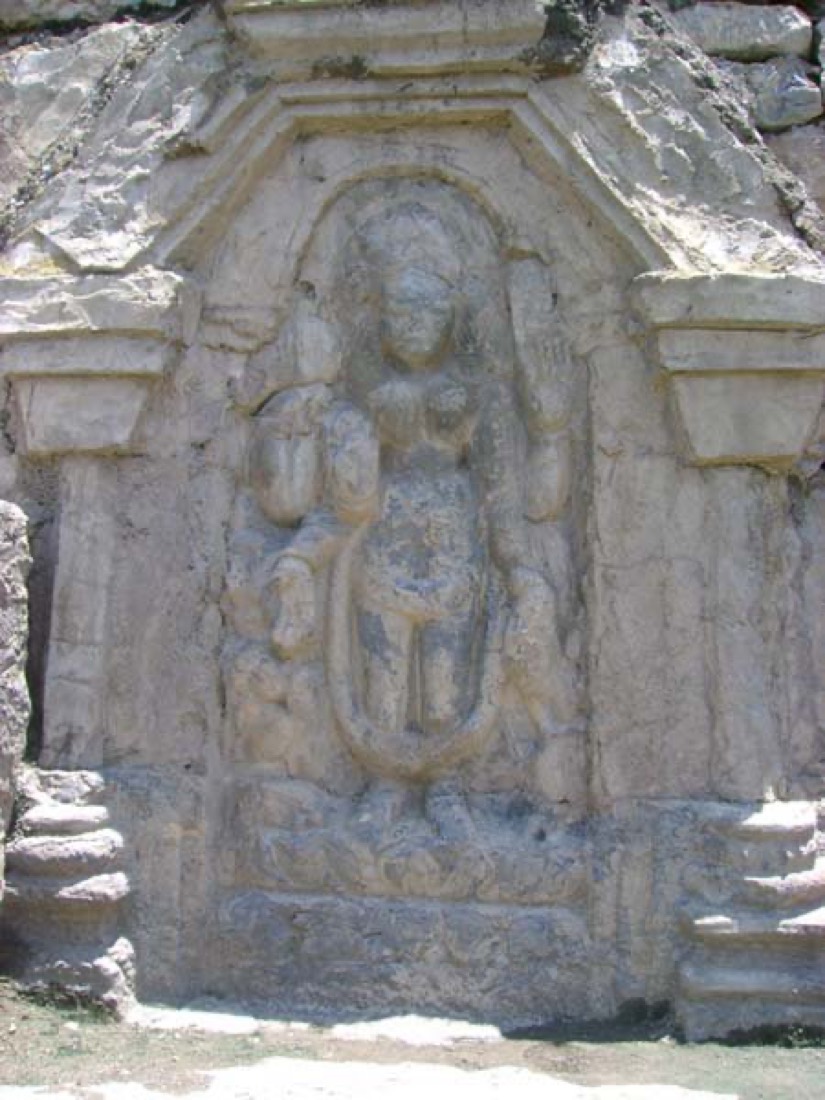
A 2013 study of Kashmir's stone temples, by Roger Bilham and Bikram Singh Bali, suggests earthquake shaking can shift blocks sideways in these limestone buildings. Deliberate damage is not the only explanation. Its dating test was at a different temple, Sugandhesa near Patan. No source read for this article fixes one date or one cause for Martand's fall.
Incredible India describes a central shrine in a courtyard of 220 by 142 feet, ringed by colonnades. It records the Archaeological Survey of India's designation of the site as one of national importance. Around 1900, Stein wrote that the ancient temple had long ceased to be an object of religious interest.
Devotees have still come. In May 2022 more than a hundred pilgrims prayed among the stones, and a Navgrah Ashtamangalam puja was held that the Lieutenant Governor attended. Scroll, citing other reports, wrote that Archaeological Survey officials said permission had not been sought. The Jammu and Kashmir administration said recognised religious customs are allowed under the monuments law. These are dated episodes. They do not set the rules for any later visit.
Finding the ruins, and who to ask
As of 12 November 2026, the district page and the Incredible India page both describe a ruin near Mattan. The district page puts it over five miles from Anantnag town. Neither gives opening hours or rules that could be checked. For timings, entry, dress and what is allowed inside, follow the notices of the Archaeological Survey of India's Srinagar Circle and the district administration.
Questions people ask about Martand
Who built the Martand Sun Temple, and when?
Kalhana's chronicle credits King Lalitaditya Muktapida of the Karkota dynasty, and government tourism pages place the temple in the eighth century. Kalhana wrote around 1148 and 1149, long after, so the exact years and building phases are not settled by the sources read here.
Is Martand a working temple?
It is a ruin protected as a monument of national importance, not a temple with a daily service verified for this article. Pilgrims have prayed there, and in 2022 the Archaeological Survey and the Jammu and Kashmir administration publicly differed over permission. Check the official notices for the rules that apply on the day.
Who destroyed the Martand temple?
No source read here settles it. Stein reports that Jonaraja lists it among the temples Sultan Sikandar destroyed. Many historians disagree, and a 2013 study suggests earthquakes can shift blocks in Kashmir's stone temples. Its date and cause remain open.
Which parts of Martand's story are tradition, and which are recorded?
The sun's birth from an egg belongs to devotional tradition, in a later pilgrim text. Kalasa's journey, Harsha's exception and the battle come from Kalhana, a twelfth-century chronicler writing decades afterwards. The eighth-century building rests on Kalhana and on government summaries.
What the chronicle stops short of
Kalhana finished his chronicle in 1149 or 1150, and his last glimpse of Martand is a courtyard full of soldiers. How its walls and roof came down, he does not say. His three scenes are the earliest written moments at this temple among the sources read. A king came to it to die, a ruler left its Sun alone, and a courtyard held an army.
If a shrine with a record this layered is your kind of story, Devam is coming soon on Google Play and the App Store. It brings together stories of more than 1,000 Indian temples and of gods and goddesses, alongside bhajans, mantras, aartis and quizzes. Join the waitlist for more temples like this one.