Mahalaxmi Mandir, Pune: the temple built instead of a bungalow
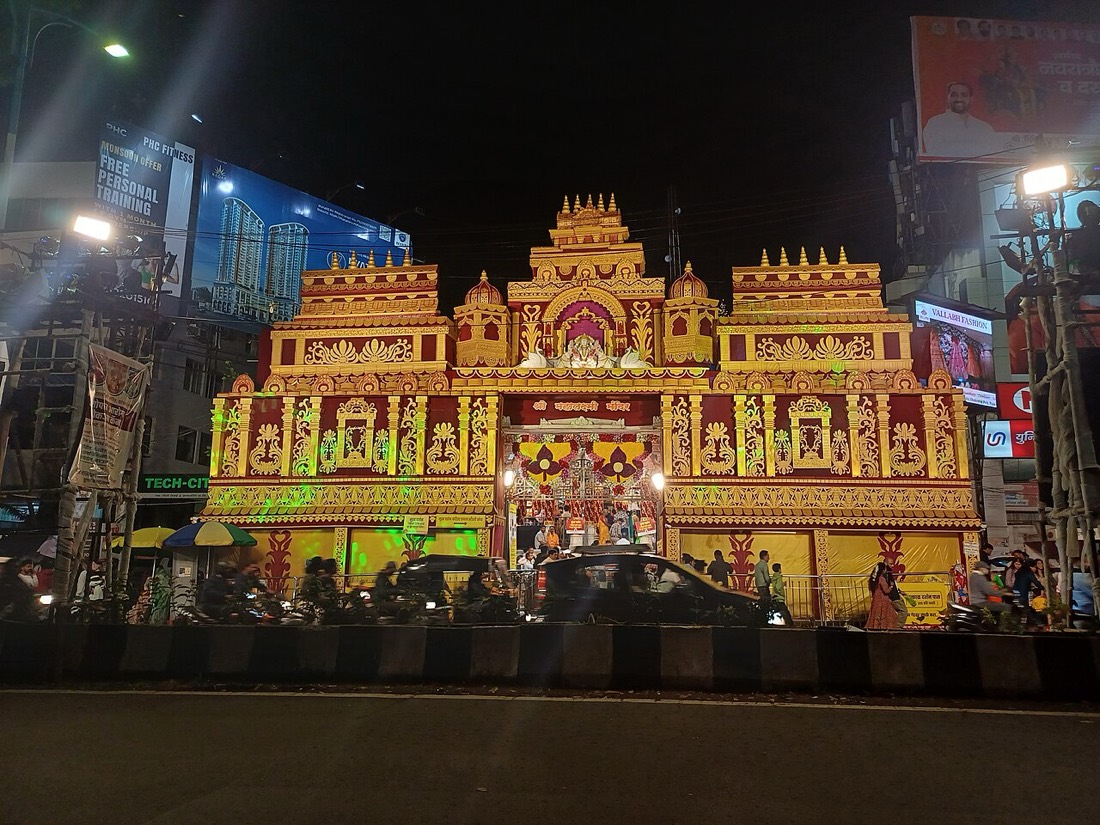
Owning a bungalow opposite Sarasbaug in Pune was once a mark of standing. Sushila Devi wanted a temple on that plot instead. That is how the temple's own history tells it, and the result is Shri Mahalaxmi Mandir in Shukrawar Peth. It worships Mahalaxmi, Mahasaraswati and Mahakali together, as three forms of Adi Shakti, the Mother's primal energy. This piece follows that decision, the three marble goddesses it produced, and a gold sari that comes out on two days of the year.
A bungalow that was never built
The temple's history page introduces the couple first. Bansilal Ramnath Agarwal was born in Moribeda, in Rajasthan's Pali district, and prospered in Pune. His wife, Sushila Devi, was born in Boondi and came to Pune with him at fourteen. The page says she took a full part in his religious and social work and had a gift for decisions.
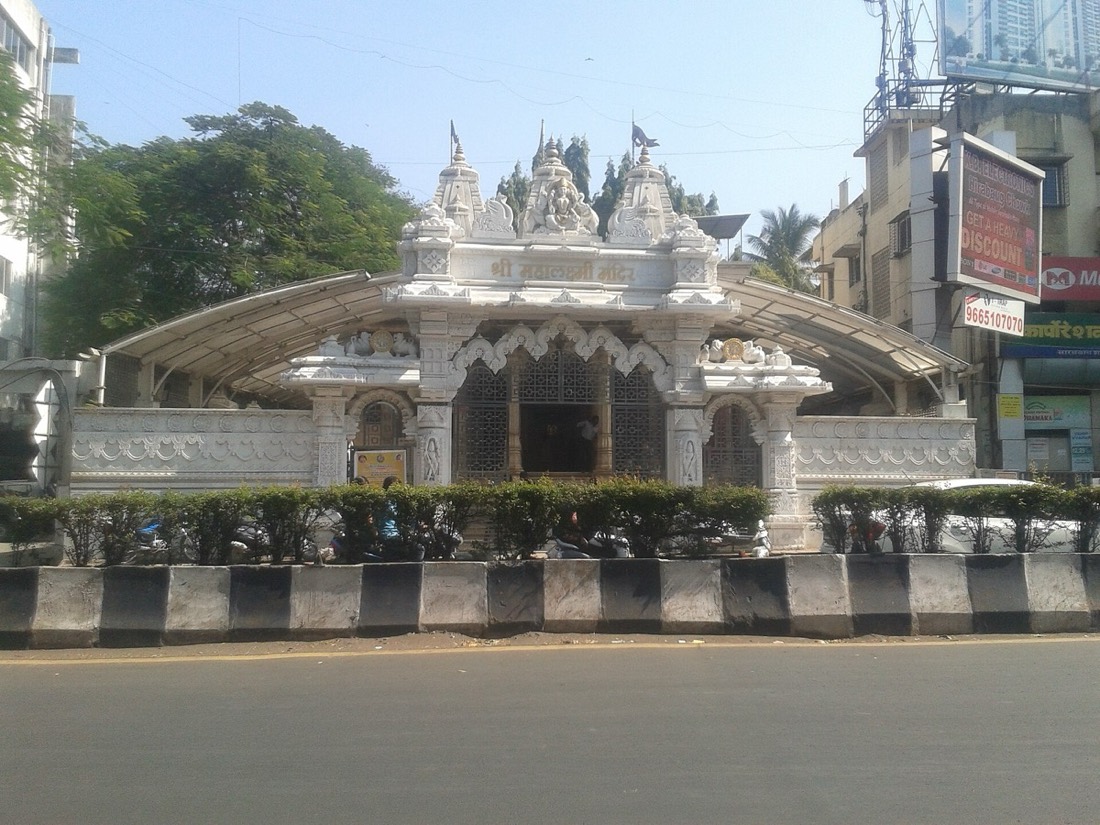
Then comes the plot. A grand house opposite Sarasbaug would have been the prestigious choice. She wanted a temple.
Her son tells it a little differently. In his message on the trust's management page, Rajkumar Agarwal calls the temple his father's dream. Both pages are the trust's own, and neither is a deed or a record from the time. Read together, they describe a couple deciding what their new prosperity was for.
Rajkumar places the construction in 1972 and says skilled craftsmen from Rajasthan worked for twelve years. The history page names artisans from Kala Kendra in Jaipur, who carved the six-foot marble images, and the sculptor Hemraj Sompura, who directed the project. The three goddesses were installed on 15 February 1984.
That makes this a modern temple. It is not the older Ganesh temple inside the Sarasbaug garden, Talyatla Ganpati. It is also a different temple from Kolhapur's Mahalakshmi Ambabai, and its pages claim no link to it.
Founding stories like this one are what Devam gathers, across more than 1,000 Indian temples, with bhajans, mantras, aartis and quizzes beside the tales of gods and goddesses. It is coming soon on the App Store and Google Play, and you can join the waitlist.
Three goddesses, and the one who comes first
Start with the goddess the temple is named for. In the photograph the temple publishes, Mahalaxmi wears a pink sari. A gold-toned halo is behind her, garlands hang across her and ritual vessels stand at her feet. The temple's pages link her with the lotus and with Diwali worship.
Why three together? The temple calls them three forms of Adi Shakti and sums them up as wealth, wisdom and strength. A wider tradition offers another way in. The Pradhanika Rahasya, a short appendix to the Devi Mahatmya, calls Mahalakshmi the primeval goddess. In P. R. Ramachander's English rendering, she takes a dark form, Mahakali, and then a form of pure goodness, Mahasaraswati, who carries a veena and a book.
The temple's pages do not cite this text, so treat it as a companion tradition, not the temple's own explanation. Even so, the order stands out: the namesake comes first.
A veena, a book and a garland of limes
Mahasaraswati is the easiest of the three to read at a glance. In the temple's photograph she wears a turquoise sari and a red shawl. She holds a veena against her shoulder and carries a small book marked with the word Veda. A white swan is at her feet. The temple says the veena stands for harmony and intellect, and calls her the goddess of learning, music and the arts.
Mahakali's portrait is darker in every sense. Her face is black, her tongue red, and a long garland of green limes hangs over her red costume. A bowl and a severed head are among the things she holds. The temple describes her as the goddess of time and death and says she symbolises divine anger and the destruction of evil.
Saints on the path, schoolchildren at Navratri
The path around the temple, the pradakshina, carries images of saints. The temple's page counts twelve and names Dnyaneshwar, Tukaram and Mirabai.
At Navratri the temple turns to students. Its Navratri page says around 15,000 of them come to chant mantras. These include the Shri Sukta, a Vedic hymn in praise of Lakshmi, and the Atharvashirsha. Each student receives prasad and school supplies. On Kanya Puja, girls are honoured as forms of the goddess and given prasad and school gifts. The figure is the temple's own and has no year attached.
A temple with Mahasaraswati inside would have a natural reason to give notebooks, though its pages do not say that is why. Rajkumar Agarwal's message adds the festival's civic side: awards for women who have worked for women's upliftment, and thanks to sanitation and healthcare workers.
A gold sari for two days of the year
On Dasara and Lakshmi Puja, the trust dresses the Mahalaxmi image in a gold sari. Reports from 2022 to 2025 give its weight as sixteen kilograms. ABP Majha's 2022 report says a devotee offered it. South Indian artisans spent about six months on its ornamental work, and the sari was made around twenty years earlier. The donor and the makers are not named.
Why these days? Chief trustee Amita Agarwal told ABP Majha that Dasara has an old custom called sone lutane, literally "looting gold". In keeping with it, the goddess should be seen in a golden sari, and devotees receive her blessings. That is the trustee's own explanation of the custom.
The sequence is the point. Someone makes a gift, craftspeople shape it, the trust keeps it, and twice a year it is shown to everyone.
Dasara evening adds something outside the temple. In 2024 the temple announced its first Ravan dahan, the burning of a Ravana effigy. Its ten heads stood for ten social problems, among them unemployment, addiction and violence against women. In 2025, Loksatta reported plans for a 25-foot effigy to be burned at 9 pm, with a message of women's empowerment. Both were announcements made beforehand, and the reports do not confirm the evenings themselves.
The hours the temple lists
As of 4 November 2026, the temple's home page lists opening hours of 6 am to 1:30 pm and 4 to 10 pm. "Mukh darshan" is marked from 1:30 to 4 pm. Aarti is listed at 7:15 in the morning and at 7:15 in the evening. The page adds that timings may vary during festivals. It does not explain mukh darshan, so ask the temple what it means for entering the sanctum. Abhishek and havan bookings, and aarti booking, go through the temple, and the page sets out no dress or queue rules. Check the website or phone the temple before you travel.
Questions people ask about Mahalaxmi Mandir, Pune
What are the timings of Mahalaxmi Mandir, Pune?
As of 4 November 2026, the temple's home page lists opening hours of 6 am to 1:30 pm and 4 to 10 pm. Aarti is listed at 7:15 in the morning and at 7:15 in the evening. Timings may change during festivals, so check the website or phone the temple before you travel.
Is Mahalaxmi Temple in Pune closed in the afternoon?
The home page marks "mukh darshan" from 1:30 to 4 pm, the gap between the two opening sessions. It does not explain what mukh darshan allows, or whether the sanctum is open for entry in that gap, so ask the temple before planning an afternoon visit.
When is Lakshmi Puja in 2026, and what time is the puja in Pune?
Lakshmi Puja on Diwali falls on Sunday, 8 November 2026. Drik Panchang, a panchang site, gives Pune's evening muhurat as 6:24 pm to 8:24 pm, inside a Pradosh Kaal of 5:59 to 8:31 pm. The new moon begins at 11:27 am that day. The window changes from city to city. The temple's home page, read on 4 November 2026, gave no festival programme, so confirm the temple's own timings with the temple.
When is the gold sari put on the goddess?
Reports from 2022 to 2025, quoting trustees, say Dasara and Lakshmi Puja. The temple's home page, read on 4 November 2026, does not mention the sari or give festival dates. Confirm with the temple before planning a visit around it.
Is Mahalaxmi Mandir in Pune a Shakti Peeth?
No. It is a modern temple. The trust's accounts place the construction in 1972, and the images were installed on 15 February 1984. The Mahalakshmi temple that is counted among the Shakti Peeths is the Mahalakshmi (Ambabai) temple in Kolhapur, described on Wikipedia.
Is there more than one Mahalaxmi temple in Pune?
Yes. A Justdial listing shows a separate Mahalaxmi Mandir in Magarpatta City, Hadapsar. This article is about Shri Mahalaxmi Mandir at Plot 38/B, Shukrawar Peth, opposite Sarasbaug. Check the address before you set out.
Why are Mahalaxmi, Mahasaraswati and Mahakali worshipped together here?
The temple calls them three forms of Adi Shakti, standing for wealth, wisdom and strength. A separate tradition, the Pradhanika Rahasya appendix to the Devi Mahatmya, has Mahalakshmi taking the forms of Mahakali and Mahasaraswati. The temple's pages do not cite that text, so it is context, not the temple's explanation.
Is Mahalaxmi Mandir the same as the Ganesh temple in Sarasbaug?
No. Sarasbaug is a garden with an older Ganesh temple inside it, known as Talyatla Ganpati. Mahalaxmi Mandir is a separate, modern temple whose address is opposite the garden, at Plot 38/B in Shukrawar Peth. Its three images were installed on 15 February 1984.
How old is the temple?
It is modern. The trust's accounts place the construction in 1972, and the images were installed on 15 February 1984 after twelve years of work. Those are the temple's own accounts, not deeds or archives. Nothing on its pages claims an older shrine on the site.
What the plot became
The bungalow never rose, so nobody can say what it would have looked like. What rose instead has a longer guest list than any house. Three goddesses are there, with saints along the path, schoolchildren at Navratri and a sari from a donor the reports never name. Nearly everything the temple's pages record is something handed on to other people. It all began with one plot and one decision about what it was for.
Devam is coming soon on Google Play and the App Store, and temple stories like this one are what it is for. If you would like to hear when it opens, add your name to the waitlist.