Mahakaleshwar, Ujjain: Four Brothers, a Boy and a Pebble
A five-year-old has found a pebble. He sets it down on an empty patch of ground and begins to worship it. His mother is calling him to eat.
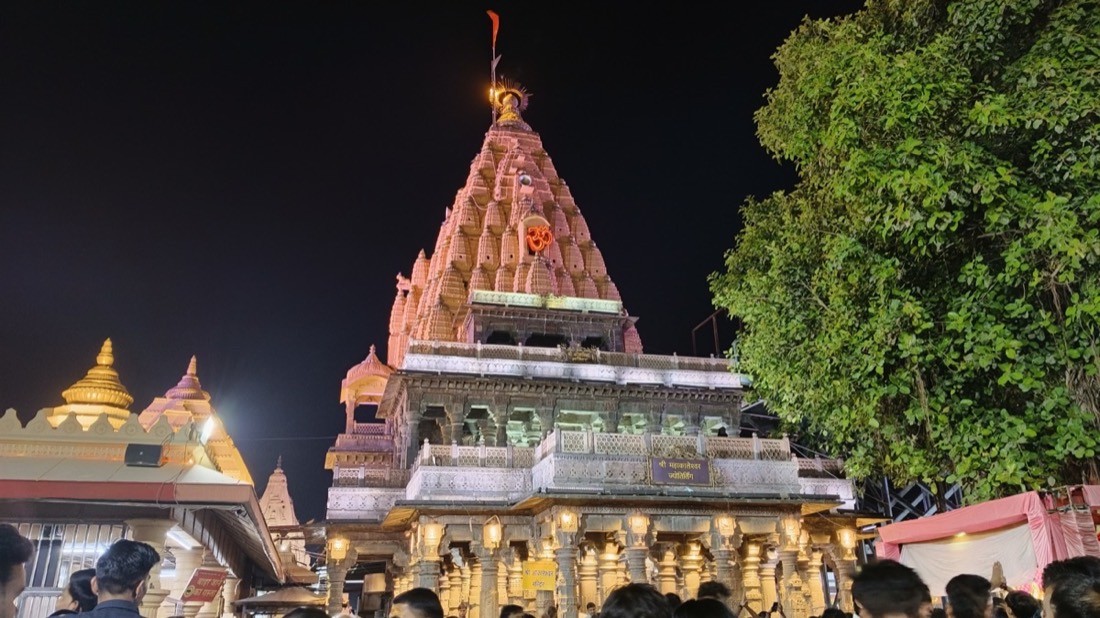
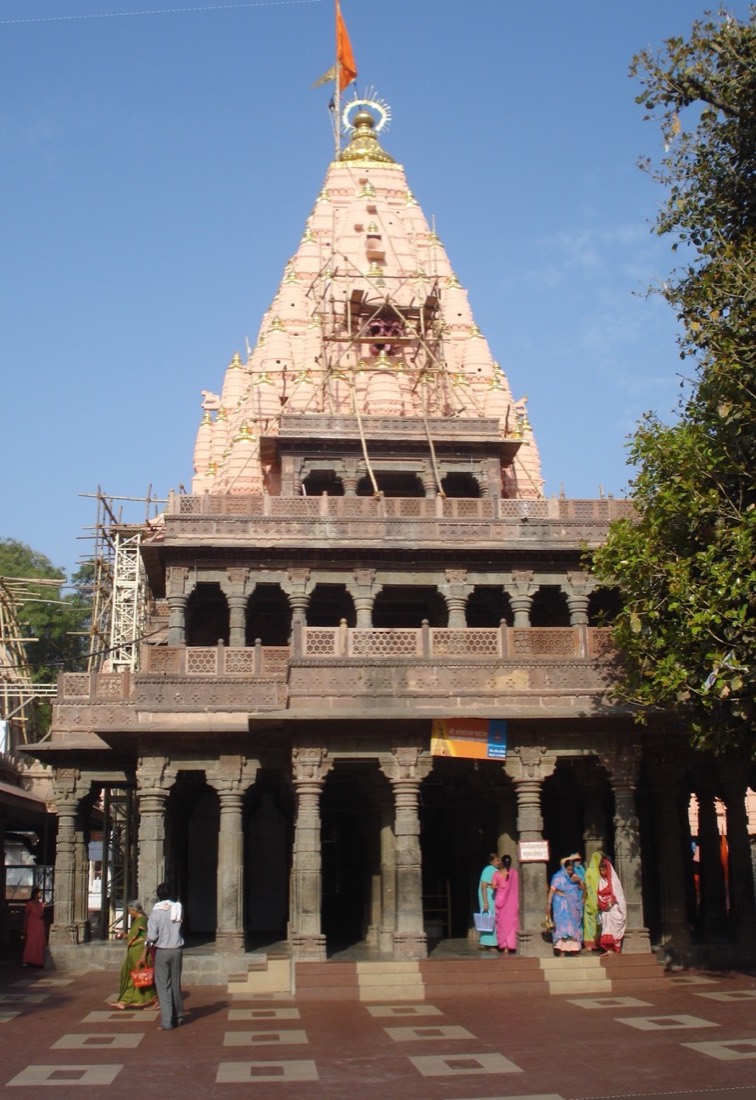
The boy belongs to the Shiva Purana's account of Mahakaleshwar, the temple in Ujjain, Madhya Pradesh, and one of Shiva's twelve celebrated Jyotirlingas. Shiva is worshipped here as Mahakala, in the form of a linga, the upright stone that stands for him. The Purana gives the city two rescues, in two separate chapters. One explains how Mahakala came to stay: four brothers, a demon and a boon. The other is the boy's, and it ends a siege without a battle.
Four brothers who had no weapons
The Shiva Purana tells the first story in chapter 16 of its Kotirudra Samhita, here in J. L. Shastri's English translation (chapter numbering varies by edition). The setting is Avanti, which the translator identifies with Ujjain.
Vedapriya, a brahmin, worships Shiva every day, and so do his four sons, Devapriya, Priyamedhas, Sukrita and Dharmavahin.
The asura Dushana, backed by boons from Brahma, has beaten the gods and stopped Vedic rites across the earth. Now he marches on Avanti with a large army, and his Daityas besiege all four quarters of the city. His terms are blunt: give up the worship of Shiva, or lose your lives.
The frightened townspeople run to the four brothers. The brothers say they have no army and no weapons, and that Shiva is their only refuge. They worship an earthen image of him and sit down to meditate.
Dushana orders them killed and bound, but they are too deep in meditation to hear. As he closes in, the ground beside the image splits open with a loud report, and Shiva comes up out of the chasm in a fearsome form. He names himself Mahakala and tells Dushana to leave. Then, with a single sound, hum, he destroys Dushana and part of his army. The rest run.
The gods arrive with drums and flowers. Shiva tells the brothers to choose a boon, and they ask for two things: release from the cycle of worldly existence, and that he stay and protect the people. The Purana says he does. He remains in the chasm and becomes famous as Mahakaleshwar.
The first wish is for themselves. The second is for the townspeople who had run to them.
The king's jewel and the cowherd's son
Chapter 17 opens in the same city, here called Ujjayini, with Mahakala already worshipped there. It does not say how he came.
King Chandrasena is a devotee of Shiva. Manibhadra, one of Shiva's chief attendants, has given him a jewel called Chintamani. It shines like the sun, and at its touch bell-metal, copper, tin or stone turns to gold. Other kings hear of it and want it. Chandrasena refuses, so they bring their armies and besiege the four main gates. The king goes to Mahakala and worships day and night without eating. The Purana says Shiva devises a way to save him, and it begins near the shrine, where a widowed cowherdess has come with her son, who is five.
She watches the king at worship, bows, and returns to her camp. Her son decides to worship too. In his mind the pebble is a linga. He has no scents, ornaments, cloth, incense or lamps, so he imagines each in turn. Then come leaves and flowers, and he bows and dances.
His mother wants him to come and eat, and he stays where he is. She calls many times. Finally she walks over, finds him sitting with his eyes shut before the stone, takes his hand and drags him away. She hits him. Nothing moves him, so she throws the stone far off and goes back into her house.
The boy collapses, crying out to his lord, and faints from grief. When he comes to, the camp has become a temple of Mahakala, with a golden doorway, jewelled columns and a crystal floor. At its centre stands a jewelled linga, with the articles of worship he had used. At sunset he walks outside and finds his home turned to gold, his mother asleep inside. He wakes her. She embraces him, hears the story and sends word to the king.
Chandrasena arrives with his ministers and chief priest and, seeing the shrine, embraces the boy with tears of love.
By morning the besieging kings have heard everything from their spies. Even the children of this city perform Shiva's rites, they say, so Shiva will surely be furious with anyone who attacks it. They choose an alliance, lay down their weapons and, with Chandrasena's permission, enter Ujjayini to worship Mahakala. Then they visit the cowherdess's house, give her son gifts and make him chief of the cowherds in all their lands.
Hanuman appears, and the kings rise and bow. He sits among them and embraces the boy, saying that the child watched Shiva's worship and worshipped him without any mantras. Eight generations on, in the boy's line, a cowherd named Nanda will be born, and Vishnu himself will be born as Nanda's son Krishna. From now on, Hanuman says, the boy will be known as Shrikara. Only then does he initiate him into Shiva's rites. The naming comes first and the teaching after.
Hanuman vanishes. Shrikara goes on worshipping Shiva, and he and Chandrasena worship Mahakala together until, the chapter says, both reach Shiva's own realm.
One city, two kinds of rescue
Side by side, the chapters protect the city in opposite ways. In the first, the people have no army, and the god arrives. In the second, a king, a jewel and a shrine already stand, and a child's untaught worship ends the siege because the kings change their minds. That contrast is a reading, not something the Purana says.
Some popular retellings blend the two chapters. Madhya Pradesh Tourism's temple page has a boy called Shrikhar and a demon named Dushanan, and no jewel, while Shastri's translation keeps them apart. The temple's own portal tells the demon story with Shiva appearing as radiant light, where the translation has a chasm.
Devam is an app covering more than 1,000 Indian temples: their stories, their gods and goddesses, and bhajans, mantras, aartis and quizzes. It is coming soon on the App Store and Google Play. If tales like the boy's are what you came for, the waitlist will tell you when it opens.
Bhasma Aarti, the worship that begins with ash
Bhasma is sacred ash, and an aarti is worship with lamps. Neither chapter mentions Bhasma Aarti, so it is a temple practice, not part of either story.
A 2020 account from Madhya Pradesh Tourism gives the order. First the linga receives a bath and anointing, then flowers, bilva leaves and a face-like decoration. Ash is offered from a pouch, and the worship ends with lamps, bells and chanting. The temple's portal calls it daily dawn worship with sacred ash, standing for the cycle of life and death. That suits the name Mahakala, as kala can mean time or death, though the link is only a reading.
The same account says the ash once came from funeral pyres. Mahant Vineet Giri, who oversees its preparation, called that undocumented in August 2026 and described cow-dung cakes (MP CG Times).
One caution: the temple's site gives 4:00 am as the daily start of the aarti, which is when the worship begins, not when you report. The official pages checked state no reporting time, so follow your booking confirmation.
Mahakal Lok, new sculpture beside an older shrine
Neither chapter gives a date or claims that today's temple is the one in the story. The temple's history page dates the present structure to the 1730s.
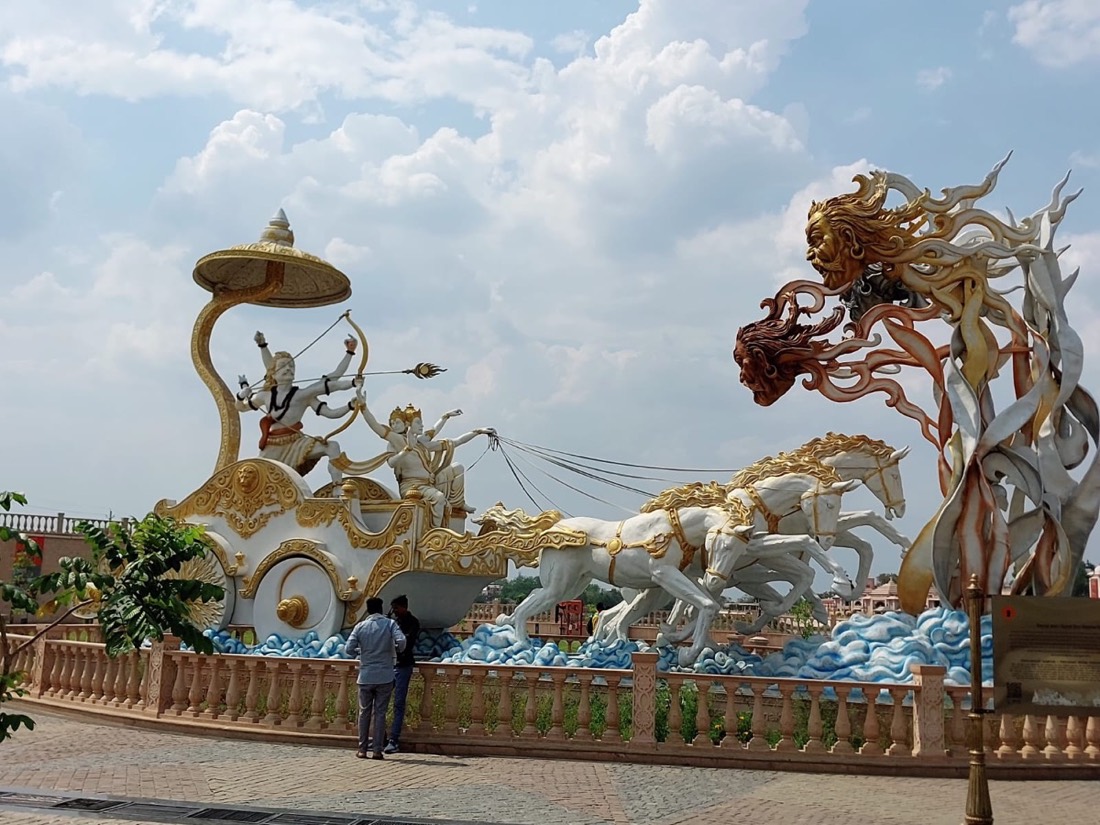
Mahakal Lok, the corridor beside the temple, is far newer. Its first phase was inaugurated on 11 October 2022, and The Week counts about 900 metres of walkway, around 108 carved pillars and some 200 statues and murals of Shiva and Shakti. This is modern public art, not ancient temple fabric, so a sculpture captioned "Mahakal" belongs to the corridor, not the old shrine.
Questions people ask about Mahakaleshwar
Are the Dushana and Chandrasena stories history?
No. They are the Shiva Purana's stories, told in chapters 16 and 17 of its Kotirudra Samhita. They explain why Mahakala is worshipped in Ujjain without dating anything. The temple's own history page puts the structure standing today in the 1730s.
Does the Shiva Purana mention Bhasma Aarti?
Neither chapter does. Bhasma Aarti is a temple practice: dawn worship in which the linga is bathed, adorned and offered sacred ash before lamps and chanting. The temple's site gives 4:00 am as its daily start, which is not a reporting time.
Who is Shrikara?
In chapter 17 he is the cowherdess's five-year-old son. Hanuman names him Shrikara once the kings have arrived, says Vishnu will be born as Krishna in his line eight generations on, and only then initiates him into Shiva's rites.
Checking timings and booking with the temple
The official website is the authority on timings, booking, dress, phones and security, and its notices change. On 3 November 2026 it offered Bhasma Aarti booking online, through the site only, with a notice of windows opening at 8:00 am on the 1st of the previous month and again the day before, though it gave no year. Reserved attendance, ordinary darshan, the separate quick-darshan pass and sanctum entry are different permissions, and a Bhasma Aarti booking covers none of the others.
Devam, the temple-stories app, is coming soon on the App Store and Google Play, and its waitlist will tell you when it opens. Until then there is the Purana's own picture of Ujjain: a crack in the ground beside four brothers' earthen image, and a pebble a mother threw away.