Kukke Subrahmanya, Karnataka: the god who stayed with a serpent
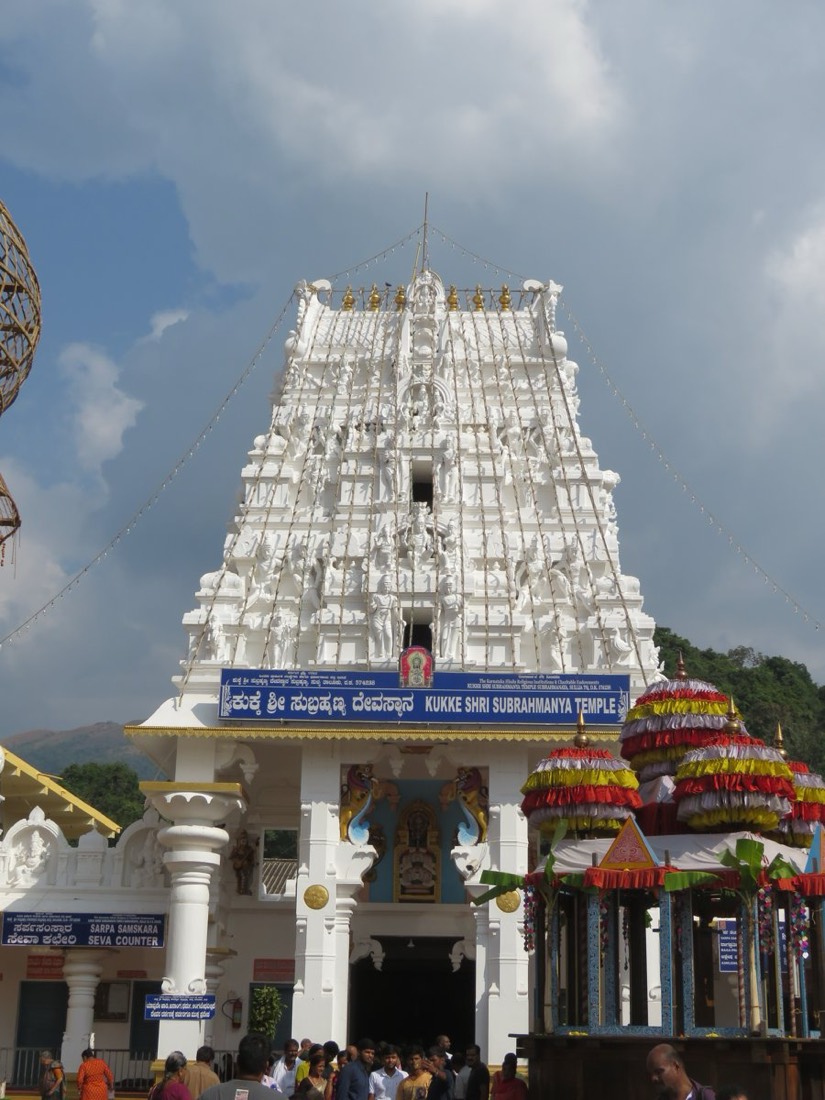
Kukke Shri Subrahmanya Temple stands at Subrahmanya in Dakshina Kannada, Karnataka, in the Western Ghats. The god here is Subrahmanya, also known as Kartikeya and Murugan, and devotees worship him together with Vasuki, the king of serpents. This blog follows three threads. One is how the god came to stay. Another is a fourteenth-century grant that budgets the temple's kitchen. The third is a pair of cooking pots, Rama and Lakshmana, whose raising and lowering open and close the Champa Shashti festival.
A wedding on the riverbank
The temple's own history, published in Kannada on the Karnataka government's temple portal, tells the founding story this way.
Kumaraswamy, as the god is called there, has defeated the demon Taraka and his followers. He comes to the mountain Kumaraparvata with his brother Ganapati. On the bank of the Kumaradhara river, Indra gives him his daughter Devasena in marriage. The text places the wedding on the sixth day of the bright fortnight of Margashirsha.
Close by, the serpent king Vasuki is doing penance. He prays that the god will stay. Kumaraswamy answers the prayer. He will remain in this holy place, present in Vasuki together with Devasena.
Other accounts give the serpent a more urgent reason. Karnataka Tourism says Vasuki came here to escape Garuda, Vishnu's mount. The district page says the serpents took refuge with the god in caves, and that he is worshipped here as a snake, which it calls his divine power. The tellings differ, so each stays separate here.
So the serpent sits at the centre of worship here. The district page calls the place famous for serpent rituals such as Sarpa Samskara. Karnataka Tourism says devotees come in the belief that worship here eases naga dosha, a serpent-related affliction in tradition. These are beliefs the sources report, and this article cannot test them.
The mountain the story points to
Kumaraparvata is more than scenery in the story. Each year, according to a December 2024 TV9 Kannada report, a party of the temple's priests and staff climbs it. The climb comes after Champa Shashti and before the separate Kiru Shashti celebration, with the Forest Department's permission. They spend the night before at Bhattara Mane, the only house in the forest. Next morning they perform abhisheka (ritual bathing) and puja at a mark understood as Kumaraswamy's footprint, with a mark of Vasuki beside it. Devotees say the Kumaradhara and Darpana Tirtha rivers rise where his foot touched the ground.
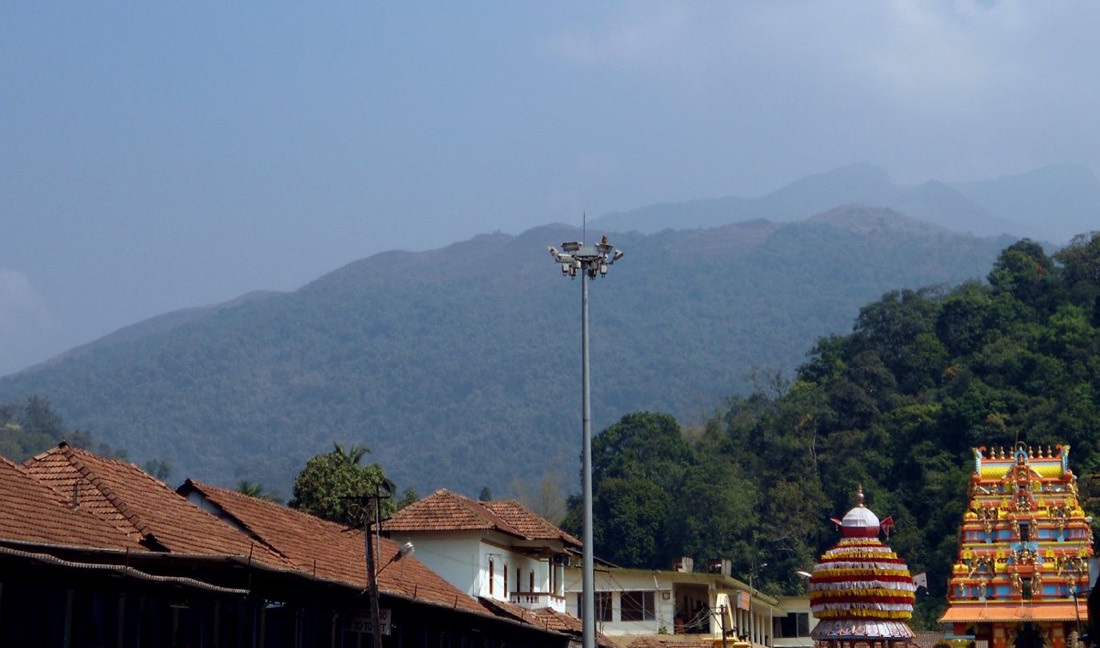
The ritual is younger than it sounds. The temple's chief priest told the channel that the worship had been done for generations but lapsed before 2003. After an Ashtamangala Prashna, a divination ritual, the temple decided to bring back one major puja each year. The climb in the report is a revival, not an unbroken line from the beginning.
A kitchen budget from the fourteenth century
Dating the temple is harder than telling its story. The temple's history page says no precise date is available. It estimates roughly 5,000 years, citing a Skanda Purana reference, a mention in the Shankara Vijaya and a ninth-century inscription from Bantra, and it calls the figure an estimate. Karnataka Tourism repeats the 5,000 years. These are traditions and estimates, not dated records.
Dated evidence comes from five copper plates, edited by K. V. Ramesh in Epigraphia Indica, volume 41. They record a grant by a man named Madhavaraja, which Ramesh dates, on his reading, to 13 December 1387. By then Kukke was an endowed temple. The plates read like a running budget.
Twelve Brahmins are to be fed. The grain must be husked before cooking, and that work has an allowance of its own. Fuel, salt, spices and ghee are listed, along with bronze lamps, copper utensils and six she-buffaloes. A yearly sum covers repairs. At festival time, provision is made for visitors and thirty-two village elders.
Then comes the cook. The cook receives a money allowance and the grain left unspent on Ekadashi, the eleventh day of each lunar fortnight, which many people keep as a fast. One reading is that the writers had thought about what a kitchen does on a day without full meals. An Amara Suddi report of November 2025 says the temple serves midday and evening meals every day except Ekadashi. The plates describe who was fed in the fourteenth century, not the open meals reported later.
The cook's name is not recorded. The cook's share is.
Records like this are the kind of temple story Devam is gathering. It is bringing together stories of more than 1,000 Indian temples and of gods and goddesses, with bhajans, mantras, aartis and quizzes, and is coming soon on the App Store and Google Play. You can join the waitlist.
Two pots named Rama and Lakshmana
Champa Shashti is held each year in Margashirsha, the lunar month that falls around November and December. It is built around the sixth day of the bright fortnight, so the calendar date changes every year.
On the Ekadashi just before it begins, the temple's chief priest goes into the sanctum and takes earth from the anthill there. This mula mrittika, sacred earth, is the temple's main prasada, according to the temple's history. The Amara Suddi report adds that it is given to devotees through the year.
Then the cooking starts. Two large cooking vessels called Rama and Lakshmana, kopparige in Kannada, are raised, and the festival opens. Through the fair's fifteen days, rice from them is served to devotees as mahaprasada, blessed food, says a 2013 Kannada Prabha feature. When the vessels are lowered, the festival ends.
In between, the deity goes out in cars: a flower car on Chauti, a car on Panchami, and on Shashthi the Brahmaratha, in what the feature calls the great car festival. The same feature says the Malekudiya people, whom it calls the area's original inhabitants, make a festival car from cane and bamboo with no other rope.
The day after Shashthi, the festival moves to the river. Amara Suddi's 2025 report describes a coloured-water ceremony called Okuli, then the deity on a raft decorated with mango and banana leaves and flowers on the Kumaradhara, for the avabhritha, the concluding bath. Back along the car street, traders and devotees offer their own worship.
The same report says praise verses call the god "Annadana Subbappa", roughly the Subbappa of the gift of food. A festival that opens and closes with its cooking pots fits the name.
Stone stacks by the river
Photographs of the river in front of the temple show something unusual: many small stacks of stones standing in the shallows. A Wikimedia Commons uploader describes them as stones arranged to look like naga sculptures. The sources read for this blog do not say who builds them or whether any rite is involved. The photograph dates from February 2012 and shows that day only.
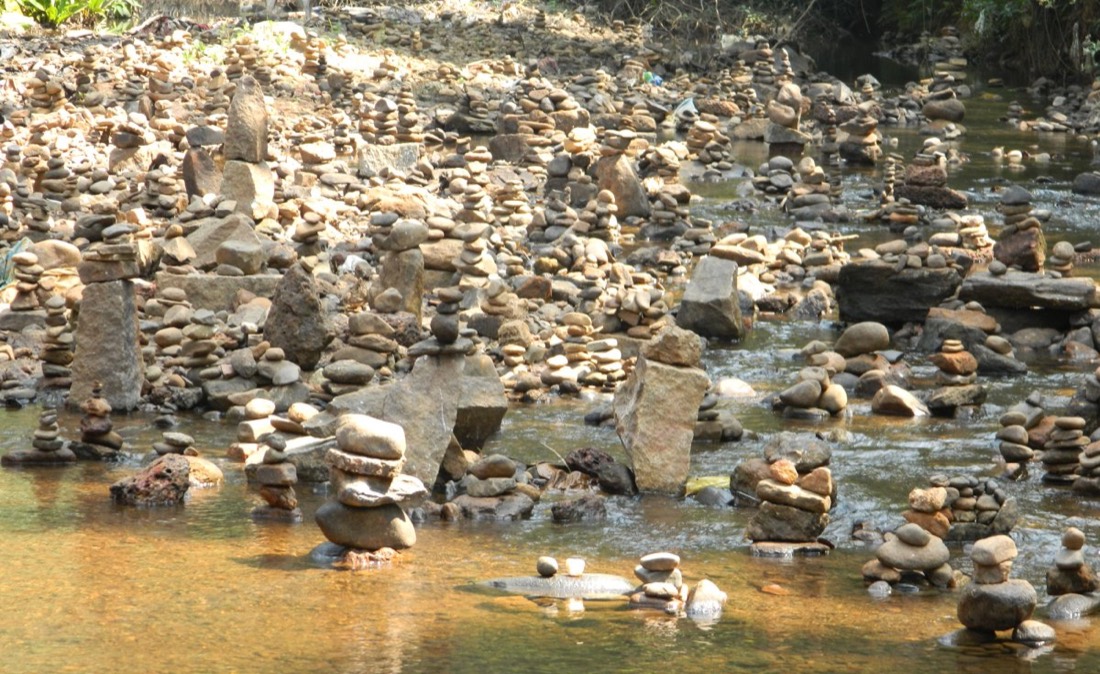
As of 10 November 2026, the district page puts Kukke about 104 km from Mangaluru by road, and Karnataka Tourism names Subramanya Road as the nearest railway station, around 12 km away. Timings, ritual booking, dress and festival-day changes are the temple's to set, so check the notices on its official portal page before travelling.
Questions people ask about Kukke Subrahmanya
Why is Subrahmanya worshipped with a serpent at Kukke?
The temple's own history says that after his wedding on the Kumaradhara's bank, the god answered the serpent king Vasuki's prayer to stay and promised to remain present in Vasuki together with Devasena. The district page adds that he is worshipped here as a snake, which it calls his divine power.
How old is Kukke Subrahmanya Temple?
No verified founding date exists. The temple's history page estimates roughly 5,000 years from traditions and references it cites, and calls that an estimate. The dated evidence is copper plates that Ramesh reads as from December 1387. They show an endowed temple by then, not when the first shrine was built.
What happens at the Champa Shashti festival?
It is held each year in Margashirsha, around the sixth day of the bright fortnight. It opens when the cooking vessels Rama and Lakshmana are raised and ends when they are lowered. Between come cars on Chauti, Panchami and Shashthi, and a river rite with a raft the day after Shashthi.
How far is Kukke Subrahmanya from Mangaluru?
The district page gives about 104 km by road. Karnataka Tourism lists Subramanya Road as the nearest railway station, around 12 km away. Confirm routes, timings and ritual booking on the temple's official notices before travelling, because the temple sets those and they change.
Rice, a serpent and a promise to stay
The temple's history begins with a promise: the god will stay. The records show what staying looked like. In the fourteenth century it meant husked grain, a cook's share and money for yearly repairs. In a 2013 festival feature it meant two pots, Rama and Lakshmana, raised to cook rice for a fifteen-day fair.
The serpent, the mountain and the river explain why the god stays. A cook's allowance and two named pots show who had to be fed while he did.
If that is the sort of temple story you like, you can put your name on Devam's waitlist. The app is coming soon on Google Play and the App Store.