Khatu Shyam Ji and the Head That Watched the War
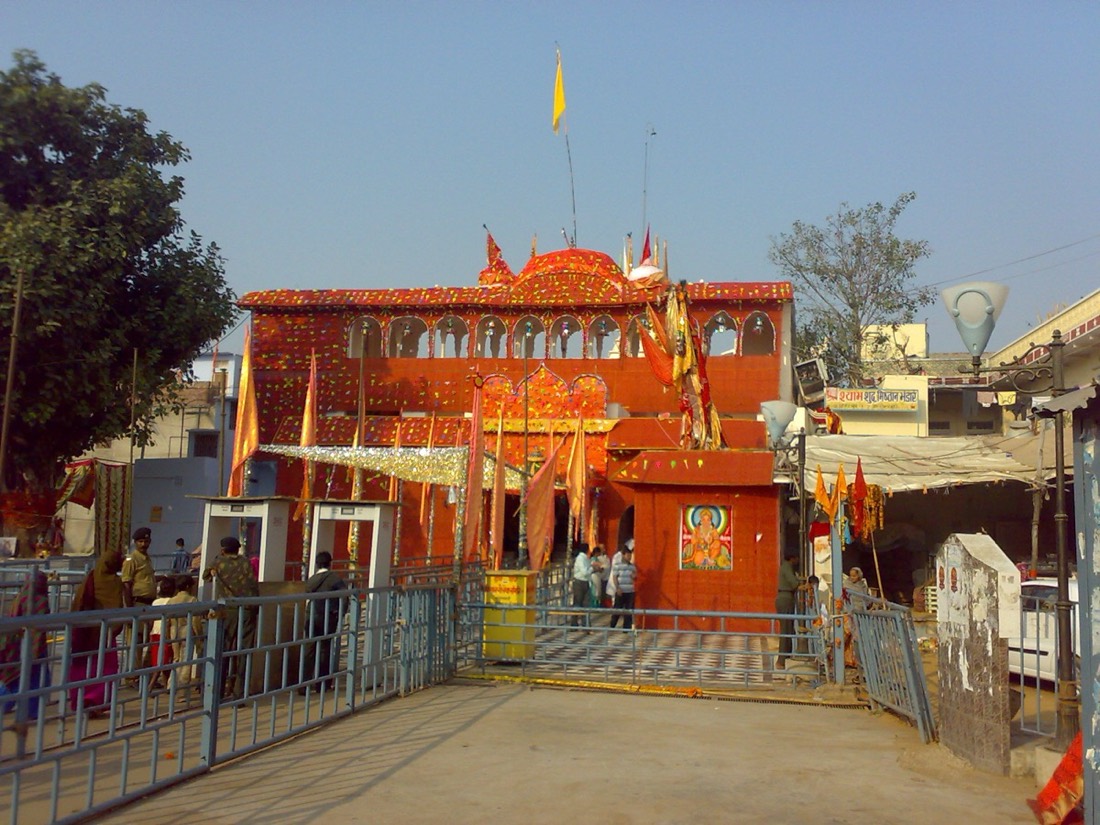
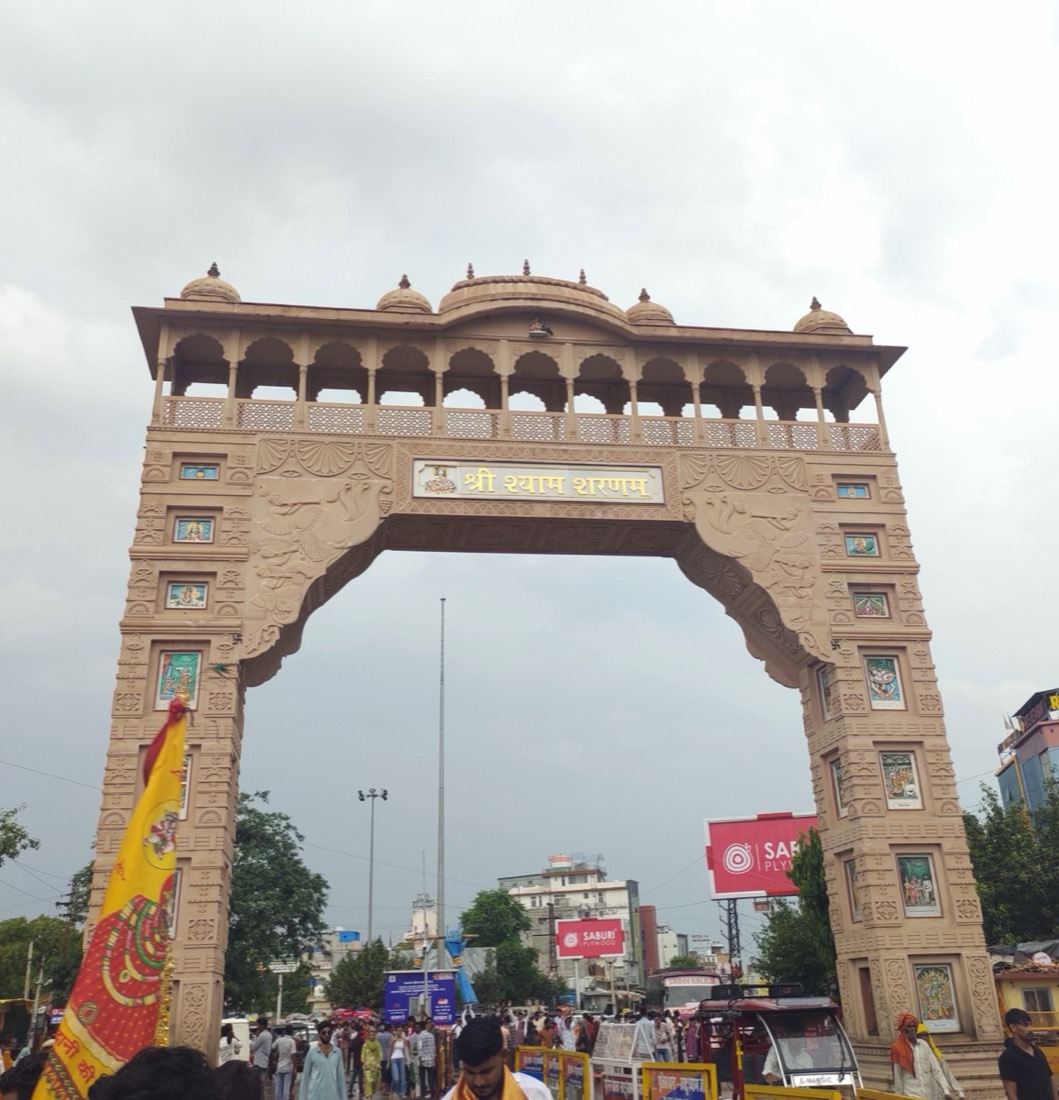
At Khatu, in Rajasthan's Sikar district, the Shri Shyam Mandir holds a head that devotees worship as Shyam, or Baba Shyam. Devotional tradition identifies it as the head of Barbarika, son of Ghatotkacha and grandson of Bhima, a warrior who never fought in the Mahabharata war. Two things need explaining. Why is a head worshipped, and why does it carry Krishna's name? The answer starts with a promise Barbarika made to his mother, and with what Krishna noticed in it.
What follows is the story as Rajasthan Tourism's page and a 2016 report for the state's Devasthan (endowments) department, pp. 14-15, tell it. It is devotional tradition, not recorded history, and tellings differ on small points.
The promise Barbarika made his mother
Barbarika's mother teaches him warfare. Shiva gives him three arrows that do not miss, and Agni gives him a bow. Then he hears that the Pandavas and Kauravas are about to go to war, and he sets out on horseback to watch it.
Before he leaves, he gives his mother his word. If he joins the fighting, he will help whichever side is losing.
On the way, Krishna stops him. He is disguised as a Brahmin.
The leaf under Krishna's foot
The two stand under a peepal tree. Krishna sets a small test: can Barbarika bind every leaf on the tree with a single arrow? Barbarika draws and releases, and within moments the leaves are tied together.
One leaf is hidden under Krishna's foot, and the arrow circles that one as well. For these arrows, a hidden target is still a target.
Then comes the real question. Which side will Barbarika take? He answers with his vow: the one that is losing.
What that vow would have done
Follow it through. Suppose the Kauravas are losing. Barbarika joins them, and arrows that never miss turn defeat into victory. Now the Pandavas are the side that is losing, so the vow carries him over to them. Then the balance tips again.
Rajasthan Tourism's account says where this ends: both armies destroyed, and Barbarika the only one left. The round-by-round reasoning is a reading of that account, not a line from it.
Nothing is wrong with Barbarika. He is skilled, and he keeps his word. That is exactly the trouble, because a kind promise joined to arrows that never fail cannot be left to run its course.
The head, and the one thing he asked for
The Brahmin now asks for charity, and Barbarika promises to give whatever is asked. Krishna asks for his head.
Barbarika is shocked, but he does not refuse. He asks the Brahmin to say who he really is. Krishna shows his divine form and explains: before a battle, the head of the bravest warrior must be offered for the worship of the battlefield, and he has chosen Barbarika.
Barbarika makes one request in return. He wants to see the war to its end. Krishna agrees. The head is placed on a hill near the battlefield, and the bow and the three arrows take no part in the fighting.
The witness with nothing to win
When the war is over, the victorious Pandavas start arguing about who deserves the credit. Krishna points them towards the hill. Barbarika has seen everything, so let him decide.
His verdict goes to Krishna. He saw the Sudarshana discus cutting down the Kaurava forces, and Draupadi, in the fierce form of Mahakali, drinking their blood. Of everyone present, he is the one who watched with nothing to win.
The name, and the head found at Khatu
Krishna then grants Barbarika a boon. In Kaliyuga, the present age, he will carry Krishna's own name, Shyam, and receive worship.
How the head came to Khatu is told as a sequel. On Rajasthan Tourism's page, Krishna blesses the head after the battle and sets it in the Rupawati river. When Kaliyuga begins, it is found buried at Khatu. A cow passing over the spot starts giving milk on its own, and puzzled villagers dig until they uncover the head. Roopsingh Chauhan, then king of Khatu, dreams that he is told to install it in a temple, and the temple is built. A Devasthan Department profile gives the dream to Roopsingh Chauhan's wife instead, and names the place of the digging as Shyam Kund.
Shyam Kund is the pond near the temple. Devotees believe that bathing there, especially during the Phalguna fair, relieves illness. That is a belief of worshippers, not a medical claim.
Devam, an app about India's temples and the gods and goddesses behind them, is coming soon on the App Store and Google Play. If you would like a note when it opens, you can add your email to the waitlist.
What the Skanda Purana tells instead
The Skanda Purana (Maheshvara-khanda, Kaumarika-khanda, chapters 60 to 66) tells Barbarika's story differently. This article reads it in G. V. Tagare's translation on Wisdomlib and keeps it apart from the Khatu telling.
In chapter 66, Barbarika fires an arrow filled with red ash that marks the weak points of Bhishma, Drona, Karna and Duryodhana, and an angry Krishna cuts off his head with the discus. The goddesses explain that he was once the yaksha Suryavarcas, cursed by Brahma to die at Krishna's hands. Chandika sprinkles the head with nectar so that it cannot die, and it watches the war from a mountain peak. Afterwards, asked by Bhima, it describes one figure bearing the marks of both Vishnu and Shiva fighting the enemy.
The leaf test and the request for charity do not appear in that chapter. The two accounts agree only that the head watches the war and is worshipped.
Dates the shrine gives for itself
Rajasthan Tourism's page gives no founding date. The Devasthan Department profile dates the first temple to 1027 CE, and says a renovation in Vikram Samvat 1777 (1720 CE), at the request of the king of Jodhpur, gave it its present form. A devotional website reports that a poem called Shyam Pachchisi, dated 1674 CE, is an early written mention of Shyam Ji, with the manuscript said to be in Jaipur.
No inscription or manuscript for any of these dates was seen in the research behind this article, so they are best read as the shrine's own account of its past. The epic setting of the story says nothing about when the building went up.
Timings and rules: ask the committee
The Shri Shyam Mandir Committee runs the temple, and its site, shrishyammandir.com, is the authority on current timings, notices and rules. On 3 November 2026 it carried a daily darshan update, a donation page and a page for the 2026 fair, mostly in Hindi, with the aarti timetable as an image. Rajasthan Tourism lists five daily services: Mangala, Shringar, Bhog, Sandhya and Shayan. An aarti time tells you when a service is held, not when you may enter the sanctum, and the committee's own listings label some times inconsistently, so confirm with the office. The pages checked did not state rules on dress, photography or booking, which is not the same as there being none. The main annual fair, the Phalguna fair, falls in February-March, and its dates move with the lunar calendar.
Questions people ask about Khatu Shyam Ji
Who is Khatu Shyam Ji?
Devotional tradition identifies him with Barbarika, son of Ghatotkacha and grandson of Bhima, a warrior who never fought in the Mahabharata war. Krishna is said to have given him his own name, Shyam, for Kaliyuga. At the Shri Shyam Mandir in Khatu, devotees worship his head.
Is the Khatu story the only account of Barbarika?
No. The Skanda Purana (Maheshvara-khanda, Kaumarika-khanda, chapters 60 to 66, in Tagare's translation) tells it differently: an arrow of red ash, an angry Krishna and a head kept alive by Chandika. The leaf test and the request for charity are not in that chapter.
How old is the Khatu Shyam temple?
The shrine's own accounts give 1027 CE for the first temple and a renovation in Vikram Samvat 1777 (1720 CE) that gave it its present form. No inscription or manuscript for those dates was seen, so treat them as the shrine's history of itself, not verified record.
Three arrows that never joined the war
Devotees call him Haare ka Sahara, the support of the defeated. A Zee Rajasthan report gives the title as devotees' belief and does not confirm it. Whether or not the story is the reason for it, the title sits well beside the vow he made his mother, to help whichever side was losing.
The arrows never joined the war. The head, set on a hill, saw all of it, and was the one called on to say who deserved the credit.
Devam gathers stories of more than 1,000 Indian temples and of gods and goddesses, along with bhajans, mantras, aartis and quizzes, and it is coming soon to the App Store and Google Play. If Barbarika's story left you wanting more like it, the waitlist is the way to hear when it opens.