Kedarnath Temple: the Shiva who is tended, covered and carried
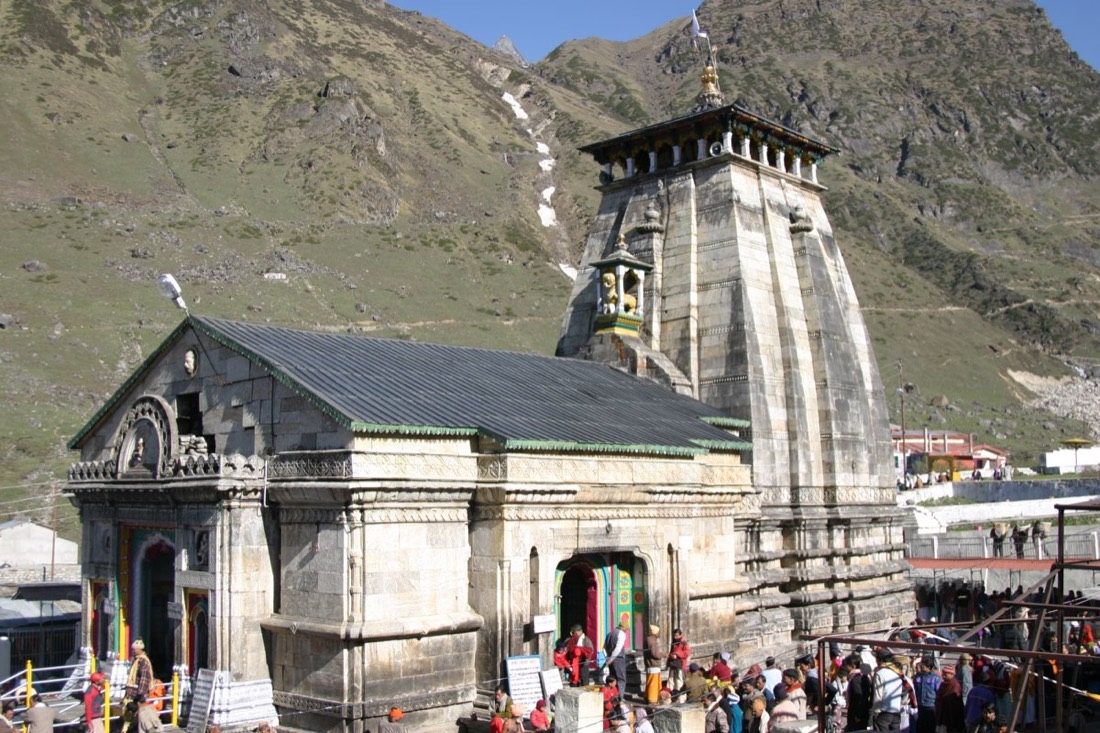
At 6 a.m. on 23 October 2025, the sanctum of Kedarnath, Shiva's Himalayan temple in Uttarakhand, was sealed. Inside, the linga lay covered with ash, grain, fruit, flowers, rudraksha seeds and a white cloth, IANS reported. The main gate closed at 8:30. Then a five-faced image of Shiva left in a palanquin, bound down the valley for the winter.
That is the temple's yearly turn. Kedarnath stands in Rudraprayag district, about 3,580 metres up in the Mandakini valley. Its temple committee calls it one of the twelve Jyotirlinga shrines of Shiva and part of Uttarakhand's Char Dham and Panch Kedar pilgrimages. The god here is a conical rock. Three stories gather around it: why the rock is rubbed with ghee, why the god goes downhill each winter, and why a boulder behind the temple is garlanded.
Bhima's blow and Kunti's order
The temple committee tells the origin this way. After the Kurukshetra war, the Pandavas seek Shiva's pardon for the killing. Shiva evades them, takes an animal's form and dives into the ground at Kedarnath, leaving his hump on the surface. Other parts of his body appear at four more places, and the five shrines together are the Panch Kedar.
The same page credits the stone temple to Adi Shankaracharya in the eighth century, beside an earlier Pandava temple. Elsewhere it gives the Pandavas as the builders. The sources read for this article give no archaeological date for the surviving walls.
A fuller telling was recorded in 2007 by the scholar Luke Whitmore for the book Mountain, Water, Rock, God. The teller was Tiwari-Ji, a tirth purohit, one of Kedarnath's pilgrimage priests. In this version Krishna tells the Pandavas that fighting for a just cause has not erased the fact of killing. Shiva hides from them as a buffalo. The jyotirlinga, the priest insists, was here before any of it, without beginning, and the animal form is taken into that older presence.
Then comes the ghee. Asked why the linga is massaged with it, the priest tells of Bhima striking the elusive god with his mace. Kunti rebukes her son and tells him to repair the place he has injured. So Bhima applies ghee, and asks Shiva to forgive the wrong. In this telling, forgiveness begins with repair.
Popular retellings often ground the ghee in Bhima's remorse after a fight with Shiva. The priest's version rests it on Kunti's order. It also met resistance: Whitmore records devotees who objected to the idea that the Pandavas would treat Shiva badly. It is one priest's account, not a doctrine everyone shares.
Whitmore also watched the practice in 2007 and 2008. Ghee came even with the simplest offering trays. At the end of the puja, family members rubbed the linga with their own hands while their priest recited a prayer admitting fault and asking for rescue. In the mountain cold the ghee was semi-solid. Older priests remembered embracing the linga, which a metal enclosure had since made harder. That is a dated description. Current rules about touching the linga are the temple committee's to state.
Devam, coming soon on the App Store and Google Play, is bringing together the stories of more than 1,000 Indian temples, along with gods and goddesses, bhajans, mantras, aartis and quizzes. If tellings like this one are what you come for, you can join the waitlist.
The god who winters at Ukhimath
Through the winter, Kedarnath is worshipped elsewhere. The Garhwal administration's page on Kedarnath says the temple closes just after Diwali, in October or November, and opens in the last week of April or the first week of May, on a date set from Hindu rituals.
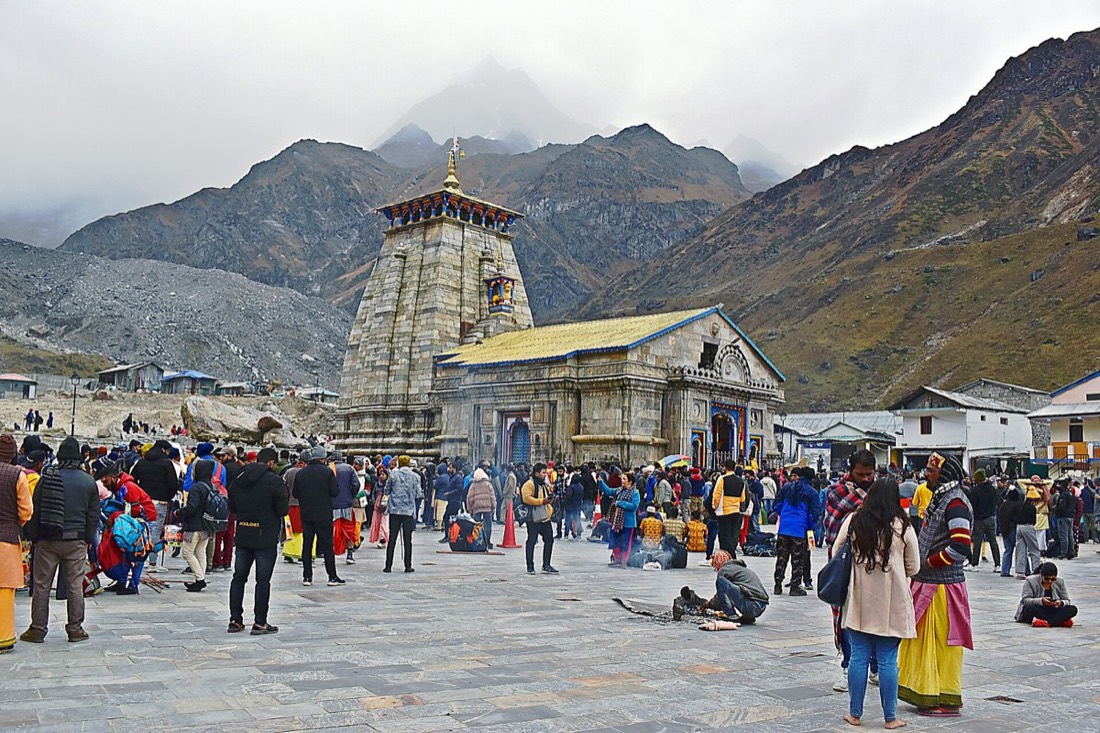
The 2025 closing shows how the move works. The linga does not travel. It stays in the sanctum, covered, in a rite called samadhi puja. The five-faced image, the one used in processions, goes in a doli, a palanquin. Akashvani reported that it left on Bhai Dooj, the festival after Diwali, and halted first at Rampur. The reported plan was Guptkashi next, then Omkareshwar Temple in Ukhimath on 25 October.
There, according to the same reports, worship continues through the winter until the portals reopen. The district's own pages call Ukhimath the winter seat of Kedarnath.
Whitmore's account of the 2007 season adds details. Temple committee representatives lock the doors while drums and a military band play. In spring, an advance party goes up first to check the snow and the paths and to restore water, electricity and telephone connections before the procession climbs back.
So the shrine is never simply left. The stone is tended where it stands, and the god's travelling form keeps worship going in the valley below.
The boulder behind the temple
In June 2013, heavy rain and the failure of the moraine-dammed Chorabari lake sent floods through the Kedarnath valley. The settlement around the temple was devastated, and many people died. The temple stood.
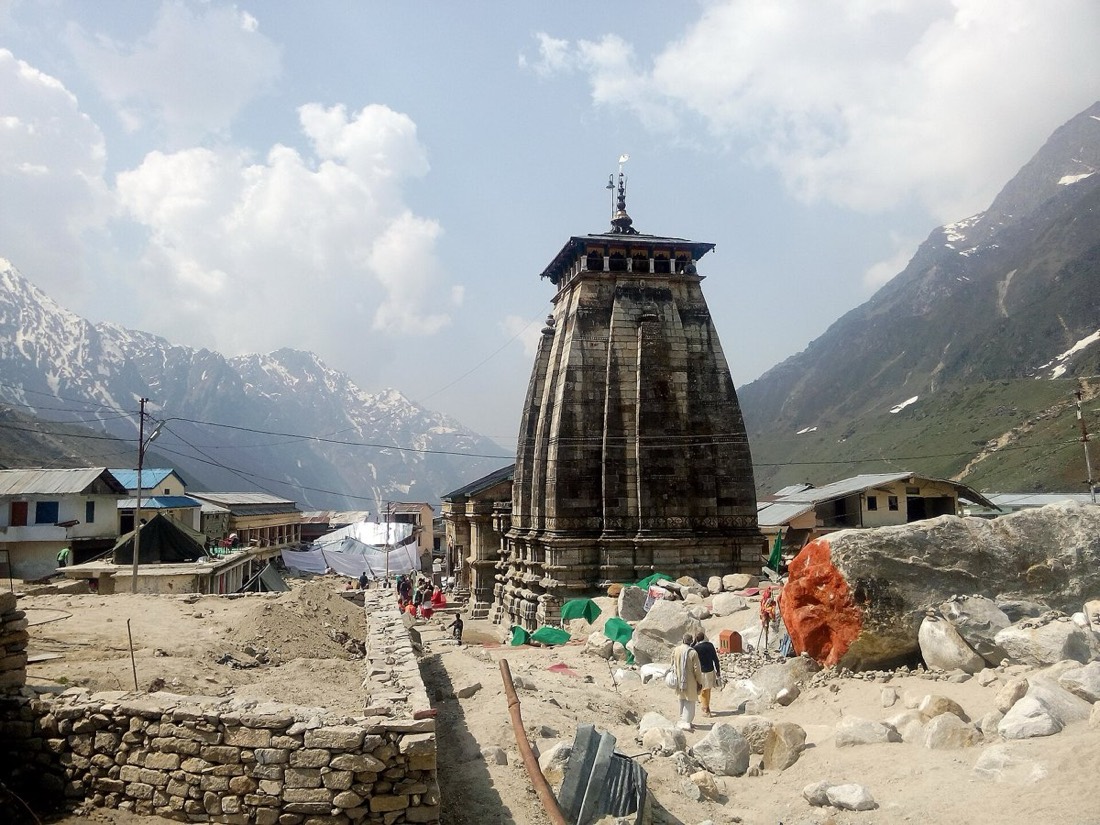
Whitmore was not present. The account, built from survivors and published reports, has people sheltering inside, mud and water entering, and the building holding behind a huge boulder. Whitmore credits the rock and the solidity of the construction. News reports say experts believe the boulder deflected the floodwater. How it got there, and exactly what it did, is still not settled.
When Whitmore returned for the reopening in 2014, visitors and local people were photographing the boulder and worshipping it as divya shila, the divine stone. It stood garlanded behind the temple. It is also called Bhim Shila. The reverence is documented. The physics is unfinished. Neither cancels the loss in the valley.
Dates, registration and what to check
As of 10 November 2026, the official pages named here were read for this article. None gives a season's dates in advance, and seasons shift. The Garhwal page describes the shrine as approached on foot from Gaurikund. The Uttarakhand Tourism Development Board's Char Dham portal describes yatra registration as required. Timings, booking, dress and rules are for the temple committee to announce, so check its official notices before travelling.
Questions people ask about Kedarnath
Is Kedarnath open in winter?
No. The Garhwal administration's page says the doors close just after Diwali, in October or November, and open in the last week of April or the first week of May. The linga stays covered in the sanctum. A five-faced image is carried to Ukhimath, where worship continues until the portals reopen.
Why is ghee rubbed on the Kedarnath linga?
In a telling recorded in 2007 from the priest Tiwari-Ji, Bhima struck the hidden Shiva with his mace, and Kunti told him to repair the injury. Ghee became the repair, with a prayer for forgiveness. It is one local account, and some devotees objected to it. Today's rules on touching the linga are the committee's.
Who built the Kedarnath temple?
Tradition and documented history differ. The temple committee credits an eighth-century building to Adi Shankaracharya beside an earlier Pandava temple, yet elsewhere names the Pandavas as builders. The sources read give no archaeological date for the surviving walls, so the builder is a tradition, not an established fact.
Did a boulder save the Kedarnath temple?
Devotees honour the boulder behind the temple, called divya shila or Bhim Shila, as the stone that stood between the shrine and the 2013 flood. News reports say experts think it deflected the water, but the mechanism is not settled. One scholar's reconstruction also credits the temple's solid construction.
Tended, covered, carried
In 2025 the doors opened at 7 a.m. on 2 May, Akashvani reported, and closed at 8:30 a.m. on 23 October. In one story the god is mended with ghee by the hands that hurt him. Each autumn the same stone is wrapped in ash and flowers, and a travelling image goes down the mountain. Between those two stories sits a boulder people garland, in a valley that remembers what the water took.
Coming soon on Google Play and the App Store, Devam will hold more temple stories like this one. If you would like to hear them when it arrives, join the waitlist.