Katarmal Sun Temple, Almora: A Stone Shrine With a Wooden Past
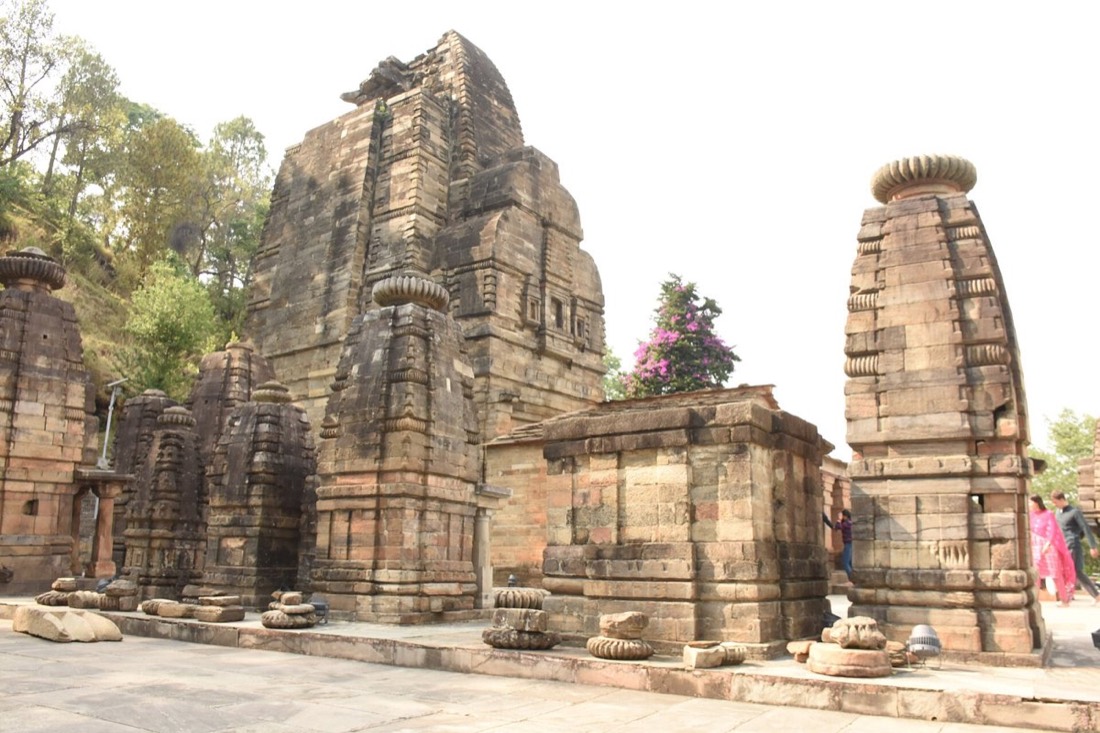
On a hill slope in Kumaon, in Uttarakhand's Almora district, the Katarmal Sun Temple is dedicated to Surya, the Sun god. The Archaeological Survey of India (ASI) records its local name as Bara Aditya, "the great Sun". It looks like a place of stone: one tall shrine and dozens of small ones. Yet wood runs through its story. A tradition tells of a Sun god seated in banyan wood. An ASI reading finds brick and timber beneath the stone. And a carved door from the temple is held by a museum in Delhi.
One tall shrine, forty-four small ones
ASI describes the main shrine as east-facing, with a sanctum and a gabled-roof hall in front of it. It considers the hall a later addition. Around the shrine, on a raised platform along the slope, ASI counts 44 smaller shrines, reached by a flight of steps from the east. Some sources count 45.
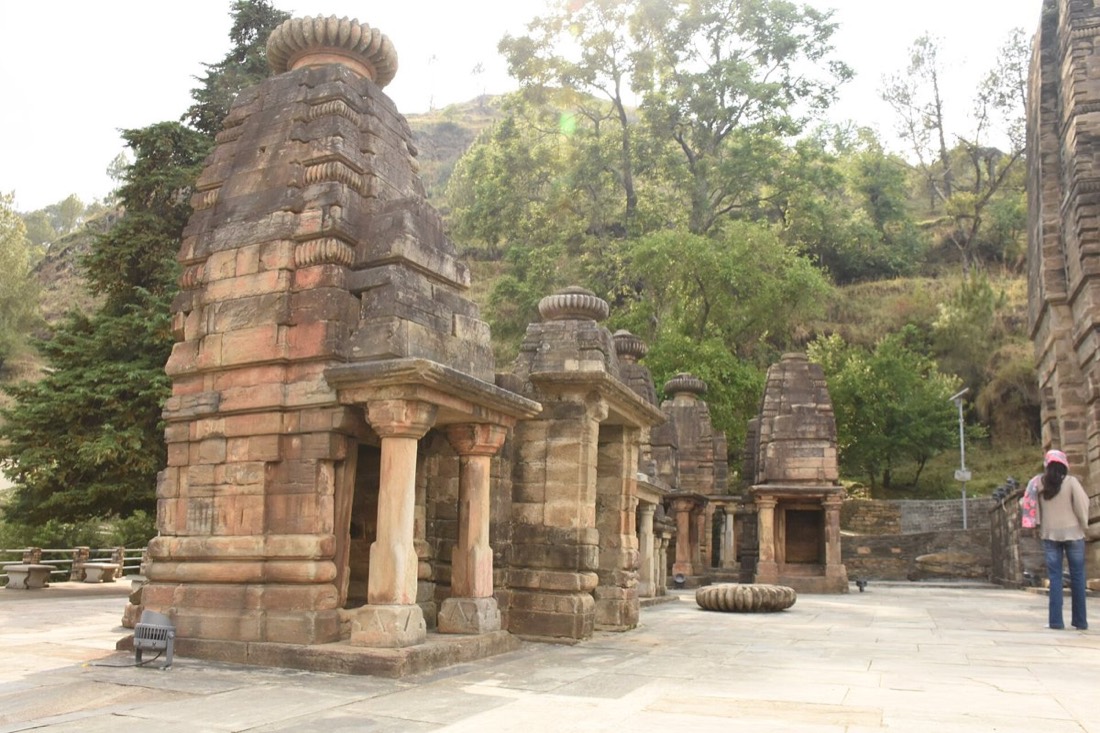
ASI notes many stone sculptures of Brahmanical (Hindu) deities in the sanctum. A 2002 feature in The Tribune adds images of Shiva with Parvati and of Lakshmi with Narayana. So this is a Sun temple with other gods in its company.
Chhath, observed in the month of Kartik, is the festival of arghya, water offered to the Sun at dusk and at dawn. Its date follows the lunar calendar. A tour operator's page says Katarmal draws worshippers during Chhath. The ASI, museum and press sources read for this article describe no Chhath custom here, so none is claimed. What they do describe is Surya worship in a hill shrine. A 2016 article in the Chitrolekha journal says many devotees come here to pray to the Sun god.
The Sun who sat in banyan wood
The Hindi daily Patrika retold the temple's origin tradition in 2021, citing Puranic references without naming a text. It is set in the Satya Yuga, the first of the four ages.
Sages are meditating in the hill caves, and demons keep disturbing their penance. Troubled by one demon, sages from the Dunagiri, Kashaya and Kanjar hills come to the bank of the Kosi river and worship Surya. Moved by their austerity, Surya appears and frees them from fear. Then he sets his radiance in a vat shila, a banyan stone. Since that day, the account says, the Sun has been seated here in an image of banyan wood. King Katarmal had the temple built on the same spot.
The story carries a name with it. Patrika says the banyan image is why the temple is also called the Bad Aditya, since bad is the Hindi word for banyan. Other writers hear other meanings. ASI glosses Bara Aditya as "the great Sun", and the Tribune gives the deity's name as Burhadita or Vraddhaditya, "the old Sun God".
A travel site, Hello Prabhu, told a variant in 2024. Its demon is named Kalanemi, and Surya's energy in the stone destroys him. A king again builds the temple on the spot.
Both tellings end the same way: the Sun's light is left in a stone at this place, and a king builds a temple there.
Stories like this one are what Devam is bringing together for more than 1,000 Indian temples, along with their gods and goddesses, bhajans, mantras, aartis and quizzes. Devam is coming soon on the App Store and Google Play, and you can join the waitlist to hear when it opens.
What the brick and the beam suggest
Archaeology offers a quieter reading, and ASI words it as a likelihood. It points to brick fragments still found at the site and to a carved wooden beam from Katarmal, displayed in the National Museum in New Delhi. From these it infers an earlier temple of brick and wood. The present stone temple, ASI says, may have replaced it in the 12th or 13th century CE.
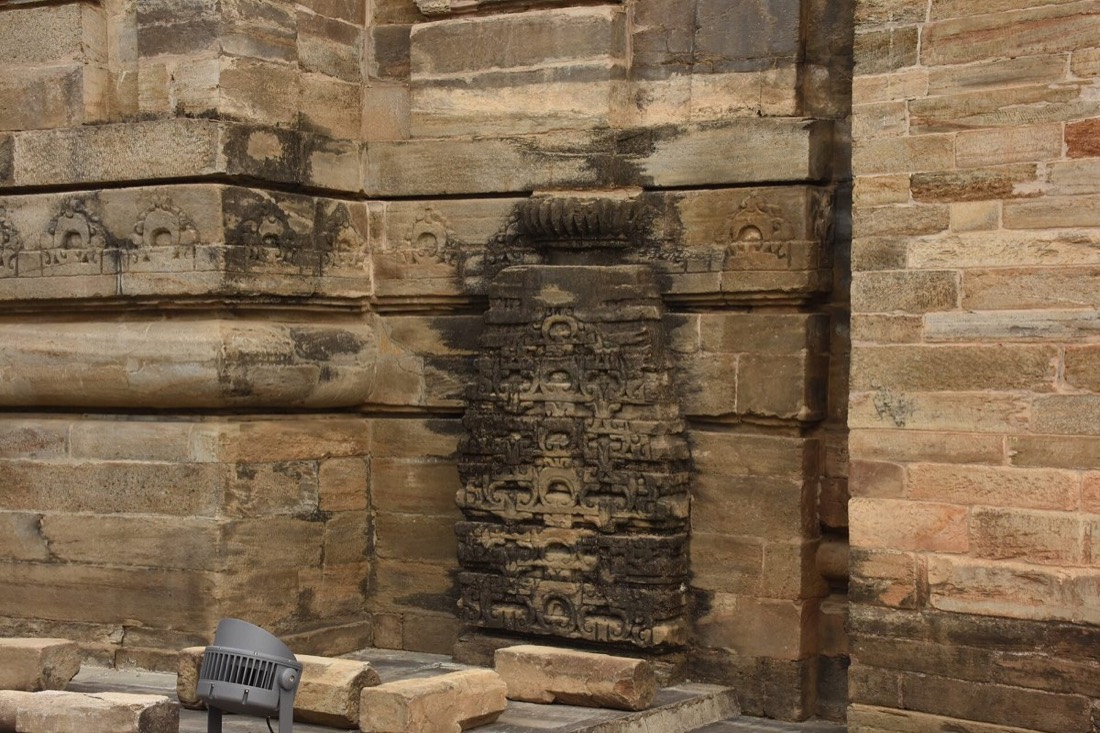
ASI adds that a nearly disintegrated wooden image of the Sun god appears to have been worshipped before the present temple. Set beside the banyan-wood tradition, the two point the same way, though neither proves the other. The tradition names no century, and ASI's wording is an inference.
Dates differ. The Tribune says Katarmalla, a Katyuri raja, built the temple in the 9th century. It dates the Surya image to the 12th and says the present hall and many of the shrines came much later. Patrika gives the 6th to 9th century. ASI names no builder. None of the sources read settles it, so the temple is best called medieval, with phases that writers date differently.
A door in Delhi, writing on its back
The best-recorded piece of wood is the door. The National Museum lists a "Door from Sun temple": shisham wood, two leaves, from Katarmal village in Almora, dated 1200 to 1400 CE.
Each leaf is divided into four panels of deities. Among them are Shiva with Parvati, Lakshmi with Narayana, Narasimha, Brahma and Bhairava. A chain for locking is part of the door.
On the back of the right leaf are five lines of Devanagari writing, in a script the museum calls late medieval. The sources read for this article give no transcription.
A door dated 1200 to 1400 says when the door was made, not when the shrine began. And the Sun's own doorway, it seems, met a visitor with other gods.
The museum's record does not say how or when the door left Katarmal. The Tribune's 2002 feature says the carved doors and panels were removed to the National Museum after the theft of the temple's presiding idol.
The walk up from Kosi
As of 12 November 2026, the sources read for this article support only a few details for a visitor. Katarmal is a village in Almora district. A 2025 magazine article says road access ends at Kosi village, with a trek of about 1.5 km to the complex. The Tribune gave the same distance in 2002. Sources differ by several kilometres on the distance from Almora, so a current map is safer than any figure here. ASI protects the monument. Timings, entry rules, dress and the state of the path change. Check the notices of the ASI Dehradun Circle and the district and state tourism offices before planning.
Questions people ask about Katarmal
Who built the Katarmal Sun Temple, and when?
The sources read name Katarmalla, a Katyuri king, as the builder. The Tribune gives the 9th century and Patrika the 6th to 9th. ASI names no builder and suggests a stone temple may have replaced an earlier brick-and-wood one in the 12th or 13th century. The dating is unsettled.
Is the Sun image at Katarmal made of wood?
A tradition reported by Patrika says Surya is seated in an image of banyan wood. ASI says a nearly disintegrated wooden Sun image appears to have been worshipped before the present temple. The Tribune dates the Surya image to the 12th century. The sources read do not settle what the present image is made of.
Where is the carved door from Katarmal kept?
It is in the National Museum, New Delhi, which records it as shisham wood with two leaves and four deity panels on each, dated 1200 to 1400 CE. A five-line Devanagari inscription is on the back of the right leaf. The record does not say how or when the door left Katarmal.
Does Katarmal have a Chhath tradition?
The ASI, museum and press sources read describe no Chhath custom at Katarmal. One tour operator's page says the temple draws worshippers during Chhath, which could not be confirmed. Chhath itself is observed in the month of Kartik, with arghya offered to the Sun at dusk and dawn.
Where the wood went
The stone shrines stay on the Kumaon slope. The carved beam and the door are in Delhi. The banyan-wood Sun belongs to tradition, and the wooden image ASI describes has almost gone. What remains of the wood is a trail of clues: a beam, a door, a story told on the bank of the Kosi. And on the back of one door leaf, five lines of old Devanagari whose wording the sources read for this article do not give.
Devam, coming soon on Google Play and the App Store, is collecting stories like this one for more than 1,000 Indian temples. To hear when it opens, join the waitlist.