Kanaka Durga Temple, Vijayawada: A Waiting Hill and a Wrestling Match
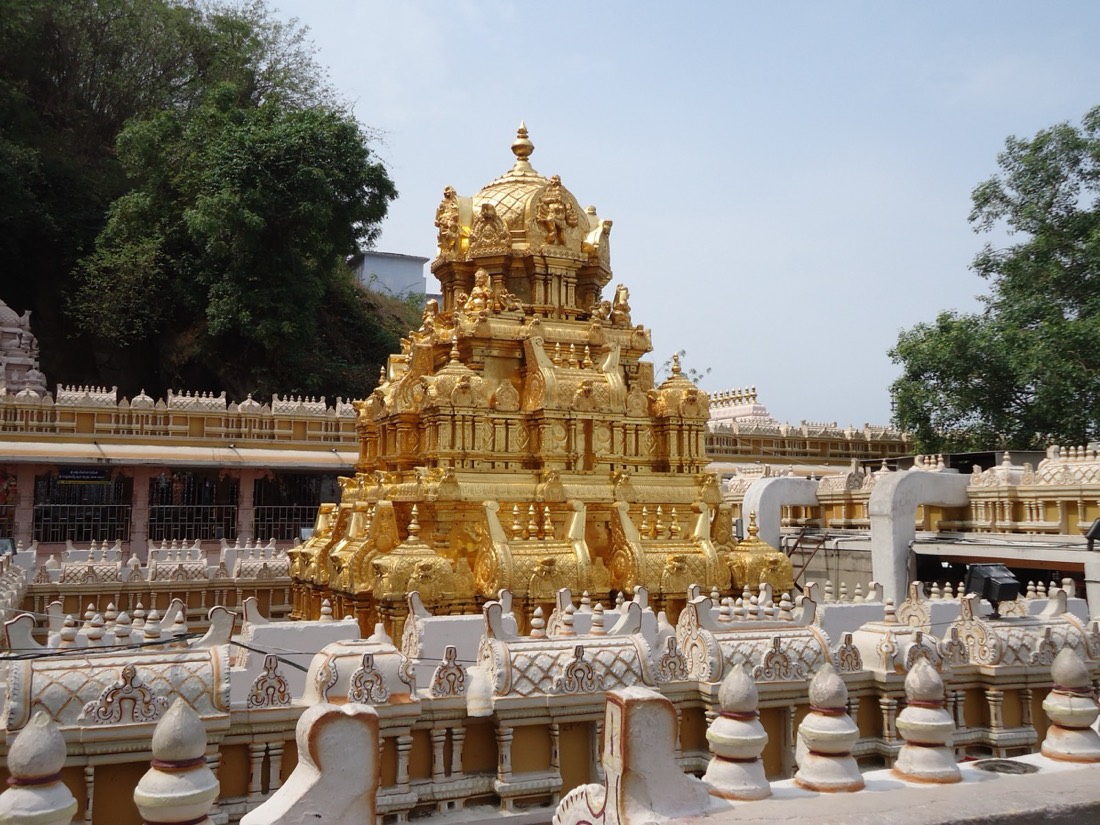
The Kanaka Durga Temple stands on Indrakeeladri, a hill beside the Krishna River in Vijayawada, Andhra Pradesh. Its official name, Sri Durga Malleswara Swamy Varla Devasthanam, names two deities. One is Kanaka Durga, the eight-armed goddess who defeats the buffalo demon Mahishasura. The other is Malleswara, a form of Shiva. The temple places her on his southern, right-hand side and reads that as the prominence of Shakti on this hill.
Each name has a story, and so does the hill. In one, the hill itself is a devotee who asked the goddess to stay. In the other, Shiva earns his name in a wrestling match with Arjuna. After those comes a short, plain look at what old inscriptions can actually date.
The Yaksha who asked her to stay
The temple tells its beginnings as a sthala purana, a sacred history of the place, and it starts with the hill, not the goddess. The temple's website and a heritage page from the CPR Environmental Education Centre tell it almost alike.
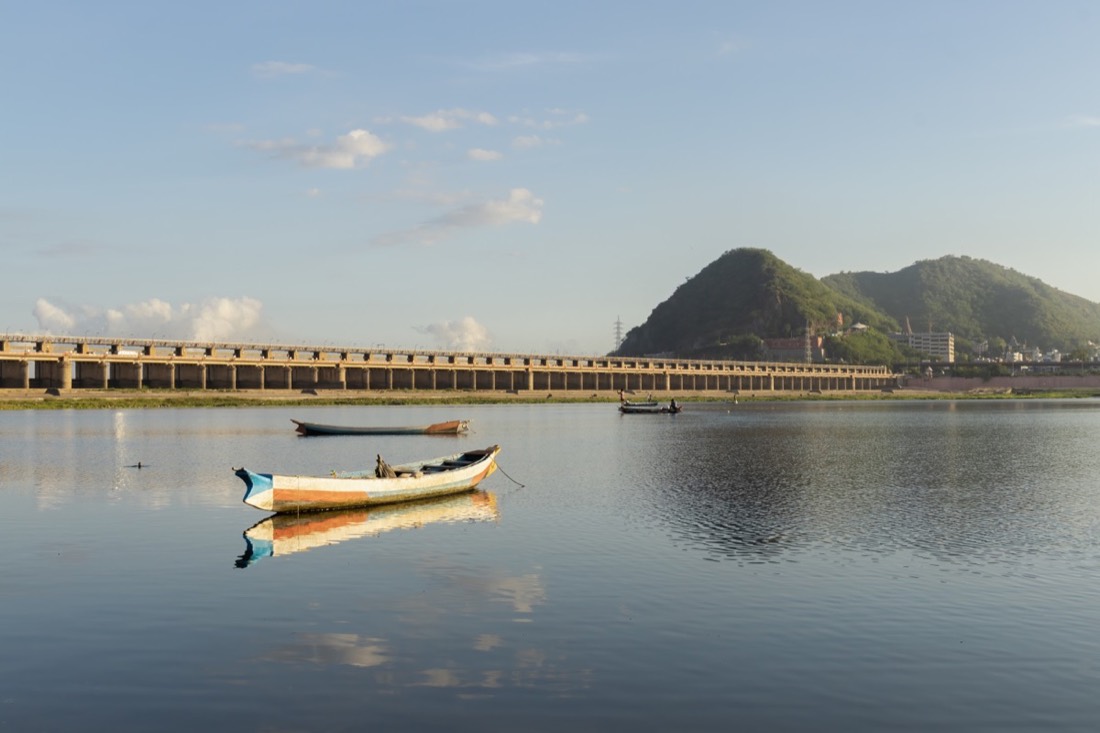
A Yaksha named Keela performs hard penance to please Durga. She appears and tells him to ask for a boon. He does not ask for wealth or power. He asks that she should always remain in his heart.
She blesses him, with a condition. First she has demons to destroy in the Krita Yuga; only after that will she live in his heart. Until then he must stay in the form of a mountain on the bank of the Krishna. In the temple's telling, Keela obeys, becomes the hill Keeladri and waits. The CPREEC page says she turns him into the mountain herself.
Then the battle comes. Durga destroys Mahishasura and manifests on Keela's mountain with eight arms, as Mahishasuramardini, and the boon is fulfilled. Indra and the other gods come to worship her there, and the hill becomes Indrakeeladri. Her golden radiance, the account adds, is why the hill is also called Kanakachala, and why the gods praised her as Kanaka Durga, the golden Durga.
In the better-known story the goddess wins and the telling ends there. In this one, victory is only half the tale. The other half is a promise, and the hill is the one she made it to.
The hunter, the boar and the garland
Shiva's name on the hill comes in two stages. By the temple's account, Brahma first worshipped him here with jasmine, mallika in Sanskrit, and so the god became Mallikesa. Later, in the Dvapara Yuga, Shiva tested Arjuna on this hill. The combat and wrestling that followed turned Mallikesa into Malleswara in local tradition. Malla means a wrestler.
The Mahabharata tells the same meeting in the Kairata Parva, part of its Vana Parva, the book of the forest years. This retelling draws on Kisari Mohan Ganguli's English translation (Sections XXXVII to XL) and on the temple's own version, and says where they differ.
The Pandavas are in exile, and war is coming. Arjuna needs divine weapons, so he goes to a mountain called Indrakila. In the epic, an ascetic he meets there turns out to be Indra, who tells him to win a sight of Shiva first. In the temple's version, the sage Vyasa advises him to seek Shiva's Pashupata weapon. In that version Arjuna stands in penance on one leg, arms raised, among four fires with the sun as the fifth.
Shiva comes to test him in disguise, as a Kirata, a mountain hunter, with Parvati as a huntress and his attendants disguised too. A boar rushes at Arjuna. In the epic it is a demon named Muka. Arjuna shoots, and so does the hunter. Both arrows land together, the two quarrel over whose kill it is, and neither gives way. Arjuna's arrows run out. The hunter takes the bow from his hands, and Arjuna's sword breaks on the hunter's crown. They fight with fists, then wrestle, until Arjuna lies senseless.
When he comes round, bruised and bleeding, he turns to worship. He makes an image of Shiva out of clay (the temple calls it an earthen linga) and offers it a garland of flowers. Then he sees that garland on the hunter's head. In the temple's telling, this is how he realises who the hunter is. He bows at the stranger's feet, Shiva puts aside the disguise, and Arjuna receives the Pashupata along with the knowledge to use it.
No arrow turns this fight. A garland does.
The temple brings the epic home. It says the Vijayeswara shrine on the hill commemorates Arjuna's victory and his receiving the Pashupata. A note on the map, though. On a plain reading of Ganguli's translation, Arjuna crosses the Himalaya and the Gandhamadana range before he reaches Indrakila, so placing Indrakila at Vijayawada is a local identification. The epic does not state it.
Devam is coming soon on the App Store and Google Play, and it is built around the stories of more than 1,000 Indian temples and the deities worshipped in them, with bhajans, mantras, aartis and quizzes beside them. If a hunter who turns out to be Shiva is the kind of story you read temples for, you can join the Devam waitlist and hear when it opens.
Two inscriptions that say Mallesvara
The stories explain the names. They do not date the temple. For dates you need stones, and there are few.
The first firm date is about a lamp. A short Telugu inscription on a pillar of the ruined Kanakadurga mandapa, a pillared hall at the foot of the hill, was published in Epigraphia Indica. It records a gift to the Mallesvara temple at Bezwada from Rudradevaraja of Natavadi, made for the merit of his father. He gave 55 goats to keep a lamp burning. A man named Konda-Sure-Boya and his descendants were bound to supply a daily measure of ghee. Kielhorn's calendar calculation, cited in the edition, gives April 1201. The edition does not settle whether this was the hill shrine or a separate temple at its foot.
The second record was found elsewhere. In April 2025, The Times of India reported a Telugu inscription of 1229 on a pillar in a field at Veligandla, in Prakasam district. The Archaeological Survey of India's epigraphy director confirmed the find. It records a donation to Bejavada Mallesvaradeva at Indrakiladri, which it calls Dakshina Varanasi, the Varanasi of the south. The full edition was not available for this article, so this one rests on the newspaper report.
Both records name Mallesvara. That does not prove the goddess's shrine came later, because what survives is partly chance. It does mean the earliest firm dates available here belong to Shiva. No source read for this article gives a secure date for the founding of the goddess's shrine. Online guides offer several, and none of them is backed by a source read here.
Questions people ask about the Kanaka Durga Temple
How old is the Kanaka Durga Temple?
No source read for this article gives a secure foundation date for the goddess's shrine. The earliest firm dates found, from inscriptions of 1201 and 1229, name Mallesvara. Stories like Keela's and Arjuna's explain the names; they do not date the temple.
Why is the temple also called Durga Malleswara?
Its official name, Sri Durga Malleswara Swamy Varla Devasthanam, names two deities: Kanaka Durga and Malleswara, a form of Shiva. The temple places her on his southern, right-hand side and reads that as the prominence of Shakti on this hill.
Is it a Shakti Peetha?
The temple's English pages do not say so. They call the place a Shakti–Shaiva pilgrimage centre, sacred to both the goddess and Shiva. None of the sources read for this article ties the hill to the story of Sati's body falling to earth, which is why this article does not call it a Shakti Peetha.
Is Malleswara a jyotirlinga?
The temple calls Malleswara a jyotirlinga-associated form of Shiva; a jyotirlinga is a linga of light. That is a devotional description of this linga. The standard list of twelve jyotirlingas does not include Vijayawada.
Timings, bookings and the cloakroom
This article gives no darshan timings. The temple's official site, kanakadurgamma.org, carries them, together with seva booking, dress rules and festival notices. On 3 November 2026, two timing listings on the site disagreed with each other. The site also says timings may vary on festivals and special occasions, so the current notice is the one to trust. The site also describes a cloakroom for bags, mobile phones, cameras and other articles that may not be permitted inside. The temple says a ghat road reached the hill in 1969, though many pilgrims still choose the steps.
Under both names
The temple is commonly called by the goddess's name alone. The official name keeps Malleswara beside it, and under both is the hill. The stones give Shiva the earliest firm dates. The story gives the goddess a devotee who is also the ground she stands on.
The app is still coming soon on the App Store and Google Play. If you would like more temple stories like Keela's and Arjuna's, leave your email on the Devam waitlist.