Badrinath, Uttarakhand: the oil and the blanket that frame its year
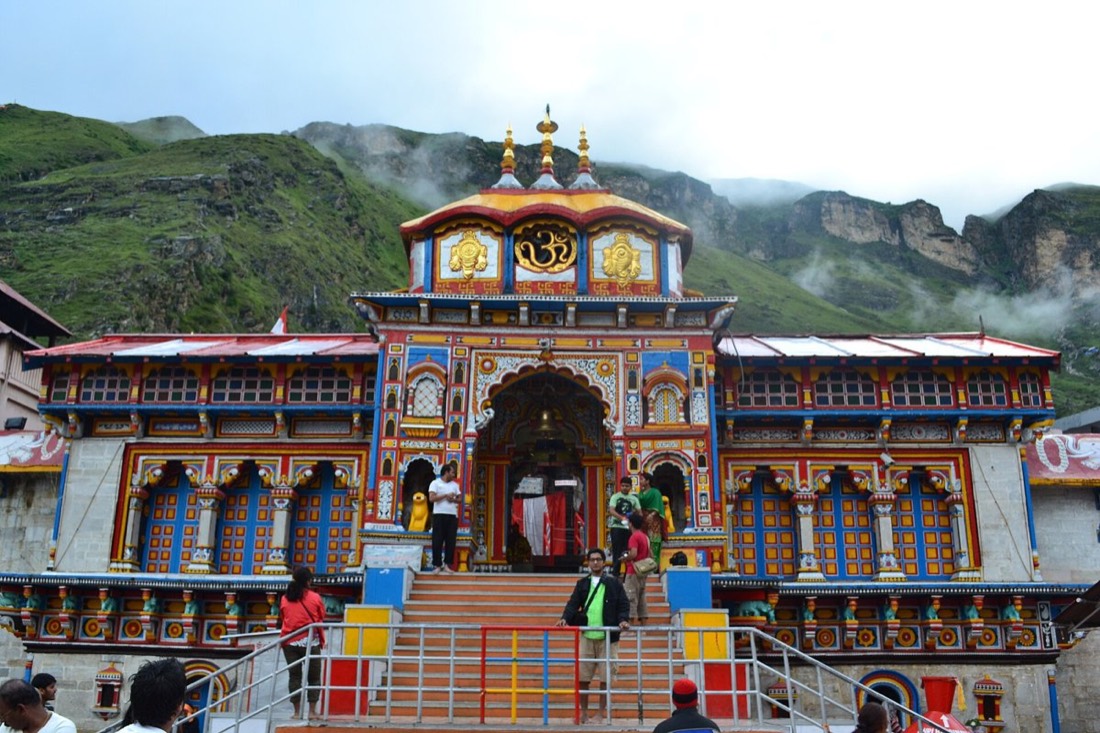
Badrinath Dham stands in Chamoli district, Garhwal, on the right bank of the Alaknanda in Uttarakhand. Vishnu is worshipped here as Badrinarayan, or Badri Vishal. The temple committee says the shrine is open to the public from April or May to November.
Two ordinary things hold that season together. One is sesame oil, crushed at a royal court and carried through the mountains to anoint the deity. The other is a woollen blanket, coated in ghee, that covers him for the winter. Follow them through a year and the temple starts to look like a relay.
The year begins in a palace court
The doors are not the first thing to open. On Basant Panchami, a spring festival whose date follows the lunar calendar, the royal court of Tehri at Narendra Nagar announces when Badrinath will reopen. In 2026 the festival fell on 23 January, and the date given was 23 April at 6:15 am. NewsX reported that a palace priest said the time came from astrological calculation based on the horoscope of the royal house's head.
The same court prepares the oil. The temple's daily anointing, the abhishek of Badri Vishal, uses sesame oil kept in a vessel called the Gadu Ghada. Reports also call it the tel kalash, the oil urn. According to Garhwal Post's advance report, married women in yellow clothes crush the sesame by hand in wooden mortars and collect the oil in silver urns.
On 22 April 2025 the work reaches its ceremony at Narendra Nagar. Amar Ujala reports that the Tehri MP, a princess and other married women pour the oil. The head of the royal house then performs an arati with a thousand lamps and hands the Gadu Ghada to members of the Dimri Religious Central Panchayat. They set out for Badrinath with it.
The journey is a relay, not a delivery. The advance itinerary plans a night in Rishikesh, a stop at Srinagar, then days of rest at the Lakshmi Narayan temple in Dimmar village. It goes on to Pakhi, the Narasimha temple at Joshimath and Yog Badri at Pandukeshwar. From Joshimath the vessel is to travel with the seat of Adi Guru Shankaracharya. The same report has it reaching Badrinath on the evening of 3 May, together with the palanquins of Uddhav and Kuber, whose images are kept in the sanctum. The doors open on 4 May. Same-day reports list some stops differently, so this is the planned route, not a log.
So the oil arrives with the figures who spent the winter elsewhere. Each stop along the way is a handover.
Devam is bringing together stories of more than 1,000 Indian temples, along with the gods and goddesses they honour. If you like learning how a temple's year is actually kept, the app is coming soon on the App Store and Google Play, and you can join the waitlist on the Devam site.
Wool for the winter
Closing has its own calendar. At Vijayadashami, the autumn festival, Vedic scholars and the temple's dharmadhikari, a religious office-holder, fix the date from the panchang, the Hindu almanac. The Rawal, the chief priest, then announces it, ANI reported in September 2025. A run of special prayers, the Panch Pujas, follows.
On 25 November 2025 the main doors close at 2:56 pm. Garhwal Post describes what happens first. The images of Uddhav and Kuber are brought out of the sanctum. The image of Lakshmi is installed inside, and the chief priest invites her to stay for the winter. A ghrit kambal, a woollen blanket coated in clarified butter, is offered to Badri Vishal. After the closing prayers, the doors are shut.
Who made the blanket depends on the account. Garhwal Post says members of the Mahila Mangal Dal, a women's group, did. In Dainik Tribune, Dr Brijesh Sati describes the traditional makers as five unmarried girls of nearby Mana village, and the ghee as coming from the Badri cow. Neither names an individual.
A shelter runs through the temple's own name story. The committee says Badri is a wild berry. In one version Lakshmi takes the form of the berry tree and shades Vishnu from the harsh sun. In another, the tree covers Narayana on every side against cold, rain and snow. Read beside the winter rite, the pattern is hard to miss: a goddess enters the sanctum, and a woven covering goes over the image. That link is an interpretation, not something the committee states.
While the doors stay shut, Uddhav and Kuber spend the winter at Pandukeshwar. The seat of Adi Guru Shankaracharya goes to the Narasimha temple at Jyotirmath, the town some reports call Joshimath. All India Radio's report said they were due to leave the next morning, and that the seat would reach Jyotirmath on 27 November.
Who keeps watch while the doors are shut
The committee's account gives the closed shrine a keeper. In winter, it says, Narada arranges worship and bhog, the food offering, and the Akhand Jyoti, a continuous lamp, keeps burning. That is the committee's statement of belief. Dr Sati's account adds that devotees regard the lamp as a miracle of Narayana.
When the doors reopen, the blanket is lifted from the idol. Dr Sati says it is then shared among devotees as prasad, the blessed offering returned to worshippers. The same account records how some read it: if the blanket is in good condition, the coming year is expected to bring good weather, enough rain and fewer disasters. That is a community belief, not a forecast.
The painted doorway
The main gateway is painted in reds, blues and yellows. The committee describes the temple in three parts: the sanctum, the Darshan Mandap, and the Sabha Mandap, where pilgrims assemble.
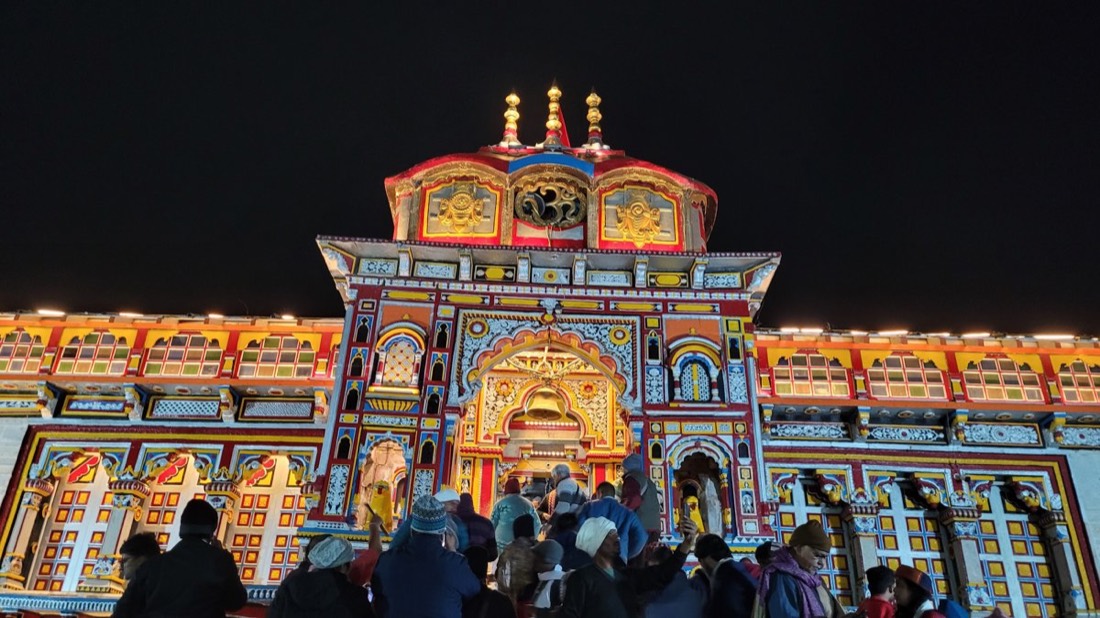
Its history says Adi Shankaracharya recovered the image from Narad Kund, on the Alaknanda, and re-enshrined it in the eighth century. That is the temple's own tradition, not a construction date for the building that stands today.
Hot water by the river
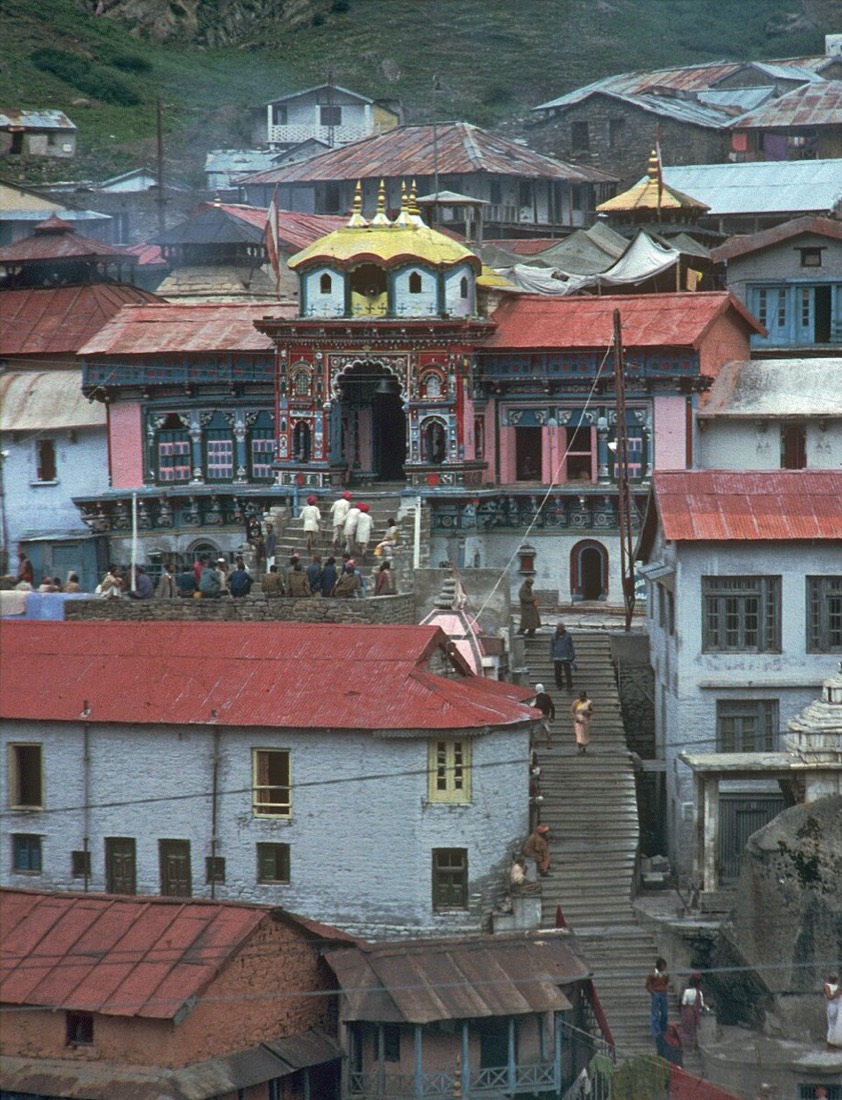
Between the temple and the Alaknanda lies Tapt Kund, a natural hot spring. The committee's list of nearby sites says bathing there before entering the temple is customary.
A few points for orientation. As of 10 November 2026, these are the details the official pages give:
- Season. The shrine is described as open to the public from April or May to November, and the dates are fixed afresh each year.
- Rules and timings. Booking, timings, dress and rules change. Use the notices on the committee's official site, badrinath-kedarnath.gov.in, before planning.
- Height. The Uttarakhand government's Char Dham registration site gives the altitude as 3,133 metres.
- Winter. The committee's list of nearby temples says pujas at the Narasimha temple in Joshimath continue through the year, even when Badrinath is closed by snow.
Questions people ask about Badrinath
Is Badrinath temple open all year?
No. The committee describes the shrine as open to the public from April or May to November, and it closes for roughly six months each winter. The opening date is announced on Basant Panchami and the closing date is fixed at Vijayadashami, so both change from year to year. Check the committee's notices.
What happens to the images at Badrinath in winter?
Reports of the 2025 closing say Uddhav and Kuber leave the sanctum for Pandukeshwar, while the seat of Adi Guru Shankaracharya goes to Jyotirmath. Lakshmi's image is installed inside, and the ghee blanket is offered to Badri Vishal. Dr Brijesh Sati says the blanket is lifted from the idol at reopening.
How old is Badrinath temple?
The committee's history says Adi Shankaracharya recovered the image from Narad Kund and re-enshrined it in the eighth century. That is temple tradition, not a dated construction record for today's building, so the eighth century is best read as the temple's own account of its beginnings.
What is the Gadu Ghada?
It is the vessel of sesame oil used to anoint Badri Vishal. Married women crush the sesame by hand, and the oil leaves the Tehri royal court at Narendra Nagar each spring. In 2025 it was due at Badrinath on 3 May, a day before the doors opened.
Spring's oil, winter's wool
The oil goes in at the start of the season and is used for anointing while the doors stay open. The wool goes on when they close and, at reopening, comes off to be shared out. Between those two moments, a palace court, a few villages and a string of smaller shrines do work that a photograph of the gateway does not show.
Devam, which is bringing together the stories of more than 1,000 Indian temples, is coming soon on Google Play and the App Store. If stories like this one appeal, join the waitlist on the Devam website.