Arasavalli Sun Temple, Srikakulam: a kick, a dream and two dates
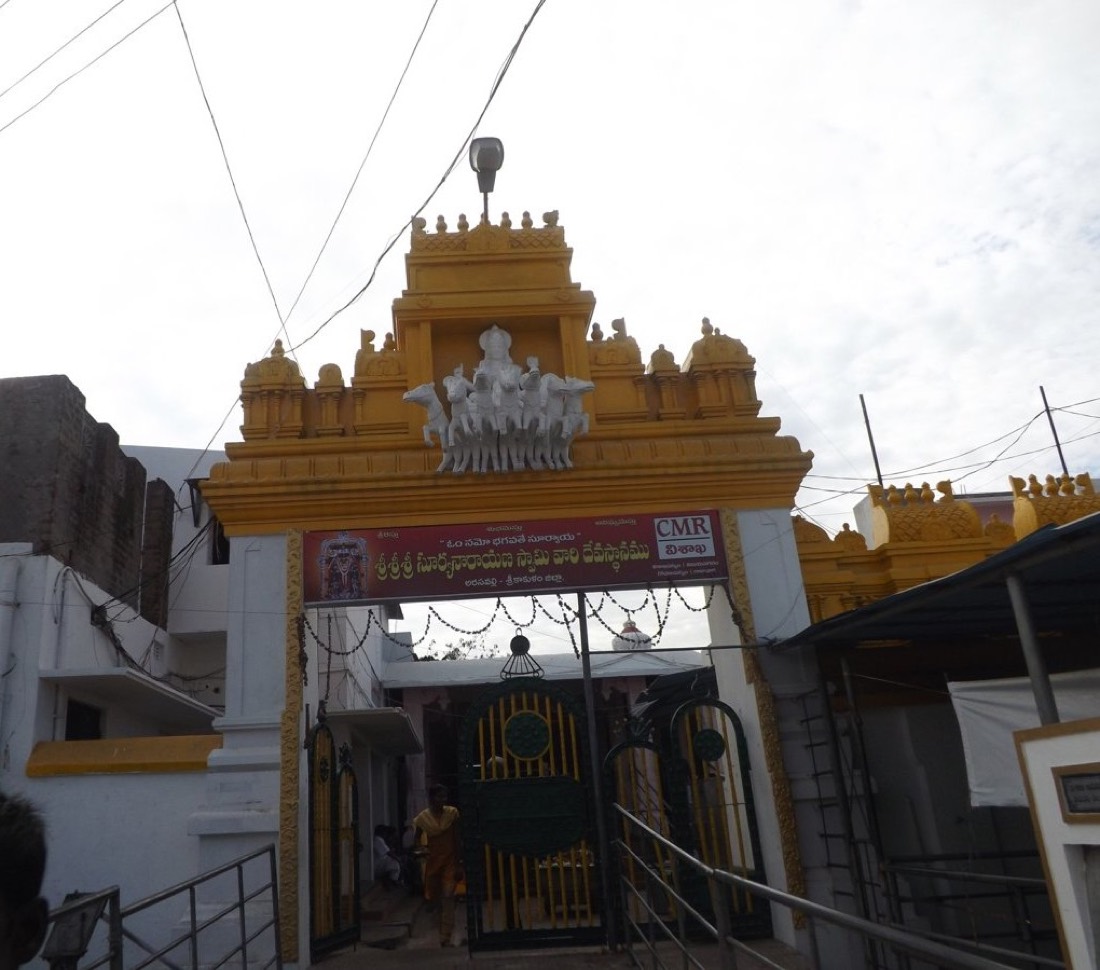
At Arasavalli, about a kilometre east of Srikakulam town in Andhra Pradesh, the district administration says, the Sun is worshipped as Suryanarayana Swamy. The name is also spelled Arasavilli. The temple's story begins with a god refused at a door. Its stones add a second discovery: a date far from the seventh century that most pages quote.
Chhath, kept each year in the month of Kartik on a date set by the lunar calendar, offers arghya, water, to the setting and the rising Sun. The sources read for this article do not tie Arasavalli to Chhath. They do show a temple devoted to the Sun through the year. The temple's information site names Ratha Saptami, the Sun's birthday in devotional belief, in the month of Magha as its main festival, and lists a boat festival on its tank in Kartik.
The god who would not wait
The temple's account, which the district administration calls its sthala-purana, the sacred history of the place, begins at the shrine of Shiva as Rudrakoteshwara. Indra, king of the gods, arrives at an untimely hour. Shiva is with his consort. Nandi, the gatekeeper, tells Indra to stay out. Indra pushes on. Nandi kicks him, and Indra falls unconscious with an injury to his chest.
In that state he dreams. If he builds a temple and installs an image of the Sun God, the pain in his chest will ease. He wakes and remembers. At the spot where he fell he scoops up earth three times, and there lies a beautiful image of the Sun with his three consorts, Usha, Chhaya and Padmini.
The temple describes the rest: the doorkeepers Mathara and Pingala at the base, the sages Sanaka and Sanandana holding umbrellas above, and the charioteer Aruna driving the Sun's chariot, all said to be cut from one piece of polished black granite.
Indra installs the image. With his thunderbolt, the vajra, he digs a pond, the tank called Indra Pushkarini. There the account ends: a temple founded by the god who had been turned away from another.
Nandi's refusal does not end Indra's journey. It sends him to a different door.
Devam is bringing together the stories of more than 1,000 Indian temples, and of gods and goddesses, with bhajans, mantras, aartis and quizzes. It is coming soon on the App Store and Google Play. If origin stories like Indra's are what you enjoy, join the waitlist.
Two other ways the temple began
The temple's origin is told more than once. The district page, citing the Padma Purana, says the sage Kasyapa installed the image for the good of humankind, so the Sun here is said to be of Kasyapa gotra, the lineage of Kasyapa.
The information site gives another. Balarama draws the river Nagavali along with his plough and consecrates a temple of Uma and Rudra Koteswara on its bank. Indra arrives late at night, and Nandi, keeping watch, will not let him in. Indra insists, and Nandi kicks him towards the east. In pain, Indra prays to the Sun, whose rays touch him and restore his strength. He begs to stay there for ever. Here the cure is light, not a dream.
The sources keep these side by side. Each is a devotional tradition, and none is a dated record.
The tank Indra dug
The temple has a sacred tank, a pushkarini, which the information site calls Indra Pushkarini after the pond Indra is said to have dug.
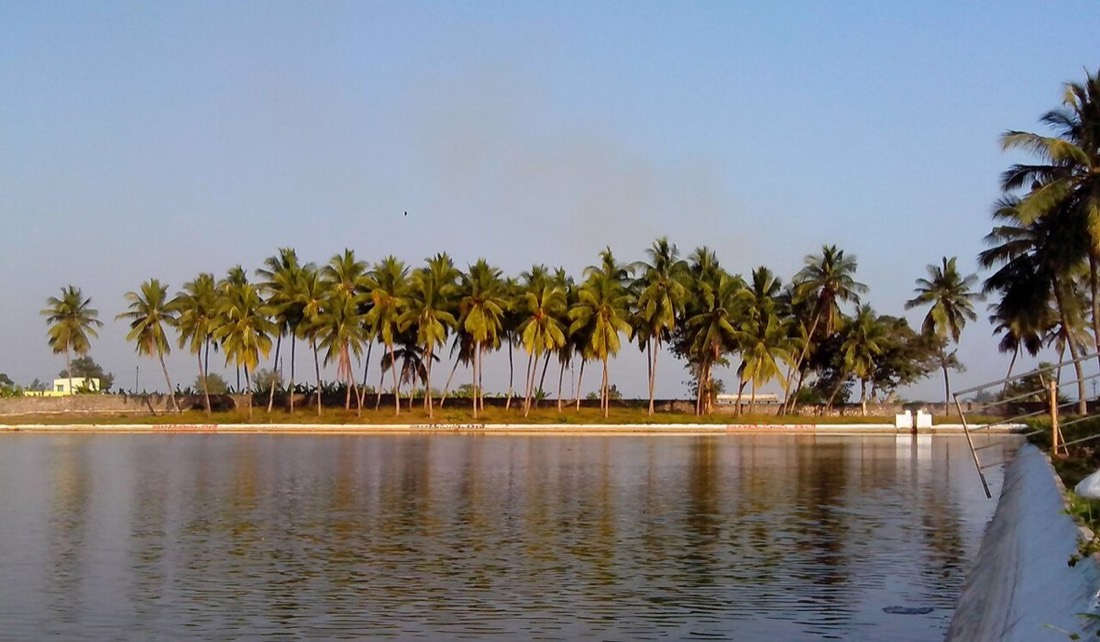
The site says devotees believe they can gain the Sun's grace by praying after a dip in it, then turning towards the temple to see the idol.
The tank has a festival too. Each year on the twelfth day of the bright half of Kartik, the site says, the processional deities of Suryanarayana Swamy, Usha and Chhaya are taken to the tank and set on a swan-shaped boat, which is turned around twelve times. Devotees place lamps on the water, which the site says lights a way to heaven.
What the stones say about the date
Most pages give the temple a seventh-century start. The information site says archaeologists read its stone inscriptions as pointing to Devendra Varma, a ruler of Kalinga, as builder in the later half of that century, and another page gives 672 CE. This article found no published edition of the inscriptions to check that. Templenet, an encyclopaedia of Indian temples, adds that the present structure is largely the result of 18th-century renovations.
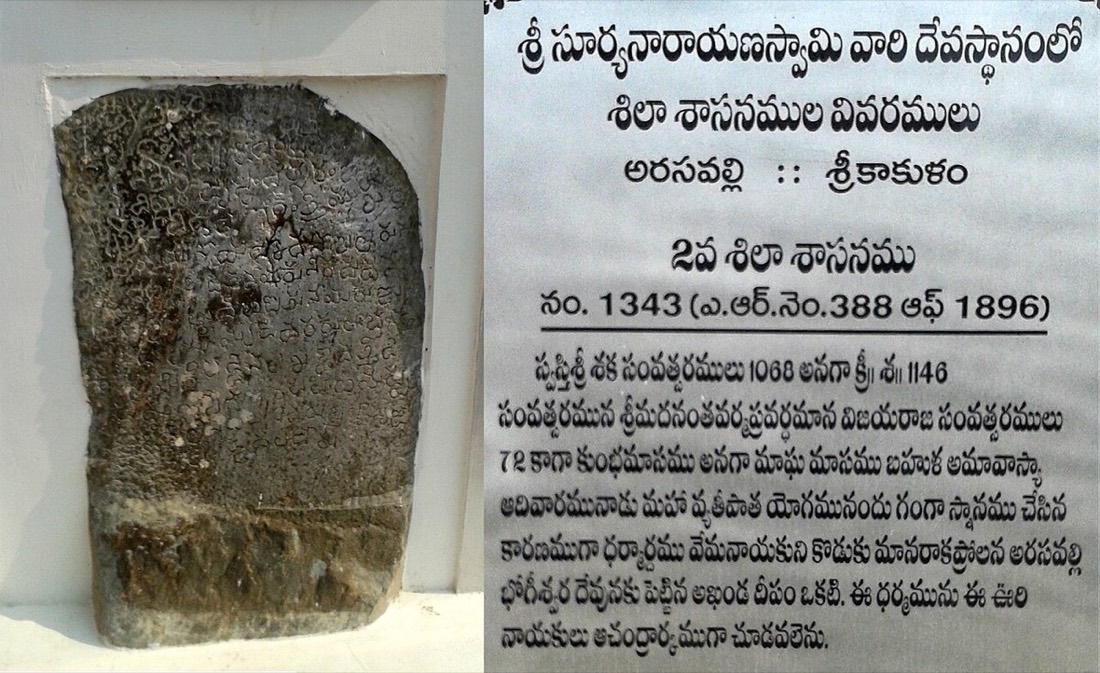
The stones themselves are more specific. The same site describes three in the temple premises, and panels beside two of them, seen in photographs taken in 2014, give their readings in Telugu. The first names a Ganga-dynasty king, Anantavarma Deva, in the 58th year of his reign. Its donor is an official named Surapotu, not the king, and the site says his gift was to run a school and hostel for students.
The second stone carries a date. Its panel reads Saka 1068, given as 1146 CE, in the king's 72nd year, and numbers it A.R. 388 of 1896, the year the site says the government recognised the inscriptions. A man named Prolana gives a lamp meant to burn without a break, and the stone asks the village leaders to keep it for as long as the moon and Sun last. The lamp is for Bhogeshvara, a name of Shiva, and the site points out that this stone does not say Surya. A third stone, a year later by the site's count, records a similar lamp and names Surya.
So the stones show gifts being made at Arasavalli in the twelfth century. They do not say who first built the shrine, and the site's own pages disagree: one puts the gifts before the 11th century, another describes a stone of 1146. The 672 CE date remains the temple's attribution.
A few minutes of morning light
The temple is also said to do something with the Sun's own light. The information site says the rays reach the idol's feet twice a year, passing through five entrance gates and staying a few minutes. It gives the months as March and September on one page, and March and early October on another.
News reports add detail. The Deccan Chronicle, in a report dated 2 October 2025, describes the light arriving at 6:00 am for about six minutes, moving from the idol's feet to its head. It says the light can also be seen around 9 and 10 March. A report dated 9 March 2025 tells of the other possibility. Persistent clouds and fog kept the Sun away that morning, and the next chance was the following day.
For a Sun temple, the idea is easy to follow. On those mornings the deity is reached by the very thing he is worshipped as.
Planning around the temple's notices
Timings, darshan arrangements, booking, dress and rules are set by the temple and can change, so rely on its current notices. The light mornings above are reported dates, not a timetable. As of 12 November 2026, this article rests on the pages and reports named here. The information site does not say who runs it, and its festival page carries a 2016 heading, so treat its details as a guide to the tradition.
Questions people ask about Arasavalli
Who is worshipped at Arasavalli, and where is it?
Surya, the Sun, as Suryanarayana Swamy, at Arasavalli (also spelled Arasavilli), about a kilometre east of Srikakulam town in Andhra Pradesh, according to the district administration. The information site describes four other deities worshipped alongside him: Ambika, Vishnu, Ganesha and Maheshwara.
Is the Arasavalli temple really from the seventh century?
That date, 672 CE with Devendra Varma, is the temple's attribution, and no published edition was found to confirm it. The stones the temple displays are later, one dated 1146 CE, and record gifts rather than a founding. Indra's founding is sacred tradition, not a date.
Does sunlight really reach the idol's feet?
The temple's information site says so twice a year, and news reports describe it at about 6:00 am in early October and around 9 and 10 March, lasting some minutes. Reports also record a morning when clouds blocked it. Treat the dates as reported, not guaranteed.
When is the main festival at Arasavalli?
The temple's information site names Ratha Saptami, held in the month of Magha, as the main festival, and calls it the Sun's birthday, Surya Jayanti. The date follows the lunar calendar and falls in February or March. The temple's notices give each year's day.
A lamp for as long as the Sun lasts
In a temple of the Sun, one donor measured a promise by the Sun and the moon: a lamp to be kept for as long as they last. The stone that carries that line has a date, 1146 CE by its panel. The shrine's own beginning, with Indra, a kick and three handfuls of earth, has none. Arasavalli holds both, and each answers a different question.
For more temple stories where the accounts sit side by side, Devam is coming soon to Google Play and the App Store. Join the waitlist to hear when it launches.