Annapurna Mandir, Varanasi: the gold goddess seen once a year
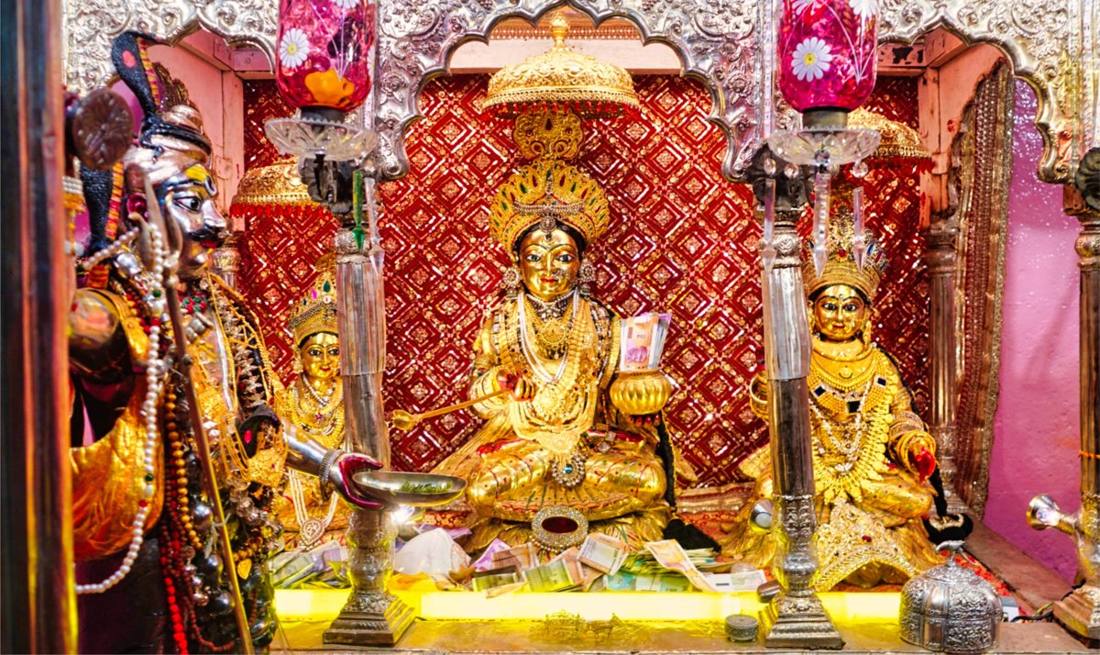
For most of the year, the Annapurna temple in Varanasi's Vishwanath Gali shows its goddess in brass. Then Diwali comes round and the doors open. A second image appears: Annapurna in gold, on view for a few days and then put away for a year.
This is Annapurna Mandir, also called Annapurna Bhavani, the shrine of the goddess of food, close to Kashi Vishwanath. Its annual opening is why many people have heard of it. The reason it exists is an old Kashi story about a god who called food an illusion.
In 2026 the doors opened on Dhanteras, 6 November, after the morning aarti. UNI reported long queues for the golden form of the goddess, and quoted the temple's mahant, Shankar Puri, on worship beginning at 3 am.
Shiva calls food unreal
This is a Kashi tradition, not a dated event. The Kashi government's tourism portal tells it like this.
Shiva tells Parvati that the world is maya, appearance or illusion, and that food is unreal too. Parvati vanishes. Without her, the world goes hungry. Shiva realises his mistake and asks her for food. She comes back as Annapurna, holding a golden pot and ladle, and gives food in Varanasi. A second page on the portal says she opens a kitchen in Kashi and feeds everyone, Shiva included.
The tale has other tellings. In a folktale on Rana P. B. Singh's heritage page, Parvati closes Shiva's three eyes, and Shiva tells her to give out food in Varanasi. She does, as Annapurna.
Every version ends in the same place. Whatever the philosophy, someone still has to be fed.
A brass goddess every day, a gold one at Diwali
The portal says the temple holds two images of Annapurna, one gold and one brass. On Singh's page, the brass image is open for daily darshan, the sight of the deity. The gold one is seen only once a year.
When, exactly? The portal puts it on Annakut, which follows Diwali. Local reports and the temple trust's own Diwali notice describe a longer window, from Dhanteras, the first day of the Diwali festival, to Annakut. Recent reports give four or five days. The lunar calendar sets the dates, so they move from year to year. In 2026 the trust's notice named 6 to 10 November.
Local reports say the gold Annapurna is seen with Bhumi Devi, Lakshmi and a silver Mahadev, a name for Shiva.
Stories like this are what Devam is bringing together for more than 1,000 Indian temples and for gods and goddesses, with bhajans, mantras, aartis and quizzes. Devam is coming soon on the App Store and Google Play. You can join the waitlist to hear when it arrives.
The coins given at the doors
On Dhanteras the temple also gives coins to visitors as prasad, the offering handed back to devotees. Local reports call this the goddess's khazana, a word for treasure.
Devotees treat the coin as a blessing to take home. A 2020 Zee News report says it is kept in the puja room or a home locker. Popular belief, it adds, links the coin to happiness and prosperity in the household. A 2026 local report adds the belief that it brings growth in grain and wealth to a home.
These are devotees' beliefs, as reported. What the coin brings is a matter of faith. Read as devotion, it is a token of Annapurna as provider.
Annakut: a mountain of food, then a closing
Annakut means a mountain of food. The Kashi portal says fruit, sweets and grain are heaped before the goddess, then shared with devotees as prasad.
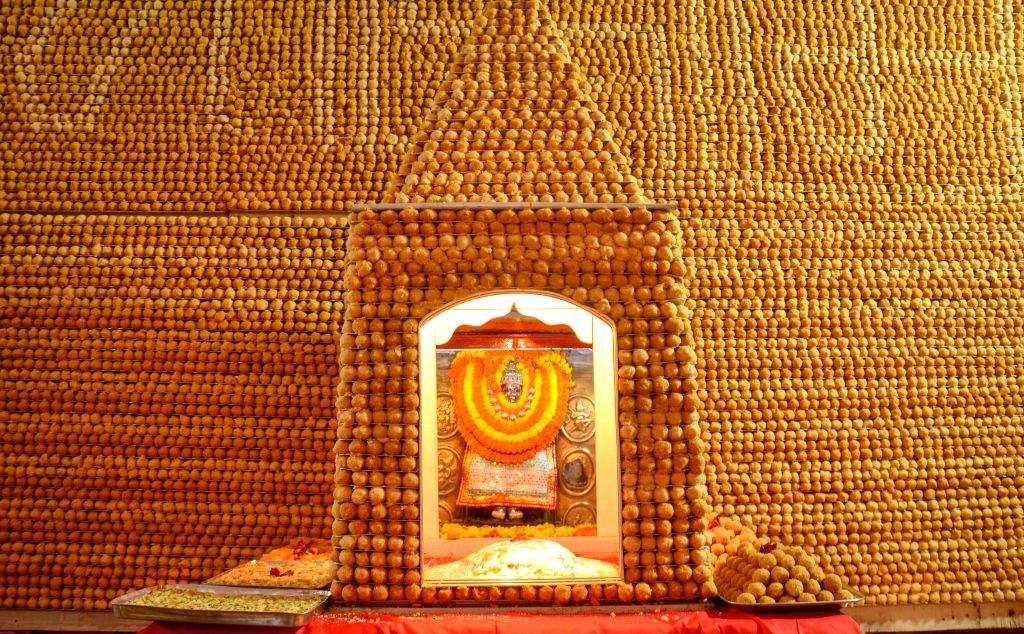
In 2026, local reports said Annakut day, 10 November, would bring a laddu display and a maha-aarti at 11:30 pm. After it, the doors of the golden Annapurna would close for a year. The brass image keeps the daily darshan until the next Dhanteras.
Here the old story becomes a custom. Food is made visible, then handed on. The trust's website adds that free meals are served on the premises in the afternoon.
The Annapurna who came back from Canada
A different Annapurna made news in 2021, and the two are easy to mix up. That one is not this shrine's gold image, and it was not placed in this temple.
It is a small eighteenth-century stone sculpture. It sat in the University of Regina's collection at the MacKenzie Art Gallery, catalogued as Vishnu. The artist Divya Mehra, researching for an exhibition, noticed the figure was a woman. The curator Siddhartha V. Shah identified her as Annapurna.
The Indian Express reported what Mehra's research found. Norman MacKenzie noticed the sculpture on a trip to India in 1913. A stranger who overheard his wish stole it for him from a temple on the riverbank steps in Varanasi. The report does not name that temple.
The Ministry of Culture handed the sculpture to the Uttar Pradesh government in Delhi on 11 November 2021. It gave the size as 17 by 9 by 4 centimetres. India Today reported that on 15 November it was installed in the north-east corner of the Kashi Vishwanath temple.
Who built it depends on who is asked
The temple is an eighteenth-century shrine, but its beginning is disputed. The Kashi portal gives 1729 under the Peshwa Balaji Bajirao. The temple trust's own history gives 1729 under Baji Rao I, and the Incredible India site names Baji Rao I with the year 1725. The sources read for this article do not settle the year or the patron.
Planning for next year's opening
The gold image appears only in the Diwali window, so a visit outside it means the brass image. For everything else, follow the temple's own notices.
- The 2026 window was announced as 6 to 10 November. The next one follows the lunar calendar, so wait for the year's announcement.
- Timings, queues, booking, dress and rules change. The trust's website is the place to look.
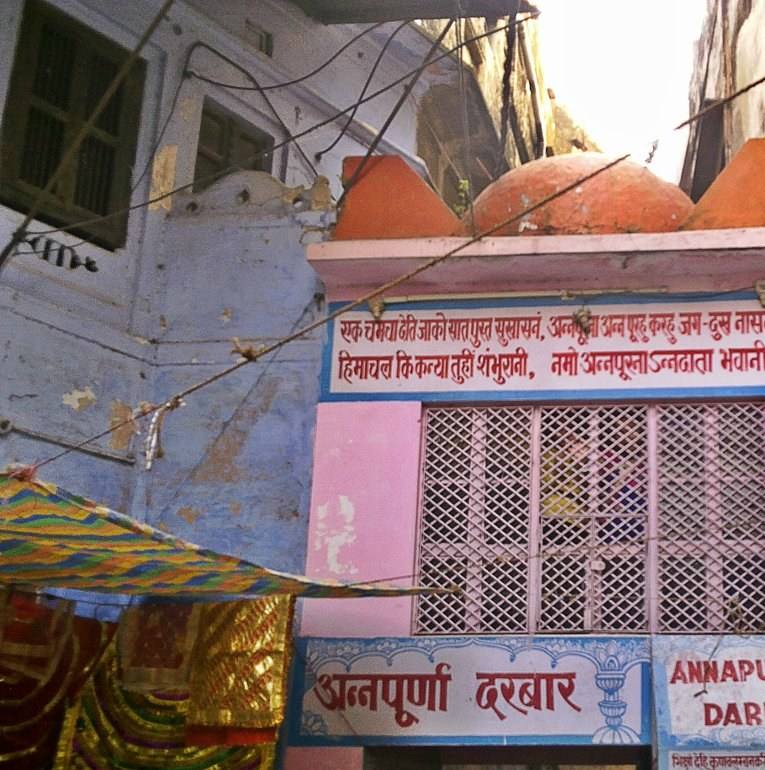
- The shrine is in Vishwanath Gali, the old-city lane beside Kashi Vishwanath.
Everything above about 2026 was checked on 10 November 2026.
Questions people ask about Annapurna Mandir
When is the gold Annapurna shown?
Around Dhanteras to Annakut, usually four or five days in Diwali week. The lunar calendar moves the dates each year; in 2026 the trust's notice named 6 to 10 November. Check the year's announcement, because the doors then close for twelve months.
Is the Annapurna returned from Canada the gold image?
No. The returned sculpture is a small eighteenth-century stone figure, handed over in 2021 and installed at Kashi Vishwanath. The gold image belongs to this shrine in Vishwanath Gali and is shown only around Diwali. The reports do not tie the stolen sculpture to this temple.
Is the story of Shiva, Parvati and food history?
It is sacred tradition, not a dated event, and its tellings differ. What is documented is an eighteenth-century shrine. Its date and patron are disputed: the Kashi portal gives 1729 under the Peshwa Balaji Bajirao, while the temple's own history names Baji Rao I.
What are the coins given at the opening?
They are prasad given to visitors on Dhanteras, which local reports call the goddess's treasure. Devotees keep one at home as a blessing. Reports describe a belief that it brings grain and wealth, but that is faith and devotion, not a promise or a payment.
What the doors keep for a year
After Annakut night the golden goddess goes behind closed doors. The brass Annapurna carries on in the lane. The old story keeps its point either way: the god who called food unreal ends up asking for a meal.
If you would like stories like this on your phone, Devam is coming soon to Google Play and the App Store. You can join the waitlist to hear when it arrives.