Ambabai Temple, Kolhapur: Following the Sunset Ray to Her Feet
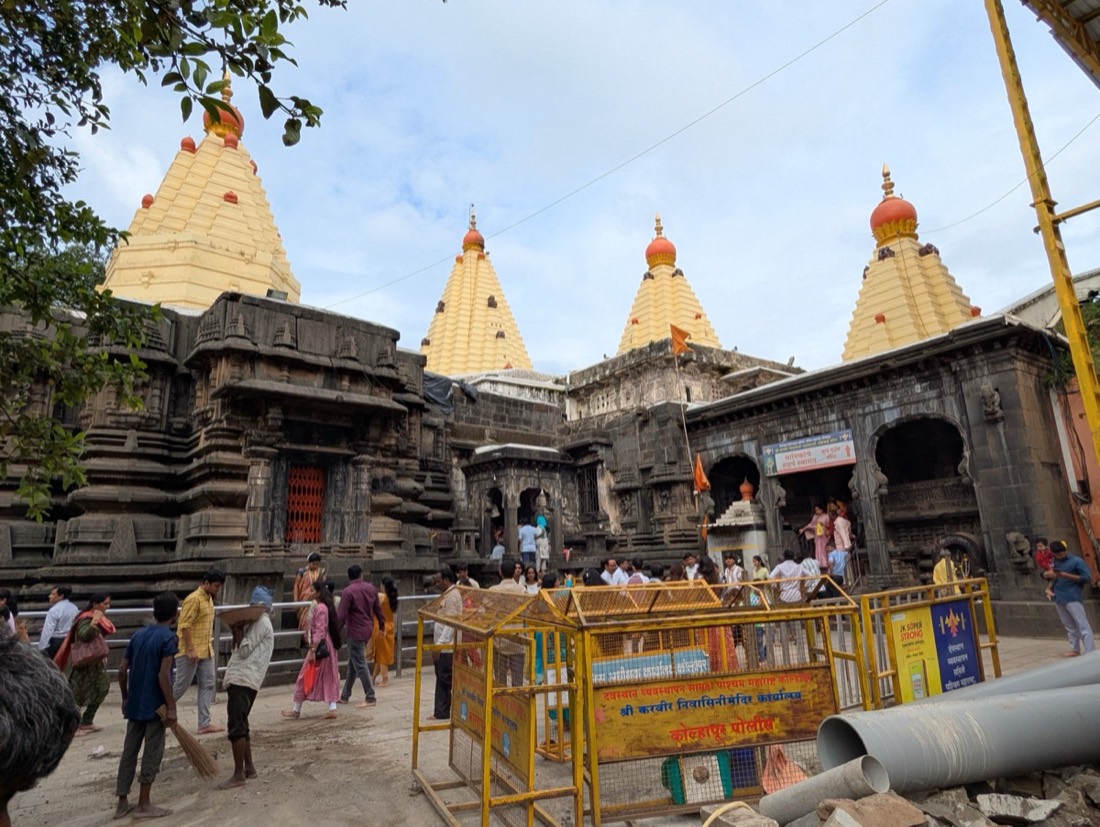
At 5:05 pm on 8 November 2025, the setting sun enters the Ambabai temple in Kolhapur, Maharashtra, through its main gate. It passes the Garud Mandap, Kasav Chowk, a brass threshold and a silver one. At 5:42 it touches the feet of the goddess; by 5:47 it has climbed to her shoulders and slips away to the left. That is Lokmat Times' account of the first evening of Kirnotsav, the festival of rays.
The goddess is Mahalakshmi, worshipped here as Ambabai. This article follows her light, the hall in its way, and the demon whose name the city carries.
A sunset's walk from gate to feet
Kirnotsav comes twice a year, around late January and early February and again in November. On those evenings the setting sun lines up with the temple, and a patch of light makes the whole walk in, from gate to sanctum. The temple keeps other lights too, such as its stone lamp towers, called deepmala.
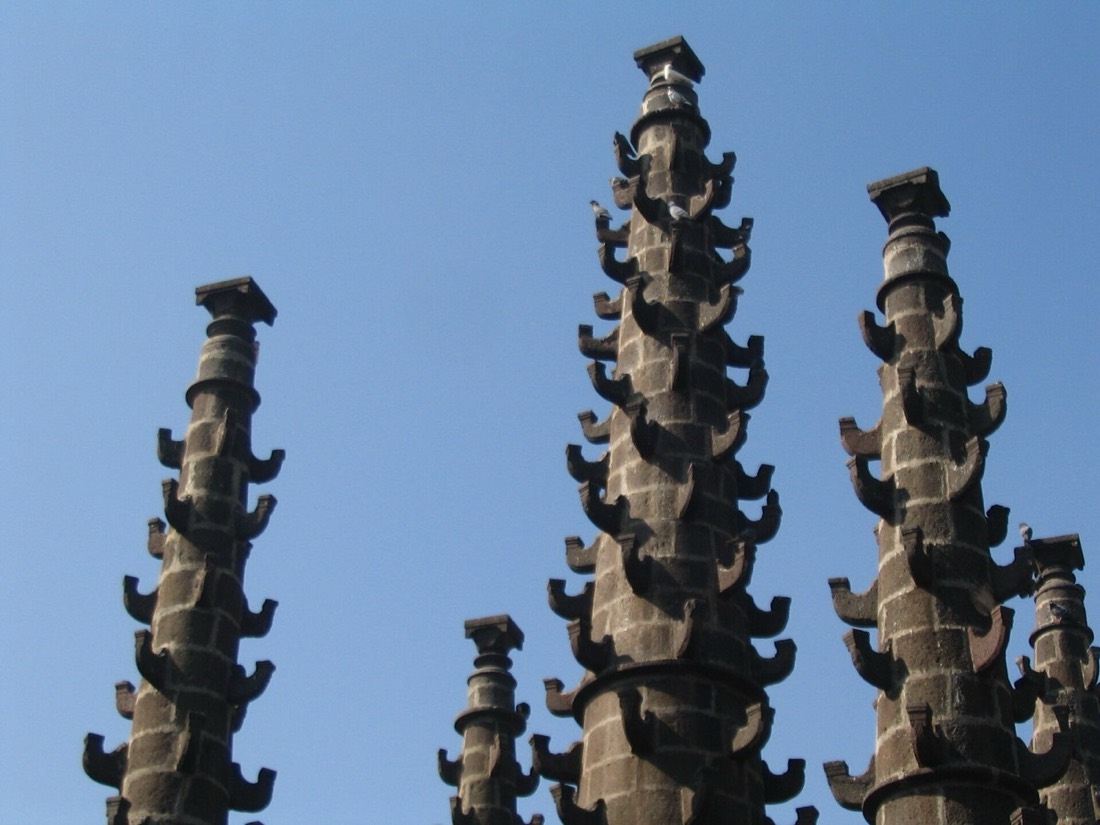
By that report's clock, the walk took thirty-seven minutes from gate to feet. Then the light keeps climbing, evening after evening. The Times of India describes the pattern: feet on the first two evenings, waist on the third, the whole image on the fourth and fifth. The first evening in 2025 had already reached the shoulders, so years differ.
What the light finds is a black stone image about three feet tall, according to Maharashtra Tourism. Her crown carries a five-headed serpent, and a stone lion stands behind her. In her hands the page lists a matulinga (a citron), a mace, a shield and a drinking bowl.
Tradition counts the temple among the Shakti Peethas, the goddess's sacred seats. Maharashtra Tourism calls it a revered peetha, and the temple committee's website calls it one of the "three and a half" of the Puranas. Other sources count differently.
Devam is gathering the stories of more than 1,000 Indian temples, along with bhajans, mantras, aartis and quizzes. It is coming soon on the App Store and Google Play. If a temple built around a sunset ray makes you curious about others, you can join the waitlist.
The hall that stands in the light's way
In November 2025 the Garud Mandap on that list was a building site. The wooden hall just inside the gate came down after roughly two centuries, Lokmat reported, and rebuilding began in August 2024.
It matters to worship, because the goddess's palanquin sets out from it at Navratri. It matters to the light, because the rays must cross it. And it is a late layer of a temple whose age is debated. Maharashtra Tourism credits a seventh-century Chalukya ruler, Karandev; Ambabai.com describes building from the ninth century to the eighteenth.
With the hall gone, the sun had a clearer run. The same report says both Kirnotsavs since had run at full strength, the light rising above the goddess's crown. It adds that scholars wanted the new hall's arch widened before building.
In February 2026, with the rebuilding under way, the rays did not enter the sanctum even once, the Times of India reported. It was the first time in 25 years. On 1 February they reached only the silver threshold.
Milind Karanjkar, who heads the physics department at Vivekanand College and has studied Kirnotsav for years, blamed cold, cloud, fog and dust. The committee's secretary pointed to air pollution and cloud. Some devotees blamed the hall's construction and the placing of its pillars. The report does not weigh one cause against another.
In April, ETV Bharat reported, the committee decided to raise the new hall by eight feet and sent the proposal to the archaeology department. The hall's three arches, it notes, are narrower than the arch on Mahadwar Road. Karanjkar said widening them too would clear the way for both Kirnotsavs.
By Navratri the hall was in use: on 15 October the palanquin set out from it. Whether the finished hall includes those changes, and what it does to the light, no report found says.
The demon who asked for a city's name
Why the city is called Kolhapur is a story devotees tell, not recorded history. This version follows the devotee-run site Ambabai.com.
Kolhasur, king of the region, hands his kingdom to his four sons and goes to the forest to meditate. The sons torment the people, and the gods kill all four. One of them, Karveerasur, gave the town its older name, Karveer, the page says.
Kolhasur returns in anger, worships the supreme goddess and asks for one thing: that she leave the place for a hundred years. She agrees and goes. For a century he rules by terror, with four demon commanders posted at the four sides of the city.
At last the gods call her back. She returns with divine allies, who defeat the four commanders, and then meets Kolhasur in battle. Shiva, impressed by his skill, offers him a wish.
Kolhasur asks that the goddess not be angry with him and that she kill him as Mahalakshmi. She does, on Ashwin Shuddha Panchami, the fifth day of Navratri. As he dies, he makes three requests.
The region should carry his name. It should be a holy place on a par with Gaya, the pilgrimage town in Bihar. And each year on that day a pumpkin standing for him should be cut before the goddess Tryamboli.
In this telling, the enemy she defeated gives the city its name.
The cutting still happens. On 15 October 2026, the day called Lalita Panchami, Pudhari reports, Ambabai's palanquin leaves the Garud Mandap at ten for the Tryamboli temple on the city's edge. It halts for darshan at Shahu Mill and rests at Takala, as custom requires.
A little before one it reaches the shrine, where the two goddesses meet in an embrace called galabhet. A girl from the Gurav family pierces the gourd with a trident. Pudhari calls the gourd a symbol of Kolhasur's killing.
To curb the yearly scramble for a piece, the temple's honour-holders, the mankari, carried the whole gourd away and split it in a safer place. Some young men rushed it anyway, and police held the crowd.
The report also gives the local reason for the visit. Tryamboli had sulked at not being invited to celebrate Kolhasur's death, and Ambabai goes on that day to coax her out of it. The newspaper records what happened that morning. Why it happens belongs to tradition.
Visiting around Kirnotsav
The temple's website was checked on 4 November 2026, and arrangements change.
Rules and booking: the Paschim Maharashtra Devasthan Samiti runs the temple. Its website lists daily rituals, live darshan, pooja booking and notices, and its home page asks visitors to dress in keeping with tradition.
Dates: no Kirnotsav dates had been announced there for this year, and reports put the November window anywhere from 8 to 13 November.
Viewing: in February the Times of India said the event is live-streamed and the darshan queue pauses for about fifteen minutes on Kirnotsav evenings, so a place inside is not needed.
Works: September reports describe conservation work across the precinct, so expect building work in places.
Questions people ask about Ambabai Temple
Is the Ambabai temple a Shakti Peetha?
By tradition, yes. The temple committee's website calls it one of the three and a half Shakti Peethas of the Puranas. Maharashtra Tourism calls it a revered Shakti Peetha. That is devotional tradition, not a documented register, and other sources count a different number of peethas.
When is Kirnotsav, and does the light always reach the goddess?
Twice a year: around late January to early February, and again in November, with reports putting the November window anywhere from 8 to 13 November. The temple's notices set the dates. Nothing guarantees the light. In early 2026, the Times of India reported, the rays never entered the sanctum.
How old is the temple?
Sources disagree. Maharashtra Tourism credits a seventh-century Chalukya ruler, Karandev, while Ambabai.com describes building from the ninth to the eighteenth century. The Garud Mandap, taken down after roughly two centuries, is a late layer. Treat any single founding date as a claim, not a settled fact.
Why is a gourd split at Tryamboli every Navratri?
According to local tradition, the defeated Kolhasur asked that a pumpkin standing for him be cut each year on Ashwin Shuddha Panchami. What is documented is the ritual: on 15 October 2026, Pudhari reported, a girl from the Gurav family pierced the gourd at the Tryamboli temple. The reason belongs to tradition.
One city, two journeys
Twice a year the sun's last light walks in to her feet, if the sky, the air and the carpentry allow it. Once a year, on the fifth day of Navratri, her palanquin travels to Tryamboli along a road lined with flower carpets and arches. Both journeys need the city to make room. And both lead to a goddess whose city, in local tradition, wears her enemy's name.
Devam is coming soon to Google Play as well as the App Store. It will bring together stories of temples, gods and goddesses with bhajans, mantras, aartis and quizzes. To hear when it opens, join the waitlist.